All posts by Jay Pinho

About Jay Pinho

Jay is a data journalist and political junkie. He currently writes about domestic politics, foreign affairs, and journalism and continues to make painstakingly slow progress in amateur photography. He would very much like you to check out SCOTUSMap.com and SCOTUSSearch.com if you have the chance.

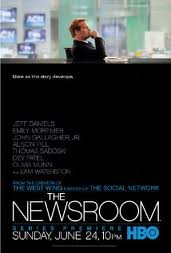
The Newsroom slides further into the abyss

I know I’m late on this, but I watched Episode 5 of The Newsroom a couple days ago. And wow, has that show ever jumped the shark. It’s gotten to the point where, if Sorkin and Co. don’t wake up soon and at least wink half-heartedly at the audience in some way, the show may rapidly devolve into a “hate-watching” fest (thanks to Victoria for that term) for everyone who bothers to tune in.

Also, self-plug: a slightly revised version of this post is now on the Australian Broadcasting Corporation’s Religion & Ethics site. You can check it out here.

A response to Steve Almond on our late-night political comedians

Jon Stewart

Michael Potemra of the National Review Online takes issue with Steve Almond’s critique of the late-night comedy duo Jon Stewart and Stephen Colbert (previously covered here):

The Baffler writer…calls the work of Colbert and Stewart an “almost entirely therapeutic” attempt to “congratulate” the viewers, and criticizes the viewers for “accept[ing] coy mockery as genuine subversion.”

But what if we, the viewers, don’t want genuine subversion of the exact same things you happen to want to subvert? Furthermore, what if we don’t mind laughing even about some things we agree with? Both Colbert and Stewart make fun of some of my own political views. I was thinking of saying that I like them in spite of this; it might be more accurate to say that I like them, at least in part, not in spite of this but because of it — because I don’t want to live in a country where people can’t laugh at themselves, and where everybody takes himself and his own opinions as seriously as the Baffler guy seems to.

I don’t think this debate comes down to who takes himself more seriously. It’s about who you think Jon Stewart and Stephen Colbert are. If you think they’re simply comedians, you react as does Potemra. But if you suspect that behind their mock rage lies something a little more like…real rage, then perhaps you wonder, as Steve Almond does, why they don’t take that last, significant leap into hard-edged social commentary. Instead, we’re treated to the now all-too-familiar sight of Jon Stewart retreating behind the tired trope of “I’m just a comedian.”

Which he isn’t. Comedians generally don’t get CNN shows canceled. And they don’t play major roles in passing healthcare legislation for 9/11 first responders. Stewart, like so many of The Daily Show‘s hapless victims, wants it both ways. It’s just that, since he himself is the subject of this conversation, we don’t have someone funny around to point out his blatant inconsistencies.

Instead, we have Steve Almond. Where Potemra is right, I think, is in judging just how mainstream Stewart really is. Over the past few years, I, too, have wondered if Stewart were going soft. But more and more I’m guessing he was never that leftist to begin with. The Bush years presented fruit ripe for the picking, so it was easy to paint Stewart as a liberal. But now that a Democrat (albeit a fairly conservative one) is in the White House, it’s quickly become apparent that Stewart has little interest in pressing against the dominant strand of right-wing thought that’s gripped American politics over the last few years.

Like Steve Almond, I want Jon Stewart and Stephen Colbert to take up the liberal baton with more vigor. I’m just not sure if that’s who they are, or if it’s simply who I wish they were.

(Thanks to Andrew Sullivan at the always-excellent Dish for linking to Potemra’s piece.)

A smattering of gun control-related links

Over the past few days, I’d kept meaning to post something about gun control in the wake of the Aurora shooting, but I never quite found the time. Meanwhile, the links that I felt added something to the conversation kept piling up in my browser to the point of slowing down my computer.Well, God knows I need my laptop running optimally for appropriate time-wastage purposes, so here is a collection of links relating to the gun control debate that’s been swirling ever since James Holmes’ violent rampage.

First, Boston Globe columnist Brian McGrory wonders when the Massachusetts delegation will start heralding its own sterling gun control record and attempt to expand its success to the national level:

Legislation has been languishing in Washington since last year’s Tucson massacre to outlaw lunatic gun clips that hold more than 10 bullets at a time. Add in the fact that the alleged killer, with his freakish orange hair and absent eyes, was a veritable poster boy for stronger national gun laws. The result should be a hue and cry, far and wide, for the type of sensible gun policies that could save lives.

And in that regard, there’s nobody better to lead on the issue than the members of the Massachusetts delegation. This state has some of the strongest and most successful gun laws in America. We have an assault weapons ban. We have safety training requirements, licensing, registration, and a waiting period.

And we also have something else. Massachusetts has, per capita, the lowest rate of gun-related fatalities of any state in the nation – number 50, with 3.14 annual deaths per 100,000 people. The national average is 10.19 deaths. The worst state, Louisiana, has 18.03 deaths.

Think about this. We are an industrial state with a congested city. We are bordered by Vermont, New Hampshire, and Maine, states that have no gun controls to speak of. And fewer people die here than anywhere else from firearms. And there’s really a debate over whether stronger gun laws work?

Michael Bloomberg was affiliated with Salomon ...

Meanwhile, New York mayor Michael Bloomberg is (admirably, in my opinion) continuing his one-man crusade to take on the National Rifle Association in an op-ed for…OK, for Bloomberg View:

There is one particular fear the NRA manufactures with great success: fear of electoral defeat. Romney has walked away from the assault-weapons ban he once supported, and in nearly four years, Obama has offered no legislation to rein in illegal guns. In Congress, the NRA threatens lawmakers who fail to do its ideological bidding, although its record in defeating candidates is much more myth than reality.

What can be done?

One of the U.S. Senate’s most pro-gun members has paradoxically shown how the battle might begin. Republican Senator Tom Coburn of Oklahoma, also the chamber’s most sincere fiscal conservative, has made it his mission to diminish the influence of another ideological group that has exercised unwarranted sway over public policy: the anti-tax absolutists led by Grover Norquist and Americans for Tax Reform.

To confront Norquist, Coburn identified an indefensible tax — the ethanol subsidy — isolated it and forced a vote on it. His colleagues, many of whom had signed Norquist’s pledge never to raise taxes, were forced to choose between opposing what Coburn decried as an obvious “special interest giveaway” or looking like spineless shills for Norquist. By heightening attention on the vote, the tactic worked. The $5.4 billion ethanol subsidy was voted down.

The Coburn approach could be applied to guns. Elected officials who profess to be tough on crime but who also oppose tougher measures to stop illegal guns can’t be in two places at once — particularly when many law enforcement organizations support basic gun measures that simply don’t exist today. In the same way Coburn pointed out the ethanol-corporate welfare contradiction, a pro-gun senator can point out the obvious: It’s impossible to support police officers and law enforcement agencies and also oppose giving them the tools they need to keep guns out of the hands of dangerous people.

Then, GQ provides a little counterbalance to Bloomberg’s optimism on the possibility of confronting the NRA:

I asked a Democratic legislative staffer for a first-person description of the NRA’s power on the Hill. Here’s the response I got, on the condition that I not provide any further identifying information. It’s pretty breathtaking.

We do absolutely anything they ask and we NEVER cross them—which includes asking permission to cosponsor any bills endorsed by the Humane Society (the answer is usually no) and complying with their demand to oppose the DISCLOSE Act, neither of which have anything to do with guns. They’ve completely shut down the debate over gun control. It’s really incredible. I’m not sure when we decided that a Democrat in a marginal district who loses his A rating from the NRA automatically loses reelection. Because it’s not like we do everything other partisan organizations like the Chamber [of Commerce] or NAM [National Association of Manufacturers] tell us to…

Pandering to the NRA is the probably worst part of my job. I can justify the rest of it—not just to keep the seat, but because I believe most of the positions he takes are consistent with what his constituents want. But sucking up to the NRA when something like Colorado happens is hard to stomach.

And then there’s the tiny little matter of the American people themselves:

Firearms sales are surging in the wake of the Colorado movie massacre as buyers express fears about both personal safety and lawmakers who are using the shooting to seek new weapons restrictions.

In Colorado, the site of Friday’s shooting that killed 12 and injured dozens of others, gun sales jumped in the three days that followed. The state approved background checks for 2,887 people who wanted to purchase a firearm — 25 percent more than the average Friday to Sunday period in 2012 and 43 percent more than the same interval the week prior.

Dick Rutan, owner of Gunners Den in suburban Arvada, Colo., said requests for concealed-weapon training certification “are off the hook.” His four-hour course in gun safety, required for certification for a concealed-weapons permit in Colorado, has drawn double the interest since Friday.

The more things change…

Why writer$ write

Tim Parks wonders about the correlation between quality of writing and the amount of income received from doing it:

Asked to write blogs for other sites, some with much larger audiences, I chose to stay with the New York Review, partly out of an old loyalty and partly because they pay me better. Would I write worse if I wrote for a more popular site for less money? Or would I write better because I was excited by the larger number of people following the site? And would this larger public then lead to my making more money some other way, say, when I sold a book to an American publisher? And if that book did make more money further down the line, having used the blog as a loss leader, does that mean the next book would be better written? Or do I always write as well or as badly as I anyway do regardless of payment, so that these monetary transactions and the decisions that go with them affect my bank balance and anxiety levels, but not the quality of what I do?

I don’t know about Parks, but the reason I keep up this blog is the huge stack of cash each post brings in.

(shrug)

Stop, stop, stop, stop hurting America: are Jon Stewart and Stephen Colbert co-conspirators in the disappearance of liberal radicalism?

Jon Stewart

A very worthwhile read, via Steve Almond at The Baffler:

Our lazy embrace of Stewart and Colbert is a testament to our own impoverished comic standards. We have come to accept coy mockery as genuine subversion and snarky mimesis as originality. It would be more accurate to describe our golden age of political comedy as the peak output of a lucrative corporate plantation whose chief export is a cheap and powerful opiate for progressive angst and rage.

In this, the “golden age” of Facebook Likes masquerading as activism, have we fallen prey to a massive ruse? One in which progressive rage is vaccinated little by little via 30-minute doses of harmless political comedy?

They’re not so convinced over at Vulture:

It seems like we have some version of this conversation every few years: Is Jon Stewart too easy on some of his guests? Yes. Do we live in a time when people are extremely reluctant to criticize members of the American military? We do. But is it really the role of all comedy, even political and media-centric comedy, to radicalize a population? Comedy can absolutely introduce political agitation. Must it, though? Are Stewart and Colbert asleep at the wheel because they’re not more like Bill Hicks?

Censoring the news: this only happens in tyrannies and American presidential campaigns

The New York Times nonchalantly (and unknowingly) begins writing its own obituary as a serious journalistic enterprise:

The push and pull over what is on the record is one of journalism’s perennial battles. But those negotiations typically took place case by case, free from the red pens of press minders. Now, with a millisecond Twitter news cycle and an unforgiving, gaffe-obsessed media culture, politicians and their advisers are routinely demanding that reporters allow them final editing power over any published quotations.

Image representing New York Times as depicted ...Quote approval is standard practice for the Obama campaign, used by many top strategists and almost all midlevel aides in Chicago and at the White House — almost anyone other than spokesmen who are paid to be quoted. (And sometimes it applies even to them.) It is also commonplace throughout Washington and on the campaign trail.

The Romney campaign insists that journalists interviewing any of Mitt Romney’s five sons agree to use only quotations that are approved by the press office. And Romney advisers almost always require that reporters ask them for the green light on anything from a conversation that they would like to include in an article.

From Capitol Hill to the Treasury Department, interviews granted only with quote approval have become the default position. Those officials who dare to speak out of school, but fearful of making the slightest off-message remark, shroud even the most innocuous and anodyne quotations in anonymity by insisting they be referred to as a “top Democrat” or a “Republican strategist.”

It is a double-edged sword for journalists, who are getting the on-the-record quotes they have long asked for, but losing much of the spontaneity and authenticity in their interviews.

Good thing the Times isn’t the most influential paper in the world or anything…because acquiescing to this absurd self-censorship would really be embarrassing if that were the case.

Perhaps this is a good entry point for the new public editor. Good riddance, Brisbane.

Mitt Romney, Bain Capital, and 1999: Should I stay or should I go now?

At first glance, this ongoing saga seems an awful lot like one of those perfectly constructed and completely irrelevant bits of campaign “scoops” that have no effect whatsoever on a candidate’s ability to govern. And from the Obama campaign’s strategic standpoint, that’s basically what it was, and a masterful job at that. But the problem goes beyond the overarching campaign themes — outsourcing of American jobs, profits accruing to the wealthy at the expense of everyone else, etc. — because it now involves directly contradictory statements made by Romney in SEC filings and public comments. It will be interesting to see if this story has staying power or if the press moves on to more exciting things, like what Kim Kardashian is doing with her summer.

In any case, it is a definitive example of the Obama campaign’s strategic mastery. The overall fight over outsourcing is, in many ways, pretty frivolous, since the exchange of labor in the U.S. for cheaper labor abroad is a fairly well-known and — more importantly — unavoidable long-term impact of globalization. But it sure riles up some of Obama’s key constituencies, so there we go. Meanwhile, Romney has a scandal on his hands because he fell for the trap of being too cautious: he didn’t want to appear remotely involved with outsourcing, so he said he wasn’t in charge of Bain Capital after 1999. Maybe he should have just owned it right from the start.