Category Archives: Film/TV

Wandering aimlessly with The Americans: Sam Lim and I discuss Episode 5, “COMINT”

Sam: This will be somewhat interesting, given that we just watched this episode together a few hours ago. Perhaps it was because I was watching it at your place, but I actually didn’t think the episode was too bad. It was certainly confusing, and it took me a bit to piece things together (that’s perhaps what I get from hating on the show so much that I forget to keep track of who’s who). But, overall, it was an ehh episode. That, on my The Americans rating scale, is pretty good.

To the details: if the KGB director at the Soviet embassy couldn’t talk to his guy at the Defense Department, but Elizabeth could just walk right in and question him (and Elizabeth can connect with the KGB director, I assume), why doesn’t the director just pass a message to the guy through Elizabeth? I suppose, if they did that, we wouldn’t have this episode, would we?

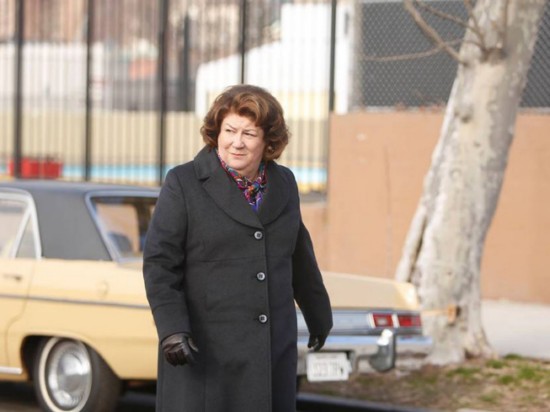
elizabethI didn’t feel like that storyline was told or developed very well as far as the Defense Department guy’s wife dying and its impact on him. In hindsight, they did say it clearly, but it got so lost in the confusing details of who’s who that I was left wondering who his wife was and why that was important. This probably betrays my lack of paying close attention to previous episodes, but I was just lost for a few sequences in this episode.

One aspect I particularly enjoy, though, is the costumes Phil and Elizabeth change into when they go on their missions. They’re so clearly fake that it’s funny. Phil’s fake hair is the best. Oh, and as I mentioned when we watched the episode during Elizabeth’s little romp in the hotel room with the encryptor dude, how did her wig not just fall off?

Admittedly, given that this episode confused me a bit because of the details, I read up on it, and I really thought Karen Fratti’s recap was spot on, particularly her very last question (why does Beeman insist on studying Russian instead of going to bed with his wife??). What were your thoughts on this episode? Continue reading Wandering aimlessly with The Americans: Sam Lim and I discuss Episode 5, “COMINT”

Are the writers still “In Control?” Sam Lim and I tackle Episode 4 of The Americans

Jay: After last week, this episode felt a bit like a letdown. The action was good, the tension was decent, but the dialogue basically muddled through and the plot was weaker than it was in “Gregory.”

First, though, I have to get a pet peeve off my chest. Stan’s boss says of the attempted assassin, “[If] this guy’s said ‘Nyet’ once in the past ten years, we’re gonna find out when and where.” Why do so many TV shows and movies have lines like that? No one talks in such melodramatic phrases.

But even aside from a few campy moments — another one is when Elizabeth is arguing with Phil about staying committed to the Soviet Union: that debate is already getting old for me, and Elizabeth still hasn’t looked convincing while doing it yet — the plot got into weird territory at times.

claudia

First, why are Phil, Elizabeth, and “Claudia” all so willing to talk in their car openly (and even somewhat loudly)? They drop bugs all over the place — I’m guessing one was in the pin Phil gave to that nurse, most recently — but they’re not even remotely nervous that they’re being watched? Even after Phil knows for certain Stan was suspicious enough to snoop around their garage and check out their car?

Speaking of cars, it was never explained how they got rid of the security guard’s car. Dumping a body is one thing, but making a car disappear is another matter entirely. Maybe that’ll get brought up in a later episode.

Another thing: why would Nina’s boss tell her colleague to follow her? Once again, there’s really no explanation given for why all the right people are wary of all the other right people. It’s too uncanny, and too much like network TV.

Which brings me to my next complaint: remember how Nina was recruited in the first place? Because she got caught stealing caviar from the embassy. If you were her, wouldn’t you rather just confess the theft and try to find a new job, instead of risking your life running around every time the FBI calls? In defense of the show, I suppose it’s feasible that she feels it’s now too late, that even if she stopped working for the FBI they’d ruin her life (or end it) anyway. But her risk/reward calculations don’t seem that smart right now.

Side note: I don’t get what took place when Phil called that guy with a bunch of phones and asked to get to the vice president’s office. Was he figuring out who the nurse was? And who was that dude with all the phones?

One last thing: I couldn’t help but notice that when Paige went over her friend’s house to apologize, she was playing with her hands in the exact same way Dana does all the time on Homeland. Is that the universal TV representation of “awkward teenager?”

Sam: I couldn’t agree more with everything you pointed out! My biggest mistake this week: raising my expectations. Before I watched the episode, I read that this week’s episode would cover the assassination attempt on President Reagan, and for some reason, I thought it would make for an interesting episode, to say the least. I was wrong. Continue reading Are the writers still “In Control?” Sam Lim and I tackle Episode 4 of The Americans

“Gregory,” we have a problem: Sam Lim and I take on Episode 3 of The Americans

philSam: I almost liked this whole episode. But even with managed expectations this week, I still couldn’t buy it all. Allow me to explain.

On the whole, I thought this episode was perhaps the best one so far. The whole scene with Gregory’s guys moving Joyce, Robert’s wife that no one knew about, off the street was pretty smooth. The story lines, for the most part, weren’t tangential.

But, I still found myself not liking the show any more than I did after episode one. I’m realizing that perhaps my dislike of this series has more to do with my dislike for mushy family-ness than the show itself. I find myself wanting to just skip the scenes between Philip and Elizabeth working out their wacky relationship problems, and perhaps because the non-relationship parts of the show are not on par with that of Homeland‘s, the show seems ehh to me.

But, my own realizations aside, let me now point out the parts I found strange. Did it seem strange to you that Elizabeth had such a deep contact in Philly? The way she explained it she must have met Gregory shortly after she and Philip moved to the US. For such a loyal KGB agent, she seemed unusually chatty about her ties with him when they first met. Sure, she fell for the dude, but wouldn’t she have been even more steely and committed to her cause than she is now? I just found this story line to be a bit of a stretch.

Also, the way Granny was introduced in the restaurant where Philip and his daughter were having breakfast just seemed weird. Who interrupts other people’s conversations from the bar? Maybe no one bothers me from across restaurants I go to, but that seemed strange to me. Finally, Stan must be quick at tying his shoelaces, because he didn’t look like he’d finished tying it when we started running after the dude “in the hood.”

Overall, though, I wasn’t as disappointed as the previous two episodes. Just ambivalent. Your take? Continue reading “Gregory,” we have a problem: Sam Lim and I take on Episode 3 of The Americans

From the Criterion Collection, with love (and for free)

The Verge is reporting that the entire Criterion Collection of films will be available to stream for free via Hulu — from today through the weekend. Happy Valentine’s Day!

The company has routinely offered up selections from its catalog — normally exclusive to paying Hulu Plus subscribers — for complimentary viewing, but now it’s opening up the floodgates and making hundreds of classic motion pictures available at no cost. If you’re spending Valentine’s Day alone, at least you can now spend your evening lost in the timeless treasures of cinema.

Enhanced by Zemanta

“The Clock” is ticking for The Americans: Sam Lim and I discuss Episode 2

americansSam and I are back — a little late this time — to talk about Episode 2 of The Americans, titled “The Clock.” The consensus? Lower expectations make for a more enjoyable viewing experience. (I guess we should all know that by now given the inexplicable long-term popularity of Two and a Half Men.)

Sam: At first glance, this week’s episode wasn’t that bad. I wasn’t impressed, but I wasn’t supremely disappointed either. I must be managing my expectations well.

Stan Beeman, though. I just find him annoying. First of all, they found caviar at some stereo store. Is it just me or does that just seem too convenient a storyline? And after pocketing that caviar, why does Stan feel the need to take it to Philip’s house that night? Is his gut telling him that caviar will make Philip admit he’s a KGB officer?

Interesting development at the FBI office though. Beeman takes a congratulatory phone call, and I noticed Amador’s face contort all of a sudden. Might this have been The Americans‘ subtle attempt to hint at race-relations in the workplace in the early 80s? Or this might’ve just been another tangential sequence with no direction (like the child predator from the first episode).

Also, in this episode, Elizabeth just seemed like a totally different character to me. Gone was the steely, nationalistic resolve from last week. Instead, perhaps fueled by her conversations with Philip (which still would be strange, given what we’d seen of their seemingly complicated relationship from last week), she wants to spend more time as a mother. I don’t know. I said it last week, and I’ll say it again. I find her character development sporadic and weak at best. Who randomly wakes up their daughter in the middle of the night to pierce their ears? Bizarre.

Your take?

Jay: Your last point cracked me up: there really is very little explanation for Elizabeth barging in on her sleeping daughter to pierce her ears. And on a similar note, I really don’t know why they insert gratuitous scenes like Phil watching over his sleeping son with hands folded. What is that scene supposed to accomplish? Let us know that, despite nearly suffocating an innocent guy earlier, he’s still a loving dad? I mean, great?!

The funny thing is, I know exactly what you mean about managing expectations: a big part of the reason I didn’t see this episode until today is because I was really busy, but the other part is that I just wasn’t that excited about it. So when I finally did watch it, my expectations were low enough that it allowed me to actually enjoy the episode much, much more than I did the pilot.

And I have to say, things were better this time around. Elizabeth, like you said, was much less dogmatic and more of a real person. Stan’s workplace dynamics are starting to shape up — although, again, we don’t know exactly what that look on Amador’s face meant yet, other than what seemed to be office politics (Stan taking the credit for other people’s hard work). Even the scene with Stan in Phil’s kitchen wasn’t as awful as it could have been. Granted, the whole caviar side-plot is a bit strange, but it seemed conceivable that Stan came over just to be friendly. He seems to be a bit of a loner, even with a family.

I’m also curious to see how the story with the newly recruited Russian caviar thief works out. I have to admit, I didn’t really pay close attention during Stan’s scene with her, so I’m not entirely sure what the racket was that she had gotten herself involved in — stealing caviar from an embassy and buying stereos with it? did I hear that right? — but I’m looking forward to seeing what she ends up doing.

My biggest complaint, weirdly enough, is about the girl Phil’s stringing along in his roleplaying as a Swedish intelligence officer: why are her lines so cheesy? No one talks like that, not even back in the 1980s. At least I certainly hope not.

Do you see any themes shaping up? Anything to get you more engaged? I have to admit that I’m somewhat less down on the show now, even if I remain wary.

americans2Sam: I had forgotten about Philip and the whole Swedish intelligence officer thing! You know, as part of my lowered expectations mantra, I think I just kind of approached that one with an “eh” reaction.

I do think you’re right, though, that such an approach allows the episode to do better this time around. You might be right about Stan just being friendly or not having much of a family life. Or perhaps he just felt bad for breaking into the Jennings’ garage.

Theme-wise, so far, I feel like we’re going to see a lot of family influence on the main characters’ actions and inactions. That seems to be a major theme of the series — that you have these covert spies who are supposed to blend in by having a normal family, etc. but have to balance a dangerous hidden life.

As for anything to get me more engaged, I’m honestly not sure. I can’t help wondering if some sort of Homeland-like twist where one of the main characters becomes a double agent might not make me more interested. But then it’d just become an even more second-rate Homeland ripoff. So I’ll just continue managing my expectations and enjoying more scenes of confiscated caviar being consumed. That’s it. I enjoy food, so perhaps introducing more good food would be a nice development (I’m only being somewhat facetious on this point).

What about you? What would you do to make this better?

Jay: I’m with you on the family aspect: I think this will continue to play a large role on the show. In fact, I think I read an interview with the creator, who said that the show was really about marriage and family, and that the spying was almost secondary (paraphrasing hugely here).

The Americans is in a somewhat strange position: it’s arriving on the heels of another very popular spy show, and yet there may actually be an opening for this one too just by virtue of the fact that Homeland went almost completely off the rails at various times during Season 2. And yet anything The Americans does will — at least in our minds, quite obviously — be compared against Homeland.

I think they need to make sure they take The Americans in a different direction. Obviously, they can’t avoid certain similarities: double agents, covert operations, and so on are all necessary staples of the spy genre, but one advantage The Americans has is its historical setting: the 1980s and the beginning of Ronald Reagan’s administration. It seems to me that they’re a bit more willing to “get political” (given the multiple references to Reagan being crazy and whatnot) than Homeland was, possibly simply due to the benefit of hindsight (people don’t always get as angry discussing the politics of thirty years ago than they would about contemporary issues like terrorism). That, and the look exchanged between Stan and his Number 2 make me think the show could edge in a direction that establishes itself as social commentary. I say “could” because, so far, these seem like mostly irrelevant blips that don’t connect to any broader themes, but that may be just because we’ve seen only two episodes. I guess we’ll find out.

One for the motherland: Sam Lim and I discuss the pilot episode of FX’s The Americans

theamericansLast year, Sam Lim and I had so much fun dissecting the minutiae of Showtime’s captivating Homeland series that we decided to fill in the gap until the next season’s premiere with a new show. As it turns out, The Americans, which airs on FX, also deals with spies, espionage, and double agents. But the premise is quite different and, at least through the first episode, so is the quality.

And we’re off…

Jay: Hey Sam,

So I just finished the series premiere. Excited to be doing this again! Here we go:

I don’t know if I’m just really nitpicky, if I have an incurable contrarian streak, or if I’m actually right, but I thought last night’s pilot episode of The Americans was problematic on a whole, heaping bunch of levels. It’s hard to know where to start, so I’ll check off a few random issues that bothered me the most.

First, more than anything else, this episode felt remarkably contrived. Everything happened just as we might expect them to happen on a network TV show, but I was hoping this would be better. Obviously, while watching the show, I couldn’t resist mentally making the inevitable Homeland comparisons, and in that light The Americans‘ first episode looks even worse. The most glaring example is the Jennings’ next-door neighbor Stan, the FBI agent. Halfway through the episode, when the Jennings were beginning to worry about the curious timing of their new neighbors’ appearance, I thought, “I really hope the show ends up revealing that the FBI has already suspected this couple to begin with, and that the new neighbors were not a coincidence” — because, if not, there is absolutely no plausibility to the idea that Stan would immediately suspect Philip and Elizabeth of being somehow abnormal.

But given Stan’s conversation with his wife in their kitchen, it appears that is simply not the case. His backstory, going undercover with white supremacists, is not a particularly convincing reason to go all renegade and start snooping around the Jennings’ garage. Which brings me to a second point, which is that it is absurd for Philip to not only agree to lend Stan a jumper cable, but then to motion for him to follow him into the garage while he takes it out from under their hostage. There were a million better, and far more obvious, ways to avoid that scenario: telling him he didn’t have the cable, asking him to wait in the living room, and so on. Again, this was one of just many ways in which the episode felt like it was intentionally fabricating made-for-TV moments that make no sense in the real world.

The dialogue, too, was pretty spotty. Basically any time Elizabeth was explaining her loyalty to the Soviet Union, I wanted to laugh. Same with Philip arguing that living in the US was actually pretty decent: “America’s not so bad…Yeah, electricity works all the time. Food’s pretty great.” This is then followed by Elizabeth asking: “Is that what you care about? Not the motherland?” Nothing about that conversation felt real, but it seems certain to appeal to a very provincial and binary mindset in which capitalism/America = good and communism/Soviet Union = bad. I know The Americans is a period drama, but it feels more at home as an actual contemporary show airing in the 1980s than it does as a retrospective series. On the other hand, I did enjoy Elizabeth’s snarky little asides any time her children mentioned how awesome the US was: “You know, the moon isn’t everything. Just getting into space is a remarkable accomplishment.”

I’m going to do a U-turn and head back to some of the more improbable plot points. How about starting with the Jennings having sex in their car at the very location where they’d just dumped the KGB defector’s body? As if that weren’t bad enough, what was the deal with that child predator at the department store? It makes zero sense for Philip to go berserk on him, especially now that he’s under even more pressure than usual not to make a scene or stick out like a sore thumb in the US. I really hope this doesn’t turn into one of those alcoholic-ex-Marine-has-an-eerily-prophetic-premonition-that-Brody’s-a-spy plots (or, for that matter, a Mike-has-the-same-premonition plot), in which Mr. Skinhead becomes a consistent thorn in Philip’s side or something. But if that really is the only episode in which that dude appears, what was the point of his entire storyline? That Philip likes thrashing people and then eating their barbecued food?

Last whine: what’s up with all the music? I think that’s one of the things Homeland does pretty well: there’s some soundtrack music here and there, but it’s organic and serves well in the background. Music in The Americans was overly obnoxious and distracting: it didn’t add anything to the story, but it definitely divided my attention a few times.

OK, so I’m being a bit harsh because I still can’t stop comparing it in my mind to Homeland, which got off to a much, much better start. The bottom line is, I still plan to keep watching.

What did you think?

Sam: I could not agree more: I thought the episode was entirely contrived. Too many story angles seemed unconvincing, and the details just silly, starting with the ending of the episode (which you nailed already). Perhaps my views — like yours — are overly colored by our obsession (?) with Homeland. I mean, sure, even if Stan had his suspicions about Philip, would he really sneak into his garage almost immediately after he met him?

Then again, perhaps him recognizing the model and make of the car as the one the FBI had been tracking gave him such cause, but then that gets to your point about Philip telling Stan to follow him into the garage. C’mon! You couldn’t just offer him a drink inside and say, “Let me go grab it from the garage real fast.” Or better yet, just tell him you don’t have one, since you obviously have no problem lying about most everything else in your life. But I digress.

On an acting level, I felt like Elizabeth was the weakest of all the main characters we met. As you noted, her loyalty to the Soviet Union was laughable. Even after her unfortunate incident with her captain (whom she so desperately wanted to murder in the garage), she still has such love for being a KGB officer? I will say though that the kids were at least normal, unlike the absurdly annoying Dana and seemingly oblivious Chris in Homeland. I say this now, but who knows, perhaps they’ll devolve into moody teenagers as well.

I also didn’t understand the whole predator storyline either. If anything, it seemed like a weak play at trying to show how Philip (and by extension, Elizabeth) have to keep their trained assassin skills under wraps — and perhaps to show off their diverse collection of costumes. But you’re right, where that’s going, I have no idea.

What struck me the most about this show is the attempt to portray how these Soviet Union spies might have thought about living in America or how everything relates to the Cold War. Then again, seeing as how I might have just been transitioning out of diapers when the Berlin Wall fell, I might just be utterly naive about how the 80s were. But it just almost seemed too much. Nearly everything the kids said was somehow turned into a subtle (or not so subtle) jab at how the Soviet Union is better than the US. You noted Elizabeth’s thoughts on space travel, etc. I couldn’t help but laugh when the daughter said she was learning about the Russians cheating on arms control in social studies and the son saying they launched a rocket in science.

Finally, I couldn’t help making a mental note of all the improbabilities I saw. You mentioned a few, but the ones I saw: Fighting with Timoshev and punching his head through a wall in your garage doesn’t wake the kids up? Hmm…I think I’d hear if my parents were duking it out with some guy in my garage and generally making a racket — and head downstairs to the garage to ask them what was going on. Their kids must be heavy sleepers. Also, wouldn’t you handle Timoshev’s body with gloves at least?

The one that caught my eye the most though is a rather silly one and really has nothing to do with anything. When Elizabeth pulls out the brownies she baked from the oven, I assume the baking sheet was hot. She did use a towel after all. But when she picks up the knife, stares at it, and finally drops it back on the counter, her wrist hit the corner of the baking sheet. Silly, I know, but her reaction (or rather, non-reaction) suggested the baking sheet wasn’t very hot.

I plan to keep watching as well, but I really do hope it gets better and that the story angles become less contrived and predictable. They need another layer or two of complexity to this show. But then again, it’s only been one episode.

This is a tough question, since we’ve only seen this pilot episode, but what predictions do you have for next week on The Americans?

Jay: I’m secretly glad you had similar reactions to the pilot episode. I was worried it’d just be me, especially after all the reviews started coming out and they were almost uniformly positive. By the way, I’m pretty sure you win Episode 1’s Most Observant Moment Award for noticing the thing with the baking sheet. That would never, ever have crossed my mind. The Timoshev fight in the garage, however, definitely did, so I’m glad you brought that up. Just not believable.

The good news is, I think reviewers often receive the first two or three episodes all at once, so if they’re all this positive about the show, I’m guessing it gets better within the next few weeks. But even if so, there are certain problems that I’m worried won’t be so easily resolved. One is, as you mentioned, Elizabeth’s character. She’s way too one-dimensional and black-and-white. I’m guessing that’s mostly the fault of the writers, but maybe it’d take a better actress to really sell it too. The jury’s still out on her.

This has already been brought up elsewhere, but there’s something fishy about this couple, who have been married for a decade and a half, only now somehow coming to grips with their conflicted emotions about both their jobs and their marriage. As in, she’s still not sure how she feels about him — after 15 years or so? Similarly, would she really be that shocked that he wants to defect? The general she meets late in the episode mentions that she’d brought up Philip’s hesitance in the past, so she can’t be all that surprised that he wants to defect now, right? It’s also inconsistent that she’s so adamant about fighting for the “motherland” for the entire episode, and then decides at the end not to mention her husband’s desire to defect. Just too many stretches.

If I had to guess, we’ll start to see more of the family life (a development I’d rather not take place, but it feels inevitable). I’m guessing we’ll have the kids almost finding things out in the next few episodes, etc. For the record, and this is more of a side note, I can hardly think of a single TV show or movie in which main characters’ family lives are portrayed in an interesting or relevant way. Even on The Wire, when they show Kima’s or McNulty’s or Lt. Daniels’ home lives, I just want to hit Fast Forward.

What do you think is on the way?

Sam: The few reviews I had read were pretty positive as well, so I was truthfully a bit disappointed with the first episode. But you’re right, it has only been one episode, and hopefully we’ll see better story angles develop.

I also thought Elizabeth and Philip’s relationship a bit odd. When they first moved to the US (and stood in front of the A/C unit together), she had said she wasn’t ready to fully embrace their couple status yet. The way she continues to act, despite having two kids, seems somewhat out of place (read: contrived) given Philip’s cheery nature.

As for the show focusing on their family life, the only show that I can think of off the top of my head is Modern Family, but that’d be a totally strange mix for a show like The Americans, even though I love Modern Family. 

My thoughts on what’s coming: Stan will inevitably find another reason to go snooping in the Jennings’ garage, after another strange and contrived encounter. I also wouldn’t be surprised if Elizabeth and Philip get trailed by other covert KGB officers, particularly after Elizabeth’s latest conversation with the general. Sure, she may have convinced him that Philip’s okay this round, but Philip’s bound to have another “America’s not so bad” moment that’ll just piss Elizabeth off.

I also feel like we might see something happen between the Jennings’ daughter and Stan’s son. The way they looked at each other when their families met seemed like too obvious an opening for a developing relationship. After that brief focus on how they looked at each other in the episode, I’d almost be disappointed if they don’t get together (and create a strange tension within the Jennings’ household that will trigger red flags in Stan’s household), but that right there is exactly why I’m disappointed in this show. The story seem too obvious and simple. Or it may just turn out to be another odd tangent like the child predator dude.

Either way, I’ll be interested to see what happens in the next episode, but I can’t honestly say I’m excited to watch it. I’ve actually developed more of a liking to other new shows like 1600 Penn, even though that has its own share of contrived ridiculousness too. At least, it makes me laugh for being a political comedy. The Americans just makes me laugh for being overly implausible.
 

Stop politicizing everything? As if.

Michael Moynihan seems to have woken up on the wrong side of his bed. (On Monday, that is. At 4:45 AM EST, when his article was posted. So maybe he didn’t sleep at all.) In a rambling complaint about people who complain about movies and TV shows for various reasons, Moynihan wrote:

There is a simple lesson in all of this: if you are trawling for readers, they can be reliably attracted by accusing films and televisions shows (Argo, Django Unchained, Zero Dark Thirty, Girls, The Daily Show, American Idol, The Muppets, Homeland, The Help—a depressingly long list) of encouraging torture, war, anti-capitalism, Islamophobia, sexism, and racism. An accusation precipitates a flurry of tweets and blog posts (“I can weigh in on this; I’ve seen that movie!”) followed immediately by mainstream-media reports on the roiling “controversy.” Everyone gets provocative headlines; everyone gets page views; everyone leaves unsatisfied.

Despite a column headline that name-checks Django Unchained but then fails to mention the movie anywhere other than in the above-quoted parenthetical, and despite the fact that this very same parenthetical — consisting of a litany of film and TV titles that mostly go unmentioned for the remainder of the article — quite conveniently doubles as SEO-bait itself, the only real common thread uniting commentary on Lena Dunham’s Girls and Kathryn Bigelow’s Zero Dark Thirty is that both are well-publicized pieces of entertainment whose content inspires both slavish devotion and vehement disgust.

In other words, they’re popular. Other than that, there’s not much of a similarity, despite Moynihan’s increasingly strained attempts to prove the contrary. The primary critique of Girls, to which Moynihan devotes a significant portion of his article, relates to the series’ unapologetically white, bourgeois sensibilities — with plenty of twentysomething angst and daddy’s-girl entitlement syndrome to go around.

Like Moynihan, I find some of the more common criticisms of Girls to be repetitive and uninspired (a characterization, incidentally, I’d apply in good measure to the show itself). The cries of “where are the black girls?” sound a lot like “concern trolling” to my male Caucasian ears, but then…exactly. Who knows? As I see it, it’s Lena Dunham’s show, it’s Lena Dunham’s friends, and if they all happen to be white, well…it’s probably because that’s a pretty realistic portrayal of how middle- to upper-class cliques work in real life.

They’re also caricatures of whiny, self-absorbed, only-child, Upper East Side self-actualizers whose endless navel-gazing manages to stir just enough stale air to create a mildly entertaining storyline with enough awkward sex to compile a “Best Of” YouTube hit by now. In other words, if you’re going to ask about the racial component, you’ve got to start asking about everyone else the show is ignoring too. Which, as far as I can tell, is pretty much all of us.

Zero Dark Thirty — which, I must here disclaim, I have not watched — is something very different. And that Moynihan can’t distinguish between the two types of critiques is worrying. The film’s detractors are not, as his headline declares, “politicizing everything.” It’s simply mind-boggling to me how a movie that depicts a narrative beginning on September 11th and more or less ending with Osama bin Laden’s capture, interspersed with generous helpings of waterboarding, sleep deprivation, and other such light-hearted curiosities, could ever not be political.

In fact, Moynihan’s frustration brings to mind that of the Second Amendmentists, those last remaining bastions of valor in the face of government tyranny, who — with the onset of each successive mass shooting: oh look, there’s another, and oh look, cue the gun rights violins at the Newtown hearings — unironically proclaim that gun control advocates are politicizing a tragedy.

Well, torture, too, is a tragedy. It is a tragedy on a small scale, in that it doesn’t work. But it is also a tragedy on a large scale, because it is a betrayal of values that rise above temporal considerations, like efficacy and practicality, and that represent the core of a society’s priorities. This is precisely why Zero Dark Thirty is, for many, a film worth complaining about. For all the caterwauling over Lena Dunham’s Girls, the show is ultimately a reflection of the creative energies of one particularly privileged 26-year-old. (And, by the way, my callous dismissal of both the show and its critics can itself be justifiably subjected to rebuttal on political grounds.) Zero Dark Thirty is a film that, as has been well-documented, was marketed as quasi-journalistic while its director simultaneously fended off accusations of inaccuracy by insisting that a portrayal of torture is not equivalent to endorsement. (Never mind that the portrayal itself did not comport with reality.)

Moynihan makes passing reference to the utter incoherence of his comparison:

The politicization of Zero Dark Thirty is understandable; it deals with a controversial policy furiously debated during the Bush presidency, after all. But a work of art needn’t be expressly political for the critic to bemoan its political failings.

What does it mean to not be “expressly political?” Is it not precisely into these subjectively-defined political vacuums that some of the most sinister ideologies calmly began their gestation? To get the inevitable Nazi reference out of the way, it’s not as if Hitler’s campaign against the Jews began at Auschwitz. Many unthinkable crimes spawned from the seeds of a seemingly benign origin. But if we are to take Moynihan at his word — and, I presume, to accept his necessarily arbitrary line separating “expressly political” works of art from all the rest — how will we then guard against the gradual incursion of bad ideas into our culture?

The short answer is: we can’t. But if the vitriol surrounding Bigelow’s movie is “understandable,” why bring it up at all as an example of the politicization of pop culture? Why, especially, bring it up as a supporting argument for the overemphasis on racism in our movies and TV shows? And, lastly, why compare the critiques of this film to those radically different ones of Girls?

Moynihan’s contempt for both brands of the pop culture commentariat is palpable: “And on it goes, with countless writers, most not long out of college, on the hunt for smelly little heterodoxies, demanding that art be deployed in the service of the people.” But it is his own nonchalance that allows previous political taboos to enter the mainstream. It’s too late to stop politicizing everything. But it’s even worse to sit out the debate.

“The Choice” to stay: Sam Lim and I discuss the season finale of Homeland

carriesaulSam Lim: Where do we even start with the finale? Boy. Let me first say that it met — and exceeded — my expectations (not by a lot but enough). The beginning dragged out the way I expected a Carrie-Brody escapade into the woods would, even with Quinn right behind them (since they didn’t know). The fact that Quinn did not take out Brody and his subsequent reasoning (as explained to Estes…more on that in a minute) did not surprise me in the least; I expected that as much.

Before I make fun of Estes (again), I do think the conversations Carrie and Brody had in the cabin were really rather poignant. Here you have two very battered (physically and emotionally) individuals, and it’s like they can only be themselves and (almost) completely honest with each other. I say “almost” because Carrie — for all her ridiculousness — still has a shred of doubt about Brody (you see that look on her face after Brody found the gun? It was like a “Hehe. Let’s not play with guns now, dear” type of look), though he seemed to win her over fairly easily as always.

Now, as for Estes, gosh, what a tool. Everything always has to be about him. The sad part is there are real people just like him in real life. I suppose it’s part of what makes Quinn’s line to him somewhat schadenfreude-inducing: “I’m a guy who kills bad guys.”

The episode doesn’t really take off (action-wise), though, until Walden’s funeral, I thought. I particularly enjoyed the great ironies of Brody’s encounters at the funeral. First, he is greeted by Walden’s grieving widow, who is completely oblivious to the fact that the guy who basically murdered her husband is escorting her to her seat. Then there’s his handshake with Estes, completely unaware that the man had a hit out on him until less than a day before. I have to say…I chuckled.

Let’s talk plot flaws real fast, since they’re my favorite. Isn’t it sort of conspicuous when both Carrie and Brody leave the funeral early? And am I being too cynical to think it strange that the CIA building is absolutely deserted except for where the funeral is taking place (sure, Walden has deep ties to the CIA and the funeral might be on a weekend, but still, it’s the CIA!)? Carrie and Brody (both, again, with bright yellow visitor badges) just waltzed right into Saul’s empty office and probably would’ve engaged in a bit of inappropriate behavior in another man’s office had Brody not spotted his car. Speaking of which… Continue reading “The Choice” to stay: Sam Lim and I discuss the season finale of Homeland