All posts by Jay Pinho

About Jay Pinho

Jay is a data journalist and political junkie. He currently writes about domestic politics, foreign affairs, and journalism and continues to make painstakingly slow progress in amateur photography. He would very much like you to check out SCOTUSMap.com and SCOTUSSearch.com if you have the chance.

#40: Am I a Redundant Human Being?

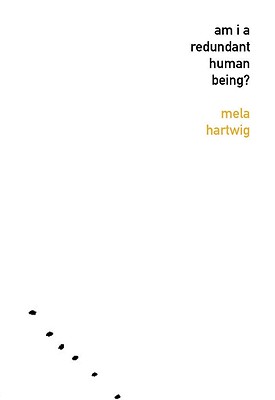
It may be that I chose to read Mela Hartwig’s Am I a Redundant Human Being? based largely upon the agreeable cover art. That, and TheMillions.com’s intriguing juxtaposition of this book with Elizabeth Gilbert’s contemporary memoir, Eat, Pray, Love. (Yes, the one that became a Julia Roberts-led feature film and spawned Gilbert’s encore, Committed: A Skeptic Makes Peace with Marriage.) From my brief intrusions into her posthumous Web presence, Hartwig appears to be most famous simply for her friendship to Virginia Woolf in the latter’s final years.

This is an apt metaphor for her short novel’s protagonist, Aloisia Schmidt, whose most notable (and verbosely related) achievement appears to be the emulation and adoration of those select few who befriend her. Fittingly enough, I, too, have fallen prey to the vice of sycophancy: I was only made aware of the parallels between Hartwig and her creation, Aloisia, after reading someone else make this very same point. Daniela Hurezanu, writing on WordsWithoutBorders.org, asks: “Isn’t the artist condemned to impersonating and copying other existences and others’ feelings? Could it be that Aloisia’s problem is that, in her own way, she is herself an artist, albeit a failed one?”

It could be, yes; hence, my appropriation and subsequent extension of Hurezanu’s observation. But I steal her point mainly because it makes sense: Hartwig, born late in the nineteenth century, became an actress and then a feminist writer, but (unless I’ve been hiding under a rock, which is entirely possible) has since been relegated to the dusty corners of history’s bookshelves, with nary a lasting honor bequeathed to her save her acquaintance with a far more notable figure.

Aloisia Schmidt, meanwhile, finds herself in much the same predicament. Faced by the suicide of Elizabeth, her friend who had fallen in love with an indifferent man, Aloisia muses, “It seemed to me that you couldn’t ask more from life than this: to be capable of such a grand passion. I no longer mourned for Elizabeth. I envied her.” Throughout, the protagonist continues to emphasize her overwhelmingly mundane features and betrays with deadpan fervor her utterly nonexistent self-esteem: “I…completely lacked that equilibrium between our talents and objectives that we call confidence.”

At one point, after she exasperates a potential suitor with her constant stream of self-deprecation, the wearied companion demands: “Why are you making it so hard to believe in you, Luise, I mean, who on earth can afford to be so hard on themselves, who? It’s hubris, Luise, to think so little of yourself.” And therein, perhaps, lies the crux of Aloisia’s dilemma: her never-ending introspection leads to an impossibly negative self-image that is, ultimately, arrogant in its totality.

I can’t say I understand Aloisia Schmidt much better now than I did at the beginning of the book, but it seems that she managed an epiphany of her own, regarding an ability to feel or something of that sort. If anything, this realization was opportune in concluding a very brief novel; I’m not certain I could have made it through another hundred pages of Aloisia’s self-pity. I presume — and hope, for the sake of the late Virginia Woolf — that Mela Hartwig did not share her protagonist’s failings.

Last call for book suggestions

Dearest blogosphere,

If you (collectively, individually, or otherwise) have any book suggestions — a book you’ve read recently, perhaps, or even one you haven’t laid eyes on in years, but that you absolutely must tell someone about — well, tell me about it. At this point, I’m all queued up through book #45 (I’m still waiting on a mystery title to add it to my “on deck” panel), so I only have five slots left for which I haven’t already decided the books.

Now is the time. As a tip, I’m more likely to pick up a book if it’s on the shorter side. Until I’ve actually completed this self-imposed fifty-book challenge, I’ll never be quite sure I’m actually going to, so it helps when the book lengths are surmountable.

Thanks for reading!

#39: The Imperfectionists

As a former employee of the International Herald Tribune and the Associated Press, Tom Rachman clearly has a soft spot for the news. Although The Imperfectionists is a novel (Rachman’s first, about a boutique international newspaper based in Rome), it is really more of a series of vignettes. These brief glimpses bring us into the editor’s office, behind the copydesk, and even to the streets of Cairo, where aspiring journalist Winston Cheung plays second fiddle to eccentric news veteran Rich Snyder, who, after regaling his protégé with embellished tales of professional glory, admonishes him not to “write about diplomacy. Write about human beings. The tapestry of human experience is my press office.” (Cheung, it is later reported, eventually procures employment at an “exotic-animal refuge in Minnesota” where, presumably, industry clichés are less in vogue.)

Each story is titled after a news headline — “Bush Slumps to New Low in Polls” opens the first chapter; “Europeans Are Lazy, Study Says” heralds another — and focuses on a different member of the newspaper. Left alone, these episodes could function separately, as portraits of news-people toiling away futilely in the face of rapidly declining readership and ever-expanding free alternatives online. But instead of taking the Paris, Je T’aime approach, in which each five-minute story stands alone, Rachman opts to eulogize the printed news a la New York, I Love You, complete with recurring characters to help center the otherwise disparate perspectives.

This only partially works. Rachman is an entertaining storyteller, and his characters are mostly believable. At times, however, his writing adopts the quixotic air of a sitcom teleplay, as when straight-laced business reporter Hardy Benjamin takes on a jobless boyfriend, reasoning that “in this regard alone, she refused to see matters in terms of business.” Or when chief financial officer Abbey Pinnola is randomly assigned the airplane seat adjacent to the man she had just fired, and ends up tangling with him in an Atlanta hotel room. If these two snippets seem to have a common thread, it’s because Rachman takes genuine delight in unlikely matchmaking; but this soon becomes an easily recognizable pattern, which then prevents the reader from actually experiencing surprise. The author’s propensity to find love (or lust) in every situation ultimately takes on a distinctly deterministic flavor, as if a romantic connection necessarily concludes every story worth relating.

Perhaps this is too American of me, but I also expected a little more on the plot side of things. The end is not entirely abrupt, but it is included with little enough context to raise doubts as to its importance. I nevertheless enjoyed Rachman concluding each chapter with a chronological history of the newspaper. I’m referring, of course, to the specific newspaper on which the novel is based, not the newspaper as a concept. Not yet, anyway.

#38: A Foreigner Carrying in the Crook of His Arm a Tiny Bomb

It wasn’t until the penultimate sentence of the final chapter that I was certain what Amitava Kumar’s latest book was trying to say. “Instead,” the author concludes, “the larger point is that the war on terror is obscuring from our sight the war in Iraq and its human cost.” Prior to this declaration, Kumar had expended 186 pages’ worth of explication, to varying degrees of success, without explicitly supporting any particular thesis.

A Foreigner Carrying in the Crook of His Arm a Tiny Bomb, whose title is a play on an earlier work with a nearly identical title (Kumar turned “book” into “bomb”), looks very much like a supplementary reader in a cultural studies class and, in fact, reads similarly to what one would expect from such a niche role. That Kumar enticed me to keep reading long after I’d given up hope on discovering the book’s raison d’être entitles the author to a small measure of genuflection, if even a bit reluctantly.

Kumar’s reflections on the American response to the September 11 attacks center around two individuals: Hemant Lakhani, “a seventy-year-old tried for attempting to sell a fake missile to an FBI informant;” and Shahawar Matin Siraj, who the author believes was “baited by the New York Police Department into a conspiracy to bomb a subway.” Interspersed throughout are various vignettes devoted to artists and intellectuals whose visceral repulsion with an increasingly militant national anti-terrorism campaign was duly expressed in some truly inventive works of art. Among these is Hasan Elahi’s rigorous self-surveillance routine, in which he painstakingly logs every action he undertakes, ostensibly as evidence in the event of a government investigation — but on a larger scale, as a protest against that very same state-directed intervention.

Kumar’s failings, strangely enough, can be attributed to his fascination with this and other tangential narratives. It is not that they are irrelevant to a sober discussion of anti-terror initiatives; however, at times the author becomes so enamored of his subjects that he neglects to take a larger view. He lingers for some time on the questionable role of the government informant in the Lakhani case, recounting his many failings as a businessman as if to prove his lack of credibility via low credit score. And yet Kumar recoils when such circumstantial evidence is used to convict Lakhani, a man who was caught on tape proclaiming that “it will [expletive] their mother if one or two [planes are struck by bombs]…If it happens ten or fifteen places simultaneously at the same time…The people will be scared to death that how this could have happened.”

The problem with focusing so heavily on character is that the same technique Kumar uses to condemn the government’s methods in pursuing suspected conspirators is doubly as effective against the perceived victims of the state’s investigations. Clearly, as evidenced by American atrocities at Abu Ghraib and Guantánamo Bay, serious crimes were committed in the name of justice. But Kumar’s valiant attempts to humanize the enemy notwithstanding, his defenses wither in the face of insurmountable evidence. Seemingly realizing this, Kumar mostly shies away from directly contradicting judicial verdicts; instead, he observes from his perch on the periphery, remarking on incongruity on the margins as the heavy hand of the state came crashing down with a vengeance.

Describing the 2008 terrorist attacks in Mumbai, Kumar notes that “what saves me from the annihilating hatred, if only for a moment, is the voice of the terrorist at the other end [of the phone conversation, which was recorded]…He is more interested in describing to his superior the rooms that he says are large and lavish. It’s amazing, he says, the windows are huge here…Rightly or wrongly, I’m caught by the drama of the displaced provincial, the impoverished youth finding himself in the house of wealth.” This all makes for a tidy little novel, but reality is rarely so neatly synopsized. By dancing along the edges of the legal process, Kumar contributes little to the discussion of where the American response went wrong. This is an unfortunate consequence caused by a writer’s compassion; the result, then, is a scattered cacophony that leaves one unsatisfied with the hurried conclusion.

#37: Super Sad True Love Story

There are many aspects of a book, aside from the text itself, that effectively preclude it from being taken seriously. It would seem that a title like Super Sad True Love Story falls squarely into this arena. Safe to say, in any case, that Gary Shteyngart is lucky to have been a known commodity before he burdened libraries and bookstores worldwide with his latest effort.

I say “burdened” not because the novel is so hard to read. If anything, the prose is easy on the eyes, and the brain. An average Shteyngartian observation is, “I just wanted to hold her. She was wearing an oatmeal sweatshirt, beneath which I could espy the twin straps of a bra she did not need.” This is actually a perfect microcosmic sentence in a way, since it also illustrates the author’s frustrating (and all-too-frequent) displays of paternalism. Time and again, Lenny Abramov, the thirty-nine-year-old love-tortured protagonist, finds himself involuntarily expressing his infatuation with Eunice Park, his twenty-something muse, through a decidedly condescending lens. “A child, just a child,” he muses as he watches her shiver from alcoholic over-consumption. Elsewhere, Lenny makes an effort to convey this thought to Eunice: “Soon you will be home and in my arms and the world will reconfigure itself around you and there will be enough compassion for you to feel scared by how much I care for you.

What say ye? Shteyngart is too self-aware as a writer to commit to such indulgent (not to mention italicized) sentences without at least the light sauté of irony thrown in. This is a man who casually remarks that “Dr. Park was landing the plane of his soliloquy,” or that “I prepared myself to become Chekhov’s ugly merchant Laptev again.” Shteyngart’s transparent ease with language renders his patriarchal episodes all the more confusing, and I’m not persuaded this ambiguity benefits anyone.

As the critical praise splotched onto the book’s back cover makes abundantly clear, Super Sad True Love Story is a satire — of contemporary American culture, our youth-obsessed society, and the vapidity of unchecked materialism. I usually stumble over faux-prophetical gazes into the future, precisely because these hypothetical apocalypses nearly always go too far. So hypnotized are many authors, by the creative license afforded them by the fiction/sci-fi genre, that they fail to pump the brakes on the less accessible elements of their vivid imaginations.

Nevertheless, in this particular case, resistance, as they say, was futile. Shteyngart’s American dystopia is littered with such head-scratchers as Credit Poles (containing “little LED counters at eye level that registered your Credit ranking as you walked by”), Onionskins (entirely see-through jeans worn by fashionable women), and the ubiquitous äppäräti, high-tech portable devices that seem to straddle the line between a camcorder and the iPhone. And yet, the ugly shades of gray that comprise Lenny Abramov’s values-depraved universe remain strikingly, even maddeningly, believable. Chalk it up to Shteyngart’s installment of the Chinese as the ascending global hegemon, or perhaps the futile American war in Venezuela that practically begs for the reference to our contemporary military expeditions in the Middle East. Whatever the reasons, the depressing world of Super Sad True Love Story retains more than enough real-life potentiality to prevent itself from being dismissed out of hand. Whether this is sufficient for it to be included in the pantheon of classic contemporary literature may, however, require a slightly further suspension of disbelief.

#36: The Mystery Guest

Grégoire Bouillier’s The Mystery Guest brings to life the despair of the disconsolate. Throughout the book, it was difficult to keep myself convinced that this was indeed a true story, a memoir of sorts, perhaps even a mini-autobiography. Grégoire Bouillier telling the story of Grégoire Bouillier.

And yet there he is, rudely awakened by the sound of the ringing telephone, knowing, as he says, “even before I was conscious of knowing,” that it was her. “It was her voice, her breath, it was practically her face, and along with her face came a thousand moments of happiness rising from the past, gilded with sunlight, caressing my own face and licking at my fingers while a thousand more like them swung at the other end of a wire.”

Lorin Stein’s translation from French serves the story well; I do not speak French, but Stein clearly captures the searing, emotive intensity emanating from Bouillier’s writing. The “her” of whom he writes is his ex-girlfriend, although subjecting her to that most mundane of labels really obfuscates the relationship’s emotional resonance. The phone is ringing, Grégoire is certain, because “she felt guilty all the time — I’d never know how guilty she felt — and maybe it was society’s fault, maybe it was the fault of her family, she didn’t know, but in the end she did the only thing she could and went off with the first man who wanted her.”

Grégoire’s stratospheric imagination is soon confronted with a far more terrestrial reality: “she was calling simply to invite me to a party — and will it never end, this continual pinching of the flesh in disbelief?” A friend, Sophie, was holding a birthday party in which Grégoire’s ex-girlfriend was selected to bring a mystery guest; hence, her call.

What follows is a heartbreaking journey into the mind. Grégoire wonders, “Was she trying to destroy me? Was she bent on my complete and utter annihilation?” This is soon followed by rapturous delight, as the lovelorn narrator stumbles onto the “realization” that “by calling me on that day…she was trying to pick up the thread of the story at just the point where it had been snapped in two, as if to say that all the intervening years had lasted a matter of seconds. And this changed everything.”

Except that it didn’t. Bouillier so perfectly and incisively captures the delusional qualities of unrequited love that he manages both to break the reader’s heart and to give his own wild-eyed musings a sharply comedic hue. One can empathize with his plight as if one with his pain while simultaneously laughing knowingly at the ancient rite of romantic devastation and recovery. Rare is the author who can pull off such a feat, and rarer still, in that the subject is himself.

What takes place at the party, and the ever more evocative moments contained therein, is for the curious reader to discover. As for me, I will be reading more from Grégoire Bouillier.

#35: Start-Up Nation

In Start-Up Nation: The Story of Israel’s Economic Miracle, authors Dan Senor and Saul Singer attempt to unravel “where [Israel’s] entrepreneurial energy comes from, where it’s going, how to sustain it, and how other countries can learn from the quintessential start-up nation.” Their goal is a noble one, and bolstered by impressive stats, such as this one: “In 2008, per capita venture capital investments in Israel were 2.5 times greater than in the United States, more than 30 times greater than in Europe, 80 times greater than in China, and 350 times greater than in India.”

The authors, in searching for the values and impulses most influential in producing Israel’s creative instincts, found an unlikely source: the Israel Defense Forces (IDF). “In the Israeli military,” they write, “there is a tendency to treat all performance — both successful and unsuccessful — in training and simulations, and sometimes even in battle, as value-neutral. So long as the risk was taken intelligently, and not recklessly, there is something to be learned.” Throughout their research, Senor and Singer return time and again to this same explanation, or some variant, to elaborate on the unique brand of innovation endemic in Israeli society.

What to internationals smacks of brazen effrontery is, at least according to the authors, merely chutzpah, that term so ubiquitous in descriptions of the Jewish people and so often bewildering to those unfamiliar with its meaning. “An outsider would see chutzpah everywhere in Israel: in the way university students speak with their professors, employees challenge their bosses, sergeants question their generals, and clerks second-guess government ministers.” As an American, this disregard for hierarchy has a certain populist appeal, especially as the much-maligned “24-hour news cycle” has helped the government metastasize into an especially cantankerous form of reality television in which competence plays second fiddle to inflammatory rhetoric.

On the other hand, at times the reasons given for Israel’s high growth look suspiciously more nationalistic than realistic. In one passage, an IDF major boasts, “If a terrorist infiltrates [an] area, there’s a company commander whose name is on it. Tell me how many twenty-three-year-olds elsewhere in the world live with that kind of pressure.” Indeed, he has a point. And yet one cannot help but notice that “the most moral army in the world” (as proclaimed by defense minister, and former prime minister, Ehud Barak) has had numerous recent run-ins leading to international condemnation (and possible criminal prosecution). Is this related to the unusually emphatic devolution of autonomy in the military? Perhaps this cannot be answered; and yet this question is left wholly unaddressed, even as the authors continually cite this very same individuality as a boon to the Israeli economy.

Start-Up Nation is a book worth reading, if for no other reason than the generous access afforded the authors by the likes of Israeli president Shimon Peres, prime minister Benjamin Netanyahu, and even American general David Petraeus. The authors’ perspective is one of nearly-unbridled enthusiasm, owing to the vibrant nature of Israel’s start-up scene and the continuing promulgation of its inventive spirit. In this latter endeavor, Dan Senor and Saul Singer join the chaotic Israeli chorus that so deftly mixes fierce national pride with a heaping helping of chutzpah. If theirs is an accurate prognostication, the best has yet to emerge from Israel.

#34: The Thieves of Manhattan

It is tempting to those of us lucky enough to live in New York to regard all other terrestrial locations with a healthy measure of disdain, concrete-jungle style. Whether these streets make you feel brand new or merely terrified of the ubiquitous tourists, one is virtually forced to concede, via self-admission or the coercion of one’s provincial fellow dwellers, that there is something special in the Manhattan air.

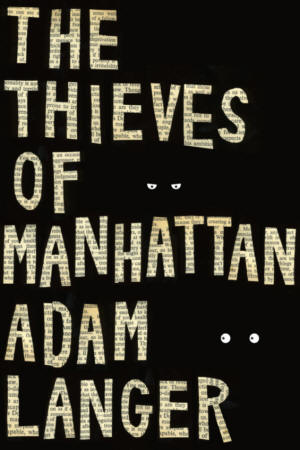
It was thus endlessly satisfying to read Adam Langer’s incurably readable The Thieves of Manhattan, a brilliant send-up of the publishing industry that eviscerates its corporate villains in the same spirit (and methodology, somewhat) with which Charlie Kaufman’s Adaptation once scorned Hollywood. As has been noted elsewhere, Langer’s prose is so hip as to require a glossary (provided in the back): franzens are “the sort of stylish eyeglasses favored by the author Jonathan Franzen;” a hemingway refers to “a particularly well-constructed and honest sentence;” to woolf is “to move as rapidly as the speed of thought.” (No word yet on danbrowning; that is, concocting a novel out of random amalgamations of nouns, verbs, and a mountain of italics so voluminous that one suspects the author has been monetarily incentivized.)

Most of the novel takes place on Manhattan’s Upper West Side. As a resident of this neighborhood, I found myself nodding with delight over casual mentions of the Hungarian Pastry Shop or 106 Bar (although I have yet to visit the latter). Clearly Langer is a man familiar with his territory.

That territory is only partially geographical. Of greater interest is the author’s irreverent poking and prodding of the esteemed literati. He labels sections with titles such as “A Million Little Pieces” and “Naked Came the Stranger,” allusions to works of literature later exposed as frauds. To Langer, the line separating fact from fiction is prime comedic material, and he clearly relishes the zigzagging trail he weaves endlessly to and fro across it.

What, then, is The Thieves of Manhattan all about? Facially, it involves a failing writer, Ian, whose Romanian girlfriend, Anya Petrescu, begins to garner the attention of publishers with her short-story collection We Never Talked About Ceauşescu. (One can almost picture Langer’s maniacal laughter as he penned that title.) Not only does Anya show literary promise, not only is her compilation “heartbreaking and beautiful and self-effacing and charming and hilarious,” but “most of all, [it was] true.” And so begins Anya’s ascent into the upper echelons of the increasingly pretentious and self-absorbed world of commercial authors, whilst Ian’s career fades ever faster.

It is at this point, near the book’s beginning, that Ian meets Jed Roth, a mysterious stranger whose intimate knowledge of the publishing industry is matched only by his hatred for all aspects of it. Roth begins to regale Ian with tales from his days as a big dog in the world of books. The longer the story continues, the more hilarity ensues as Langer embraces the genres of the cheap and gaudy in his own writing. The end of one section reads: “‘You can’t leave when I’m talking to you, Jed,’ Merrill said. ‘Of course I can,’ Roth responded. ‘Because I don’t work for you anymore.'” This is beautiful, and almost makes me want to reread some of my favorite dime-store fare. (Almost.)

I hesitate to say more, because reading this book is an experience unto itself, replete with ironic winks and over-the-top melodrama. The final section, as others have noted, goes on perhaps a few moments too long, but this hardly spoils the journey. Adam Langer has managed to wring true literature out of a terrible story, or perhaps it is vice versa. Either way, if The Thieves of Manhattan is to follow the path of all commercially successful books, it most assuredly demands a sequel.

#33: The Lovers

The Lovers is a short book. Perhaps author Vendela Vida intended it that way, or perhaps it just happened naturally given the relatively short period of time that transpires within its pages. Yvonne is a recently widowed woman in her early fifties; her husband, Peter had been killed in a car crash two years earlier. As her solitary lifestyle and dwindling social appearances in Burlington, Vermont begin to capture the attention of curious neighbors, Yvonne recognizes the need for a change of scenery.

As it happened, her now-grown children, Henry and Aurelia, were chartering a boat from Greece to Turkey; Yvonne and Peter had honeymooned in Turkey nearly three decades earlier. And so, after much reluctance, it was decided: Yvonne would travel to Datça, Turkey, to stay by herself for nine days before meeting her offspring midway through their journey.

In the meantime, Yvonne whiles away her time reflecting on her marriage — “she had decided long ago that it had been good…and after his death, it felt unnecessary to question the storyline” — and rediscovering the country she’d enjoyed with her new husband a lifetime before. During the course of her stay, we learn about her relationship with Henry and Aurelia; the former embodied the ideal of a perfect son and was virtually worshiped by his father while the latter stumbled into teenage alcoholism and suffered through her father’s emotional absence. Yvonne’s guilt is split in a million directions; following Peter’s death, “she could not admit that she took a tiny bit of pleasure in the newness of certain things — of eating breakfast food for dinner, of shoveling the snow on the front steps herself, of not having to talk about Aurelia with Peter, of not having to avoid talking about Aurelia with Peter.”

Soon Yvonne is forced to abandon her solitary confinement when she makes the acquaintance of Özlem, a younger, Turkish woman whose tales of romantic entanglements initially bore her older counterpart. This unlikely friendship is complemented by a much different one, with a young boy Yvonne sees collecting shells on the beach. Ahmet, despite being unable to converse with her, manages to bond with his older female friend in an easy manner which even the English-speaking Özlem could never replicate. Yvonne becomes Ahmet’s confidante; he, her friend.

From here, the story twists in strange and sometimes perplexing ways, as Yvonne’s internal turmoil is matched by high drama in the external world. Vida is an intricate storyteller; but even so, I found myself waiting for something to happen more often than not. It is a significant challenge to compose a narrative in which climactic events have already taken place prior to the story’s opening; and while the author makes a valiant attempt, the final product is somewhat disappointing. The Lovers ends on a curious note, leaving me with the same guilty sensation of relief Yvonne had once felt herself.

#32: The Good Man Jesus and the Scoundrel Christ

Philip Pullman’s provocatively titled The Good Man Jesus and the Scoundrel Christ is but one member of a collection of books known as The Myths Series. According to the blurb at the back of the book, this compilation “brings together some of the world’s finest writers, each of whom has retold a myth in a contemporary and memorable way.” Pullman is the author of the His Dark Materials trilogy, which includes Northern Lights, also known as The Golden Compass or the atheist rebuttal to The Chronicles of Narnia. I’m not sure whether this qualifies him as a card-carrying member of the World’s Finest Writers Club; but if The New York Times can laud John Grisham as “about as good a storyteller as we’ve got in the United States these days,” I suppose it is only fair for Pullman to have his moment in the sun too.

Of course, he earns his adulation a bit differently than the author of legal thrillers. Where Grisham imbues his characters with deeply held notions, often religiously invoked, of justice and individual responsibility, Pullman veers instead towards iconoclasm, tolerating Jesus the human while lamenting the Christianity he spawned. If you’re looking for groundbreaking material, you’ve come to the wrong place; this idea has been raised countless times before, not least of all in the thought-provoking (if a bit repetitive) biography Pilgrims of Christ on the Muslim Road, by the estimable clergyman Paul-Gordon Chandler.

It is admittedly a bit rarer to find this emotional juxtaposition expressed in such unabashedly heretical terms. Jesus and Christ as twin brothers? In Pullman’s deftly weaved universe, the former was a natural-born rebel from childhood, “getting into mischief, stealing fruit, shouting out rude names and running away, picking fights, throwing stones, daubing mud on house walls, [and] catching sparrows;” Christ, meanwhile, “clung to his mother’s skirts and spent hours in reading and prayer.”

As he approaches adulthood, Pullman’s Jesus gradually takes the comforting form familiar to Sunday school conceptualizations. However, Christ, who — at the urging of a mysterious Greek stranger — takes on the thankless role of Jesus’ stenographer, soon finds some aspects of Christ’s teachings troubling and others pedestrian. To remedy the first ailment, Christ resorts to historical revisionism, heeding the Orwellian words of his Greek mentor: “History belongs to time, but truth belongs to what is beyond time. In writing of things as they should have been, you are letting truth into history.”

The second problem was a bit thornier. Recognizing the value of organization, Christ attempts to persuade his brother to embrace something resembling a formal movement. Jesus rebuffs him, however, preferring his spontaneous charisma to what he perceives as the stolidity of an intellectual bureaucracy. Fortuitously, the approval of Christ’s enigmatic tutor allows for a bit of creative license. Thus, when Jesus scolds Peter for his belief in him as the Messiah, Christ writes instead that “Jesus had praised [Peter] for seeing something that only his Father in heaven could have revealed, and that he had gone on to make a pun on Peter’s name, saying that he was the rock on which Jesus would build his church.” (The Catholic Church should be duly horrified.)

As Christopher Hitchens notes in his review in The New York Times, Pullman is attempting to make explicit the divorce of Christianity from its roots. But the end result reads a bit like tracing the cause of a marital infidelity back to the couple’s lack of a Foreman grill. Christ, at times, substitutes for the devil, a journalist, and, weirdly, Judas Iscariot; in none of these roles does he truly take on any symbolic meaning. Philip Pullman has found and refashioned his myth of choice, with the primary corollary of further clouding Christ’s position within an already complex historical tradition.