All posts by Jay Pinho

About Jay Pinho

Jay is a data journalist and political junkie. He currently writes about domestic politics, foreign affairs, and journalism and continues to make painstakingly slow progress in amateur photography. He would very much like you to check out SCOTUSMap.com and SCOTUSSearch.com if you have the chance.

Happy new year

For those of us who measure the passing of time by the first pitch of successive baseball seasons, our annual celebration is now upon us. Tonight, the boys of summer return. Even better for those of us who plead allegiance to the vaunted red B, they will descend upon Fenway Park in Boston, where the hometown Red Sox host the World Series champion New York Yankees. (My fingers nearly mounted a mutiny as I finished typing that sentence.)

With a pitching rotation that includes newcomer John Lackey, Josh Beckett, and Jon Lester as the first three starters, the Sox are looking to be a team of solid defense and great pitching. For the first time in recent years, however, Boston’s lineup is looking vulnerable. We’ll need either a few career performances from unexpected players, a major acquisition sometime prior to the trading deadline, or both. For many years, the Sox used to be a team built to make it to the playoffs but without the depth to last once they got in. This year they may have the opposite problem.

Tonight, at 8:05 PM, be near a TV. Josh Beckett. C.C. Sabathia. Red Sox-Yankees at Fenway Park. And happy new year.

#16: Americans in Paris

Americans have long been fascinated with World War II. There are many reasons for this, not the least of which is the United States’ outsized self-portrayal as the conflict’s deus ex machina. However, Charles Glass’ new book, Americans in Paris: Life & Death Under Nazi Occupation, is not merely another ode, in a long line of them, to American wartime heroism. Indeed, it is the moral ambiguity of many of the book’s real-life subjects and their actions that separates this work from the neatly packaged pop culture depictions that characterized, say, the fictional Band of Brothers. (I write this as someone who enjoyed that series and is currently an avid watcher of The Pacific. However, while these series’ entertainment value is indisputable, their historicity is dwarfed by meticulously researched non-fiction.)

Glass, ABC News’ former chief correspondent for the Middle East, has compiled a moving portrait of life on the ground in Paris during the German occupation. Even in borrowing from a wide array of sources, the author admirably pieces together the war years’ disjointed fragments and transforms them into complete narratives. As vignettes within the overarching theme of Paris in the war-torn early 1940s, they combine to form a panorama of a world-class city brought almost, but not entirely, to its knees.

Notable amongst the ensemble cast are Sumner Jackson, a surgeon for the American Hospital in Paris whose dedication to his craft was matched only by his devotion to the Allied cause; Clara de Chambrun, caretaker of the American Library of Paris and detester of both the Nazi invaders and the French résistants; and Sylvia Beach, proprietor of the bookstore Shakespeare & Company and tireless friend of literary giants James Joyce and Ernest Hemingway. But by far the most complex and perplexing character is Charles Bedaux, introduced here as “le millionaire américain.” His business exploits, fueled by an entrepreneurial spirit that launched him to wealth and status as an “efficiency engineer,” consumed all his energies and, eventually, himself.

Although born in France in 1886, Bedaux was naturalized as an American in 1917 and quickly went to work establishing himself as a consultant. While living in St. Louis, Bedaux had an epiphany: “‘I soon found that engineers had assigned units of measurement to power of all sorts — fuel, water, electrical. Why, I wondered, couldn’t a wholly scientific and mathematical measurement of manpower be ascertained?'” As Glass then goes on to explain, the narcissistic Bedaux soon created just such a unit of measurement, and dubbed it the ‘B’ unit, for ‘Bedaux.’ What the businessman lacked in tact, however, he more than compensated for in ingenuity, as his modification of Charles Winslow Taylor’s efficiency methods led to Bedaux’s ascension to the upper rungs of not simply the American, but also the European, social ladder.

It was Bedaux’s association with unsavory individuals and regimes that eventually led to his demise — socially, financially, and even physically. Ultimately, his failures could be traced to his underlying philosophy, an either amoral or immoral worldview (depending on the reader’s own) that found its simplest expression in Bedaux’s own words: “‘A man loves his country. He makes laws for the glory of the flag. He traces the outline of a national ideal he would like to live up to, but his stomach, his need for trade are essentially international. He is a patriot, and a sincere one, but when his money is concerned, he blissfully commits treason.'” Such unabashedly self-interested sentiments, while easily in keeping with modern corporate behavior, are nevertheless as shocking to read openly in a book as they must have been when they were first enunciated decades ago.

And yet the actions of Charles Bedaux were not, in any strict sense of the term, treasonous. (As Charles Glass notes, Bedaux was guilty of “trading with the enemy,” however.) In fact, as the reader discovers late in the book, the ever business-minded Bedaux did take sides in ways that were not immediately apparent as the war dragged on. History is a harsh arbiter, and what made sense at the time will be dissected in ivory towers and living rooms for generations. Perhaps this is the lesson learned from the arguably collaborationist activities of Clara de Chambrun’s son and his wife as well. Indeed, there are innumerable aspects of wartime decision-making that eventually become permanently etched into lore as gallantry or cowardice, loyalty or betrayal. But in these delicate moments, in which every second marks the making of history, one’s legacy is hardly a consideration.

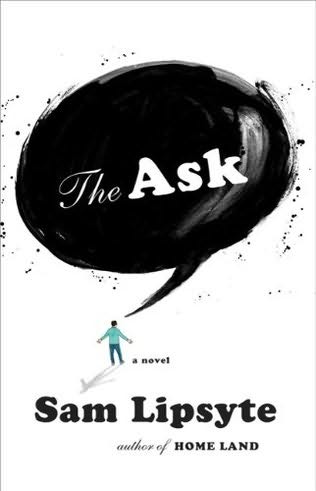
#15: The Ask

I’m not exactly sure what The Ask was about. The first sentence reads, “America, said Horace, the office temp, was a run-down and demented pimp.” Later, describing the apartment rented by Don Charboneau, the long-estranged son of the protagonist’s college friend: “He had never owned much, but now he was down to the card table, one folding chair, a saucepan, some smudged water glasses, a spoon. Papers lay curled under the radiator.” Sam Lipsyte, the author, celebrates these adjectives of derision (“run-down!” “demented!” “smudged!” “curled!”), even revels in them, and the result is a viscerally repulsive read.

So where was I? Oh, right: the protagonist. That would be Milo Burke, development officer at…well, we don’t know where. This is because, unfortunately, Lipsyte decided to leave the narrating to this pathetic little man, who apparently felt that revealing his university’s identity would be anathema to his nihilist philosophy. (I’m being generous, of course; there’s no way Milo actually has a discernible philosophy.) Thus, we are left with a story of a man whose wife is having an affair, whose job is never really gone after his firing and whose firing is always imminent when he is actually working. Along the way he rekindles a friendship with Purdy Stuart, an old friend from college. The renewed relationship is one of subservience, however, as Milo is actually recruiting Purdy to donate a large sum of money to the university, a task whose outcome will determine Milo’s fate as a development officer. Unfortunately, I could not bring myself to care. Maybe this is because of sentences like, “It might sound ridiculous now, but he had been one of the first to predict that people really only wanted to be alone and scratching themselves and smelling their fingers and staring at screens and firing off sequences of virulent gibberish at other deliquescing life-forms.” Perhaps there is nothing technically wrong with this sentence, other than the fact that it is not interesting. But isn’t that reason enough to stop reading?

Unfortunately, I have trouble putting a book down once I’ve started it: the economic logic of sunk costs has never really penetrated my actual decison-making processes, so I struggled on. I read of Milo’s increasingly strained relationship with his wife; apparently home life becomes somewhat awkward following the revelation of an affair. Persevering readers will also find more about Purdy Stuart, who continues to hang out with old college buddies, literally paying to keep them around, as he fights his way through a present that he never wanted by pretending that the past has yet to end. In other words, Purdy is dealing with a slightly more acute version of the notorious phenomenon known as mid-life crisis.

Perhaps I’m being overly harsh. Parts of The Ask were humorous or even touching. But Lipsyte’s unwillingness to take his own writing seriously undermines his readers’ ability to fare any better, and his overemphasis on dialogue leaves his characters looking and feeling like half-finished caricatures of real people. Some of the basic elements of humanity are there, but you have to squint really hard and ignore the glaring omissions. At some point, it becomes easier to just give up. Considering the fact that Milo Burke has already reached this point by the beginning of the book, anyone who manages to finish reading The Ask deserves a pat on the back simply for finishing ahead of its protagonist.

#14: The Post-American World

Fareed Zakaria is a very reasonable man. In this sense, the contrast between him and the rest of mainstream American punditry is stark indeed. Coming from anyone else, a book with the title The Post-American World could plausibly entail an exercise in sensationalist doomsday forecasts; from Zakaria, we know that such is not the case. Some conservatives and patriots may disagree with the book’s contents, but it is impossible to dismiss as a self-loathing work of anti-nationalism.

Zakaria has the distinct privilege of combining his position of respect and influence within the court of American public opinion with the nuanced perspectives he has gained from his initial outsider status. In 1982, the author was an eighteen year-old Indian student on a flight to the United States, about to embark on a four-year educational journey in a country where he would eventually settle. “The preceding decade had been a rough one in India,” writes Zakaria, “marked by mass protests, riots, secessionist movements, insurgencies, and the suspension of democracy.”

But something has happened since then — in India, in China, and in many other nations as well. Zakaria calls this something “the rise of the rest,” as “countries all over the world have been experiencing rates of economic growth that were once unthinkable.” Unsurprisingly, given the title of his book, Zakaria is not merely interested in this economic phenomenon as a historical anomaly, but also as an indication of America’s rapidly changing role in the new era. In this, our twenty-first century edition of a brave new world, “the distribution of power is shifting, moving away from American dominance. That does not mean we are entering an anti-American world. But we are moving into a post-American world [emphasis in original], one defined and directed from many places and by many people.”

Instead of wallowing in national self-depression, however, Zakaria welcomes this new period. He notes that the American share of global GDP has remained relatively constant for decades; and he elucidates the truths hidden behind the alarmist (and often misunderstood) statistics about American decline. But while Zakaria’s prognostications leave plenty of space for a bright future, his is not a utopian vision unencumbered by hard facts. (One notable exception is his diagnosis of the American economy: “The economic dysfunctions in America today are real, but, by and large, they are not the product of deep inefficiencies within the American economy.” The first edition of his book was printed in April 2008, just months before the economy bottomed out; a later paperback edition included a new preface predicting that “the current economic upheaval will only hasten the move to a post-American world.”) Indeed, Zakaria levels criticisms in a variety of areas, decrying the United States’ “highly dysfunctional politics,” acknowledging that “the American school system is in crisis,” and dubbing the nation an “enfeebled” superpower. In his final chapter, “American Purpose,” Zakaria asks, “How did the United States blow it? [It] has had an extraordinary hand to play in global politics…Yet, by almost any measure…Washington has played this hand badly. America has had a period of unparalleled influence. What does it have to show for it?”

That is a question whose answer will depend on the person, but Zakaria’s prescription for American healing, while hardly groundbreaking, is based in historical precedent: more multilateralism. Contrary to some who argue that idealism is always the refuge of lesser nations while realpolitik is embraced by hegemons, Zakaria points out that the United States “was the dominant power at the end of World War II, when it founded the United Nations, created the Bretton Woods system of international economic cooperation, and launched the world’s key international organizations. America had the world at its feet, but Franklin Delano Roosevelt and Harry Truman chose not to create an American imperium.”

Interestingly, Zakaria’s ideas have found traction in the administration of President Barack Obama. The results are mixed: Obama’s extended hand to Iran was met with a clenched fist and the Palestinian-Israeli conflict has been left largely unaffected, but Obama was able to broker a deal between the heads of the Chinese and French states at the G-20 summit, and the United States and Russia recently finalized a nuclear arms reduction deal. It remains to be seen exactly what will follow from the American presidency’s renewed emphasis on diplomacy, but early returns indicate some potential for positive results. We may live in a post-American world, but if Fareed Zakaria has any say in the theater of global politics, the United States will be far from playing a bit role.

#13: The Informers

The Informers is a case study of words: words uttered carelessly, meaningfully, traitorously. It concerns itself with not only the interpretations, but also the appropriateness, of these words, of rhetoric itself, and in so doing questions the way we write and understand histories.

Yes, histories. What Juan Gabriel Vásquez has constructed is a web of intermingling stories, centered on the World War II era and thereafter in Colombia. These narratives alternatively corroborate and contradict; even in recounting the same events, one’s telling is always somewhat different from another’s. Calling on historical orators — from Demosthenes to Jorge Eliécer Gaitán — the author draws attention to the lasting and powerful effects of speech and memory on the lives of those who have spoken and heard.

On the surface, The Informers is the tale of Gabriel Santoro, the son and namesake of a venerated Colombian rhetorician, and his stubborn attempt to recapture and reassemble the missing pieces — the deliberate omissions and deceptions — from his late father’s life. Much of Gabriel’s (the father’s) story is related by a lifelong friend: Sara Guterman, a Jewish German emigré whose father was among the lucky few of his compatriots to successfully invent a new life in Colombia, was instrumental in helping Gabriel (the son) put together the various components that comprised his father’s life.

What is reality to one is fiction to another, however, and it is soon apparent that the son understood very little of the truth of his father’s past. Deep in the throes of an apparently life-ending illness, the senior Santoro tells his son, “Memory isn’t public, Gabriel.” This proclamation is indirectly the result of the dying man’s scathing review of his son’s book, A Life in Exile, which chronicled the life story of Sara Guterman and the struggle of German immigrants to find acceptance in a Colombia beset with war-heightened xenophobia.

The son, however, feels differently than his father on the subject of remembering. Meanwhile, Sara remains almost indecipherable, seemingly ambivalent at times, suspended as she is between the imperative to record a tragedy for posterity and the loyalty she feels to a lifelong friend. What is left in the end is Gabriel the younger’s version of events, a retelling of past cowardice that suggests a personal betrayal of its own. The Informers is neither a political nor a journalistic endeavor, but the ideas within resonate in both arenas, as Vásquez masterfully shoves the public and private spheres into an uncomfortably small space. The result is an unsettling, and highly relevant, set of difficult questions. In an era of unprecedented media ubiquity and the much-ballyhooed shrinking of personal privacy, The Informers provides no easy answers, but at least it has done us the service of starting a necessary conversation.

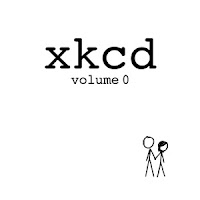
Bonus (#1101): xkcd

Randall Munroe is living the dream. True, his is a different fantasy than most — as children, many of us hope to become, say, astronauts, whereas he actually quit his NASA job to follow his childhood dream of drawing comics — but this hardly detracts from his story’s natural charm.

Charm? Maybe that’s not the right word. xkcd: volume 0 is many things to many people (and possibly everything to computer engineers), but its edgy content largely precludes “charming” as an accurate descriptor. (Unless you happen to be a computer engineer, in which case you don’t likely read blogs anyway.) Munroe trains his comedic laser on targets near and far, concrete and abstract, some obvious and others esoteric. In one strip, he muses on the awkwardness of having “to suppress the weirdest thoughts” when meeting a girlfriend’s family: “Hi! It’s so nice to finally meet you!” proclaim her stick-figure relatives, while he mentally relives their sexual exploits. Earlier, he draws a tri-circular Venn diagram with the labels “people who can always make me smile,” “people who constantly show me new things to love about the world,” and “people I want to spend the rest of my life with.” In the overlapping space of all three circles is written “you;” in the space shared by the latter two, “Vanilla Ice.” The sentiment feels oddly autobiographical.

Although Munroe’s writing caters to the nerdy elite — as one representative example, the book includes a joke about the author being barred from major cryptography conferences for various behavioral flaws — a good portion of the humor is comprehensible to the non-techie crowd (in other words, those for whom the word “python” conjures snake imagery and not if-elseif statements). This is true even though, for example, Munroe numbers his book’s pages with a binary-derived system that has already spawned entire Web pages devoted to its formula. Ultimately, it is the sheer randomness of the book that produces the most laughs, as when a particularly inventive soul poses with a chess board (complete with glued-on pieces) on a roller coaster for a souvenir photograph, or when lyricism is employed in a flowery ode to things banal or cliched (“center, silken sheets sensuously caressing soft skin, contentedly sleeps your mom,” reads one moving passage).

Admittedly, a large part of xkcd‘s allure is its applicability to reality. “The Problem with Wikipedia” portrays an online journey beginning with a Wiki-article on the “Tacoma Narrows Bridge” that eventually results, “three hours of fascinated clicking” later, in reading on everything from “William Howard Taft” to “Lesbianism in Erotica.” A similar chord is struck with a pie chart displaying “profanity usage by cause:” overshadowing the small slices comprised of “injury,” “irony,” “misc,” and (nerd joke alert) “segfaults,” is the largest slice: “Mario Kart.” Each strip is accompanied by microscopically-sized bonus text; for this last one, the comment reads, “You can evade blue shells in Double Dash, but it is deep magic.” (As someone who remains largely abstinent from video games, I’ll have to take his word for it.) And then, there are some pages that simply reverberate for those of us with sadistic tendencies, as in “My Hobby: Appending ‘No Pun Intended’  to Lines with No Puns in Them.” 

xkcd: volume 0 has the look and feel of a coffee-table staple, but its content prohibits it from occupying such a treasured position in, say, an overly dignified household or anywhere in close proximity to young children. This is really too bad for those baby boomers and others who may miss much of xkcd‘s comic value; fittingly, their incomprehension of the book’s irony is best described using Randall Munroe’s own words: “epoch fail.”

A brief digression

I’ll be honest: I love to rip on the media. My frustration is neither strictly ideological — although, as an avid New York Times reader, my jabs tend to come from somewhere around center-right — nor completely random, but this current explosion is admittedly a bit out of left field.

I love Nomar Garciaparra. An All-Star shortstop for the Red Sox and a baseball icon for the youth of Boston from the moment he first stepped onto Fenway’s glistening diamond in 1996 until his contentious last days in the summer of 2004, Number 5 was the king. His obsessive-compulsive batting rituals, mysterious middle name (you mean you didn’t know his first name was Anthony?), and searing line drives were tailor-made for baseball-mad New England. Comparisons with Ted Williams became ever more frequent; in 2000, Nomar flirted with a .400 batting average. He graced the cover of Sports Illustrated, and soon suffered from its notorious curse; the ghost of Al Reyes (who joins Sox fans’ eternal blacklist, along with Grady Little) haunted him and eventually derailed his 2001 season. He was never the same afterward, but still we loved him.

Then came 2004. Or that’s what certain members of Boston’s sports-writing elite would have us believe. In reality, the rapid downward spiral of Nomar’s time in Boston began in the winter of 2003, when rumors were swirling as to the possible acquisition of Alex Rodriguez, then the shortstop for the Texas Rangers. The persistence of the public speculation was a slap in the face to Garciaparra, who’d played for his entire career with an intensity and vigor that stood in stark contrast to the lackadaisical approach of fellow Sox superstars Pedro Martinez and Manny Ramirez. Nomar ran hard on every play, whether at bat or in the field; his numerous throwing errors were usually a result of attempting spectacular plays that most shortstops could never have attempted.

So it was understandable, then, that his attitude heading into the 2004 baseball season, immediately following his seventh full year with the Sox (he was on the All-Star team in five of those years), was less than amiable. If Nomar had a fault, it was not comprehending the nature of the beast that is the Boston sports media. And no one embodied this vindictive spirit more than Dan Shaughnessy of the Boston Globe. This was the same guy who once criticized Sox outfielder Carl Everett so vociferously that the player famously dubbed him the “curly-haired boyfriend” of Gordon Edes, a fellow (far more talented) baseball writer for the Globe. To this day, members of online Red Sox forums still refer to Shaughnessy derisively as “CHB.”

During the summer of 2004, Shaughnessy and several of his colleagues from Boston media outfits — notably including the then-novel bostondirtdogs.com, which at this moment has a sub-headline that reads “The Nomar Phonyfest Is Now Over, Everyone Go Take a Steaming Hot Shower” — went to work ruining the stellar reputation Garciaparra had nurtured over his long and illustrious career. The coverage launched a vicious cycle, as Nomar became more disillusioned with perceptions of him as a lazy and uncommitted player — allegations that, up until that season, were unthinkable — and the media caught on to his frustrations, perpetuating his misery. When he was finally traded just before the deadline in July 2004, his departure was heralded as the relieving end to a burdening era. Boston’s World Series triumph just three months later — its first in eighty-six years — appeared to lend credence to the view that Nomar had been expendable at best, a serious detriment at worst.

Fast forward six years. Nomar has just announced his retirement, and in a move that prompted a wave of hardball nostalgia for me and thousands of other like-minded fans, signed a one-day minor league contract with the Red Sox. “I’ve always had a recurring dream,” Nomar said, “…to be able to retire in a Red Sox uniform, and thanks to Mr. Henry, Mr. Werner, Mr. Lucchino, and Theo [Epstein] and the Red Sox organization, today I do get to retire, I get to fulfill that dream and retire as a Red Sox.”

Nomar, then, has achieved his dream of retiring with the team, and the city, that has always adored him. In response, the Boston media — and Dan Shaughnessy especially — have taken to excoriating him once again. His crime? Although they’d never admit this, it is only Nomar’s disinclination towards engaging the media that eventually led to the demise of his public image in Boston. Unlike Pedro, who embraced his larger-than-life role in Boston sports, or Manny, who was seemingly oblivious to it all, Nomar was actively uninterested in burnishing his reputation through exclusive interviews and media hobnobbing. This would cost him dearly.

On March 11, Dan Shaughnessy wrote a column which began, “Great player. Total fraud. Welcome home, Nomie.” His unfounded vitriol underscored his own prejudice and, even worse, highlighted his ignorance of that intangible factor that makes baseball so transcendent: the heartfelt connection between a player and his fans. Unlike members of rock bands, or politicians, or any number of other public figures, a hard-nosed and talented baseball player like Nomar Garciaparra has the potential to capture the hearts and minds of millions and remain in their memories for a lifetime. Dan Shaughnessy and his vindictive cohorts will be long gone before the echoes of Nomar Garciaparra’s legendary years in Boston ever fade from the city’s collective consciousness.

Welcome home indeed, Nomar.

#12: You Are Not a Gadget

“The words in this book are written for people, not computers.” So declares Jaron Lanier, in the preface to his self-described “manifesto” on the impending doom of Web 2.0 and its digital companions. In You Are Not a Gadget: A Manifesto, Lanier confronts the brooding technological nightmare with revolutionary fervor, decrying with gusto the horrifying destructive potential of…of…of Wikipedia. In what amounts to an elegy for the creative spirit, Lanier warns against the dangers inherent to the “hive mind” by lashing out against humanity’s self-imposed subjugation to technology.

Let’s be fair here. Lanier seems like a smart enough guy, even if his choice of hairstyle — he appears on the book’s flap in a thinker’s pose, with his dreadlocks running past chest level and on to the great beyond — is more suited to an aspiring grunge artist than an Internet visionary. Fittingly, then, he actually enjoys playing the oud and even frequents an online forum that serves as a virtual community for the instrument’s fan base. Of the forum, he says, “There’s a bit of a feeling of paradise about it. You can feel each participant’s passion for the instrument, and we help one another become more intense.”

Indeed, Lanier’s intensity — his passion for rescuing the individual voices from the clutches of impersonal cyberspace — is to be admired, even if the object of his rigor is perplexing. His thesis, that the digital era’s explosion has created ways of thinking about and interacting with technology that portend disaster down the road, is not particularly convincing. And while he could never be accused of boring his readers, one could easily charge him with alarmism.

The author ably explains the dangers of “lock-in,” the process in which an arbitrary digital convention — organizing computer data into virtual files and folders, using MIDI as the industry standard for digital music representation, etc. — becomes so ingrained in culture and thought that it is nearly impossible to reverse. What Lanier never quite masters, however, is just why certain accepted standards, most notably the open-source movement and crowd-sourcing, are so malignant. Technology’s purpose, he lectures, is to adapt to and serve human beings; he worries that the sudden and widespread advent of the Internet has given rise to the opposite being the case, as we have now become willingly subservient to machines, adapting to their whimsies instead of demanding tools that do not require a degradation of human intelligence.

It is in this vein that he alludes to Wikipedia, a site he admits to using himself but whose implicit founding principle — the more contributors, the more closely we approach truth — he derides with vivacity. “The ‘wisdom of crowds’ effect should be thought of as a tool,” Lanier writes. “The value of a tool is in accomplishing a task. The point should never be the glorification of the tool…There’s an odd lack of curiosity about the limits of crowd wisdom.” He has a point, but not much of one. It is true, for example, that, as Lanier notes, most breakthroughs in modern technology have been delivered under the auspices of for-profit corporations (i.e. Microsoft Windows, the iPod, digital camera, etc.). And that such innovations are sorely lacking in the domain of open-sourcers is cause for reflection, although not necessarily concern.

However, what the author consistently misses (or perhaps chooses to ignore) is the innate ingenuity of human beings, regardless of their provided tools. In a section discussing the impact of the file-sharing era on musicians, Lanier writes, “If we choose to pry culture away from capitalism while the rest of life is still capitalistic, culture will become a slum.” Above all, he is concerned with our collective loss of free spirit, but he fails to notice, for example, the consistent ability of the young to bypass and defeat ever more stringent regulations by those in the business of enforcing digital rights management. First, there was Napster; after being brought low, it emerged as a legal, paid music service. File-sharing clients sprouted up one after the other, with new entrants following quickly on the heels of those brought to an end via litigation. Even Radiohead’s novel idea of giving away music for free, which Lanier claims does not “fill me with hope for the future,” is actually proof that people are continuing to exhibit an entrepreneurial spirit by forming new and inventive solutions to existing problems. These are not the products of unqualified and inexpert crowds, but the brainchildren of creative, ambitious individuals. Jaron Lanier may not be a Luddite, but his dire warnings of future doom are a bit anachronistic. I can only wonder what he’d think of the iPad.

Just for fun…

…I’m throwing in an essay I recently submitted to some newspapers and the National Enquirer. (Just kidding, but it is actually in contention for a Pulitzer this year, for which it must eternally thank John Edwards.) Disclaimer: I have no particularly headstrong feelings for or against Google Buzz or any other social networking sites. (For more information, please message me, poke me, and invite me to a ninja battle on Facebook.)

Anyway.

* * * *

I’m an amateur Google Buzz user. On occasion, in the few days since its inception, I’ve been known to post a pithy little message from work, or share a link to a humorous news story. In short, I’m fairly representative of the hundreds of millions of people who regularly use social networking tools to stay in touch. Thus, when it became clear that Google’s Buzz team had not given privacy concerns enough consideration, I was among the legions of the disaffected, and I joined countless others in denouncing the search giant for the flaws in its ill-conceived product. Most concerning to many of us was the fact that the service, by default, allowed others to view our contacts, which could only be prevented by manually opting out.

However, unlike much of the online community, I am reluctant to extend my criticism of Google beyond this specific faux pas into the gray area of online privacy as a principle. In fact, a healthy chunk of the vitriol directed toward Google seems disingenuous, if not hypocritical.

As a loosely knit collective, we Web users – and especially those of us active in the social networking sphere – have, in effect, subscribed to an alternate society. Ours is a community in which shared friends, values, and interests precipitate shared information. When a group of college buddies goes skiing over Christmas break, the vacation is immediately virtually enshrined as a Facebook photo album. A food critic alerts the world about a restaurant’s new dish via Twitter. An up-and-coming band builds a fan base by posting music on MySpace, long before it signs a record deal.

And that’s just counting self-submissions. Ever since increasing bandwidth and cheaper storage spawned the explosion of Picasa, YouTube, and a variety of similar services, even those of us who’ve eschewed online schmoozing have been subject to frequent invasions of privacy. These violations range from the trivial – an embarrassing picture of someone asleep on a train – to the truly significant, as when job-seekers are denied a position due to pictures others have posted of them after one (or two, or three) too many drinks.

That such practices persist is a testament to the ubiquity of resources designed for the purpose of self-expression. Much has been made of the so-called digital era, a period that has seen, among other things, the blink-or-you’ll-miss-it rise and fall of Internet celebrities, individuals whose entire narrative arcs have been circumscribed by the medium that created them. As an enormous online neighborhood, we have smiled along with adoring parents who film their crying babies for posterity, perused blogs for gossip on public figures, scorned those caught in disgraceful acts, and even learned how to surreptitiously keep up with the Joneses without the hassle of actual communication.

And in so doing, we have embraced an implicit standard in which opting out, rather than in, must be chosen manually if we wish to safeguard our real-life identities. Yes, Google overstepped a boundary when it revealed its users’ online relationships via Buzz, but by joining the service we had voluntarily sacrificed a shroud of protective anonymity anyway. We had stepped into the circle of shared experience and then recoiled in horror when the net effect was – shudder – to bring us closer together.

After all the negative press Buzz received, Google promised immediate improvements, none more welcome than the switch from auto-follow to auto-suggest, a change requiring users to specifically select (or opt in) those whom they wish to follow, rather than Google picking for them. I welcome this change. There are many legitimate reasons for restricting the compromise of personal identity on the Internet, ranging from safety to preference and much else besides. But while we rightly concern ourselves with the proliferation of our lives’ digital fragments, it may be that we are fighting a losing battle to standardize an opt-in default in a community from which we refuse to opt out.

#11: The Curious Incident of the Dog in the Night-Time

I have just learned something: there does not seem to be a character limit on blog post titles. If for no other reason, British author Mark Haddon’s novel, The Curious Incident of the Dog in the Night-Time, has been helpful in this regard. (In the spirit of generosity, I will also attest to Haddon’s wisdom in neglecting to include a subtitle.)

Fortunately, the virtues of this work extend far beyond its function as a test of software capabilities, as Haddon lends a powerful voice to a mentally disabled boy living in England. At once a mystery novel and a compelling journey into the mind of a very unique child, The Curious Incident is savvy enough to allow the reader wide room for interpretation while still relating an extraordinarily accessible tale (and in the first person, no less). Christopher John Francis Boone is an autistic child living with his father in Swindon. (In an interview, the author preferred to define the protagonist’s condition somewhat more ambiguously, stating that “there is a very true sense in which there is something more wrong with the people around Christopher than with him.” A bit trite, yes, but not without validity.)

Throughout the course of the story, it becomes obvious that — surprise, surprise — not all is as it seems in Christopher-land. And yes, it is as if he inhabits an alternate world, likely one of his own making or, at the very least, bounded by the despotic tics that frequently shut down both his mental and physical faculties. When composed, however, Christopher is something of a math prodigy, and his embrace of sheer logic (however illogical his idea of rationality may be) is as heartwarming as it is frightening. In a rather characteristic example, Christopher postulates on the difference between his memory and the imagination of his peers: “Other people have pictures in their heads, too,” he writes. “But they are different because the pictures in my head are all pictures of things which really happened. But other people have pictures in their heads of things which aren’t real and didn’t happen.”

Like many children, Christopher is often funny without intending to be, but his limited mental agility renders his many evaluations of his experiences extremely affecting. It is not what he takes note of, but instead what he does not, that exudes the beauty and sadness of a life lived within the constricting walls of mental illness. And in a strange way, Mark Haddon’s seemingly cliched remark about Christopher is spot-on: the childlike gravitation towards (il)logical deduction provides a far more elegant form of commentary than do the voices of those surrounding him. Christopher concludes his journey secure in the knowledge that “[he] can do anything.” Readers will have little trouble believing that, but Mark Haddon’s challenge with his next novel will be attempting to live up to Christopher’s high standards.