Sam: After last week’s action-packed (we’re speaking relatively here) episode, this week’s episode dragged on through a whole bunch of relationship crap. From the get-go, we’d see Phil and Elizabeth give each tired looks of annoyance or sarcastic comments about their living situation.
Am I surprised? Nope. I didn’t really expect one decent episode to make things all better to begin with. One of the few positives of the show, though, is that Stan is solidifying his place as the best actor/character on the show. The way he hunts down people (including Phil, even in a sort of drunken stupor) leads him eventually to what the KGB hopes is the end of the Amador trail.
I thought his scene with Nina was particularly telling of where his priorities lie. She asked him who killed Vlad, and he responded multiple times with “I don’t know.” He even added, “If I find out something, I will let you know.”
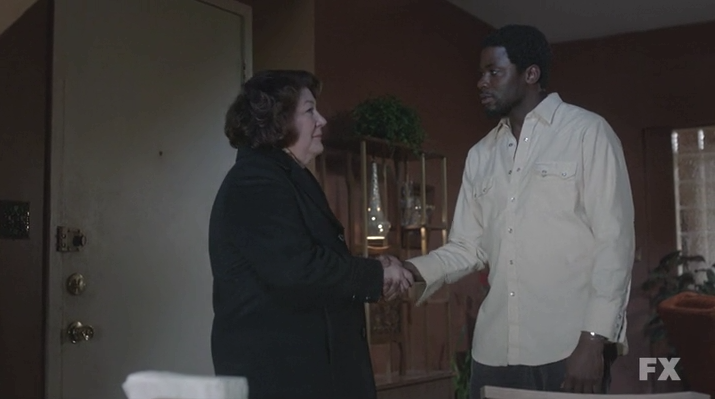
Now, contrast that with Elizabeth’s closing scene with Gregory before she (and Phil) let him walk out the door, even while both hold guns ready to take him down. For someone who’s supposed to be steely and unforgiving, she seems to hesitate whenever she has a personal connection (i.e. Timoshev in Episode 1).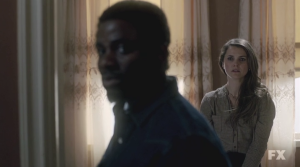
Which leads me to the part where Gregory ends up doing what he says and gets into a shoot out with police. Doesn’t the KGB/Granny know now that Phil went against their orders to do what he knows he’s “supposed to do”? Or did they just not care?
What did you think of this episode?
Jay: I’m actually excited this week because, for the first time in quite awhile, we have substantively different opinions on an episode of The Americans! It’s nice to actually have something to discuss for a change, instead of our usual wholehearted agreement on how subpar each episode generally is.
Speaking of things that are subpar, I want to briefly touch on something we’d discussed after Episode 9. In that review, I said, “As for what comes next, I’m most curious about Stan’s relationship to the FBI. What scares me most is that his extrajudicial execution of Vlad will be summarily dispensed with in the next episode’s first two minutes, and all will continue as usual as if it were a simple tantrum that everyone will get over. I hope that doesn’t happen — because if it does, that’s hopelessly unrealistic.”
To which you presciently responded: “Unfortunately, I fear what we do not want to see is exactly what will happen. We’ve seen it happen before (that I can’t remember exactly when speaks to the fact that they did not make what seemed like a huge moment very memorable).”
So…yeah. That happened. Are we just too young to understand the brutality of Cold War counterintelligence, or (as seems to me) it’s just unrealistic to assume that a high-ranking FBI officer such as Agent Gadd would be unperturbed by the extrajudicial execution of an innocent person? Again, it’s not as if this were the CIA: it’s the FBI, an ostensibly domestically-focused organization. I just have a hard time believing events would have transpired as they did.
Like you, some of this episode’s moments felt contrived to me as well. I eye-rolled a little to myself after Stan came knocking on Phil’s hotel room door, and even more so after the conversation switched immediately to the death of Amador. There is just no logical reason to believe that a seasoned FBI agent would be so free-wheeling in his discussions of intra-agency topics with outsiders, even if they didn’t happen to be Soviet agents.
Nevertheless, carrying over from last episode, which noticeably sped up the pace of action, I felt that this one did a decently good job of driving the story forward. Particularly interesting to me was the standoff with Elizabeth, Phil, and Gregory in the hotel room, in which each character was conflicted between competing interests in one way or another. Phil would have been glad to be the one to kill Gregory, but ironically was still too in love with Elizabeth to do it in front of her. Elizabeth was torn between her loyalty to her country and her loyalty to Gregory. Gregory himself seemed to agonize the least of the three: he knew what he had lived for, and he knew his time had come. Going to Moscow was never really an option for him.
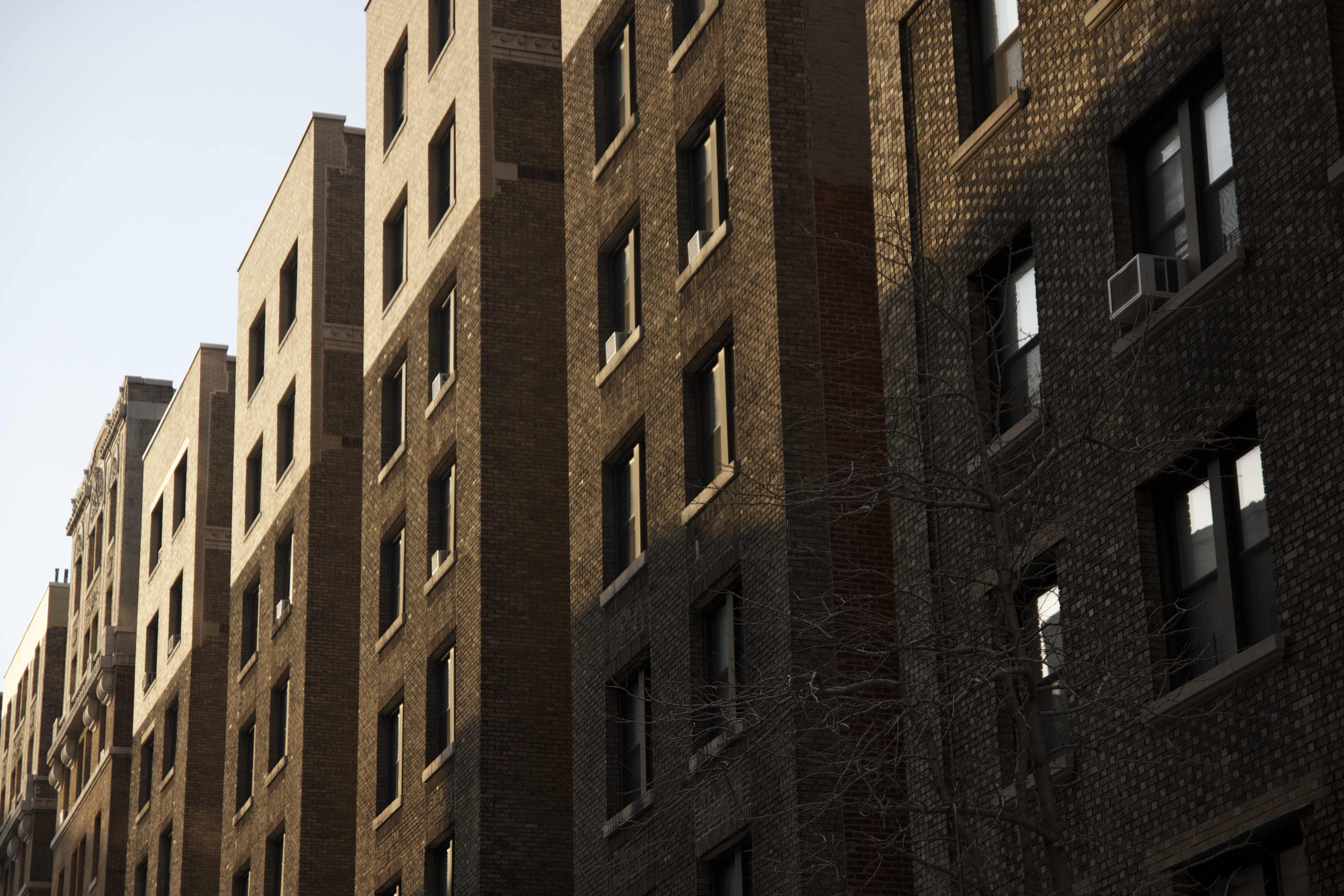
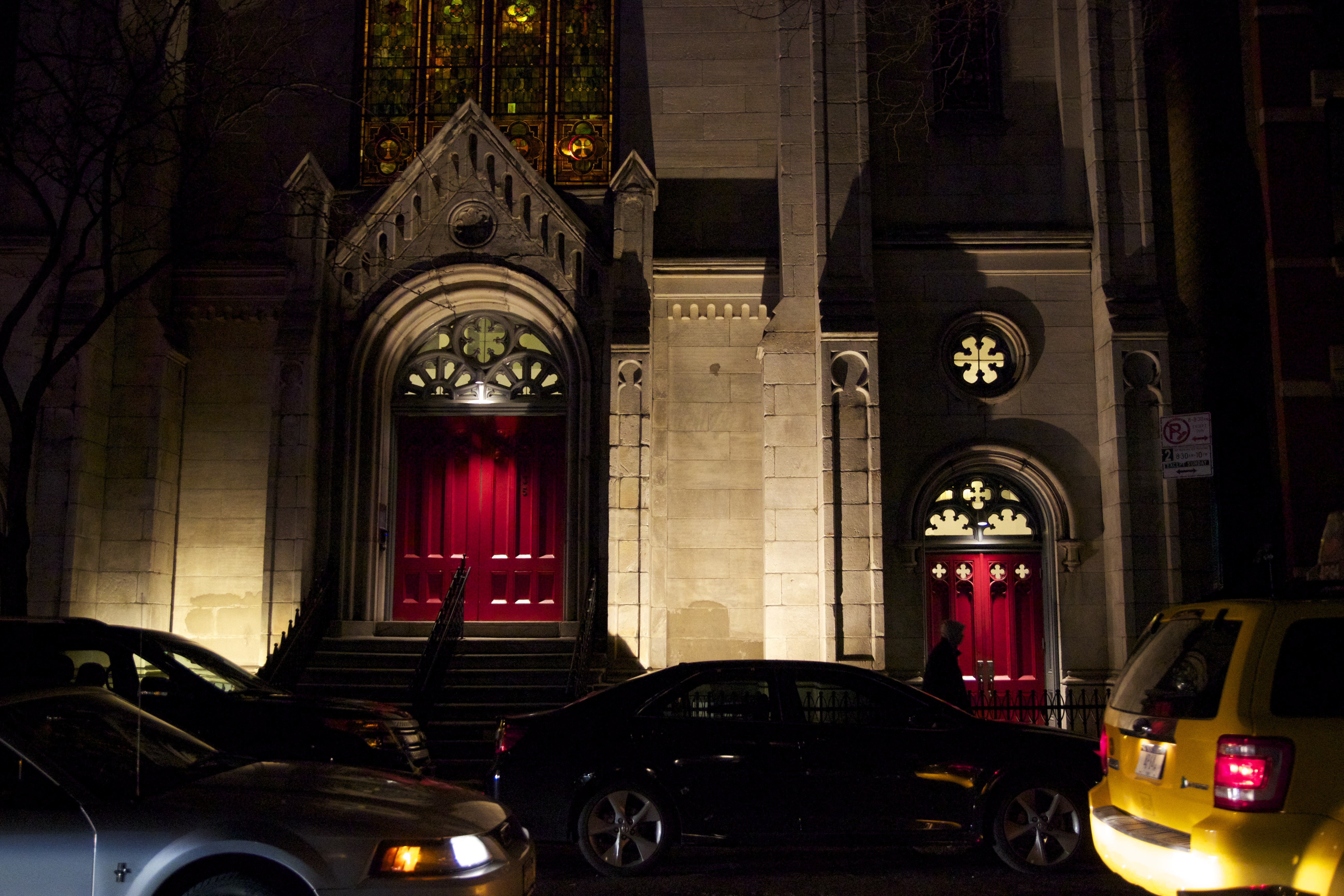
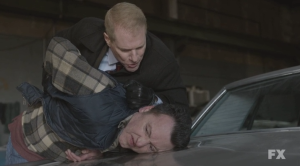 Two final points: First, as you did, I enjoyed virtually every aspect of Stan’s character in this episode. Even when he’s given bad lines or unrealistic situations to work with, the character is played almost flawlessly, and this episode was no exception. Secondly, I hadn’t even thought about the element of disloyalty to their handlers exhibited by Phil and Elizabeth by letting Gregory walk. (Speaking of which, I’m pretty sure Gregory’s shootout with the police was filmed on West 122nd Street in Morningside Heights.) Given what happened in these past two episodes with regards to Stan’s assassination of Vlad, though, I doubt we’ll see much in the way of repercussions for the Jennings.
Where do you see The Americans going from here, for the final few episodes of Season 1? Perhaps a better question — and one we asked each other towards the end of Homeland‘s second season — is who do you think will be dead at the conclusion of Season 1 here?
Sam: I just chuckled out loud at your last question. Let me respond to other parts first, and then I’ll give you my morbid prediction(s).
I agree that it seemed pretty unrealistic that Agent Gadd had (seemingly) no problems with Stan’s extrajudicial killing of Vlad. But perhaps you’re right: we don’t feel the same way as perhaps others who really lived through and understood the Cold War. For this reason, I didn’t quite know how accurate Agent Gadd’s comment about an invisible war was. For the first time though, I wasn’t overly annoyed with his character, given that his lines now were, for the most part, from the heart (and not all cheesy lines).
I will say that I thought Granny was going to pull out a pistol and take care of Gregory herself. Perhaps just for a second. Did it strike you as strange that she and Phil decide to have a conversation about finishing Gregory off directly outside his door? It reminded me of Brody shouting “Nazir!” into his cell phone when CIA agents were right down the hall.
The character conflicts in this episode were certainly what made it intriguing; I guess I was just hoping for a faster-paced episode. Funny though, I had the same thought that Gregory’s shootout was right by SIPA, and I wondered when they filmed that, especially as I imagine it would’ve been a loud day of filming potentially.
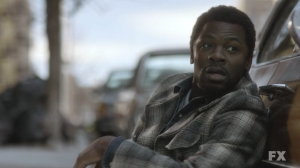 As for where things are going, I think the season will end with a scenario where Stan is on the verge of discovering Phil and Elizabeth’s true identities. It’s cliché, but how else will they make people excited over Season 2? I do think someone will be dead by the end, and I come back to Nina. I’d throw in Martha as well. I feel like they’re secondary characters who have been central enough to warrant lots of attention but still expendable in the grand scheme of things. If anyone is safe, it’s Stan, Phil, and Elizabeth. However, one of them may get shot or injured or something between now and the end of Season 1.
Your thoughts on who makes it and who doesn’t?
Jay: I had a very similar reaction to the scene between Granny and Gregory. However, I was more of the mind that Gregory was going to be the one to do something sudden: kill himself, or maybe even Granny. And yes, I also thought it was strange how Granny and Phil discussed Gregory’s fate just outside his door. In fact, that scene makes even less sense when you consider that, at some point later on, Elizabeth was in the apartment with Gregory too, having what was presumably a private moment on the couch. Was Phil waiting just outside the door that entire time? (It seems as if he was, since he comes in at the end as Elizabeth is preparing to leave.) And if so, I don’t understand what happened earlier, following Phil’s conversation with Granny, in which it appears that Phil is about to enter the apartment himself. What happened immediately after that? There’s never any indication that Phil and Gregory had spoken to each other in this episode, prior to the point at which Phil enters with a gun.
Anyway, I agree that Nina is an obvious candidate to get knocked off. In some ways, it seems almost too obvious — as in perhaps the show’s creators want us to believe she’s doomed in order to pull off a different surprise? Almost from the moment she first appeared, Nina has had a huge bullseye on her back: it would be understandable if, for that reason alone, The Americans was hesitant to actually do what everyone expects and kill her off. I can imagine Martha being killed, but I’m actually going to go with Arkady and/or Granny as my top two candidates for early termination.