All posts by Jay Pinho

About Jay Pinho

Jay is a data journalist and political junkie. He currently writes about domestic politics, foreign affairs, and journalism and continues to make painstakingly slow progress in amateur photography. He would very much like you to check out SCOTUSMap.com and SCOTUSSearch.com if you have the chance.

Austerity has lost its truthiness

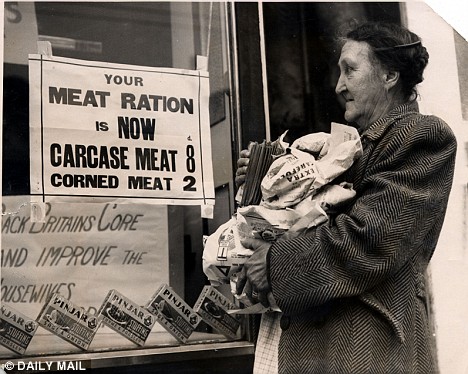
I googled "austerity," and this was the first image that appeared in the results. (Thanks, The Independent.)
I googled “austerity,” and this was the first image that appeared in the results. Seemed appropriate enough. (Thanks, The Independent.)

Back in February, The Washington Post‘s Ezra Klein registered his frustration with the way that deficit reduction was covered in the media:

For reasons I’ve never quite understood, the rules of reportorial neutrality don’t apply when it comes to the deficit. On this one issue, reporters are permitted to openly cheer a particular set of highly controversial policy solutions. At Tuesday’s Playbook breakfast, for instance, Mike Allen, as a straightforward and fair a reporter as you’ll find, asked Simpson and Bowles whether they believed Obama would do “the right thing” on entitlements — with “the right thing” clearly meaning “cut entitlements.”

A few days earlier, Ron Fournier, the editor of the National Journal, wrote that President Obama was giving America “the shaft” by taking an increase in the Medicare age off the table. It is difficult to imagine him using similar language for a situation in which Republicans reject universal health care, or Democrats say no to a tax cut. Over the past couple of weeks, MSNBC’s Joe Scarborough has reacted with evident astonishment to Paul Krugman’s argument that the long-term deficit is not a problem we need to solve right this second.

The secret to the special treatment that deficit reduction enjoys in Washington, I think, is that it’s a rare policy area that lends itself to pox-on-both-their-houses politics. “It’s such fun for me to irritate the AARP and Grover Norquist in equal measure,” Simpson told Allen. “It makes your life worthwhile.” It also makes deficit reduction a safe topic for otherwise strenuously nonpartisan figures to issue strong opinions on. After all, they can’t be accused of being partisan, as both parties are standing in the way!

Klein’s disappointment came, of course, only two months before the ideological underpinnings of austerity itself were subjected to the same remedy they proposed for American and European governments: death by a thousand cuts. And thus, two additional months later, the case for austerity has now been severely damaged.

Which is why yesterday’s article in The New York Times caught my eye. Regarding the newfound optimism of many economists in the expected growth rate of the American economy, reporter Nelson D. Schwarz provides some context:

“It’s better than it looked,” Mr. Cowen said. “Technological progress comes in batches and it’s just a little more rapid than it looked two years ago.” His next book, “Average Is Over: Powering America Beyond the Age of the Great Stagnation,” is due out in September.

Certainly, there are significant headwinds that will not abate anytime soon, including an aging population, government austerity, the worst income inequality in nearly a century and more than four million long-term unemployed workers.

Since when did “government austerity” become an accepted consensus target of criticism, so obviously detrimental to whatever economy it affects that even The New York Times feels safe citing it as a “significant headwind” in a news article?

Well, since mid-April, when the Reinhart-Rogoff paper was in large part dismantled. On a very surface-y level, this can be seen as progress — a sign that the dense fog of austerity has lifted and been replaced with a healthy level of skepticism. But far more concerning is the ease with which “straightforward and fair” reporting incorporates whatever dominant perspective holds sway in government offices at the time, as if it were an uncontested truth.

In other words, if austerity (or rapid deficit reduction, to use the example from Klein’s article) was right back in February — when even the news media’s straight reporting sections treated its efficacy as a foregone conclusion — then it can’t possibly be wrong (or a “significant headwind”) now.

Something’s got to give — and not just the viability of austerity as an economic policy. The entire foundation of traditional journalism — objective reporting — rests on the notion that some sort of absolute truth exists and that reporters are bound to it regardless of prevailing political ideologies. But when such a premise is shown to be so clearly false — as it is here with austerity — then the viability of objective reporting itself appears vanishingly low.

Wynn Resorts confirms financial support of Everett United

I’ve been in Seattle the past couple days, so I hadn’t had a chance to search for Everett United news until today. Now that I have, I’m happy to report that a bit of sunlight has begun to seep into the organization’s inner workings. Two separate articles published last Friday by the Boston Business Journal and The Boston Globe confirmed Wynn’s financial backing of Everett United.

First, The Boston Globe (“Wynn finances ballot drive for Everett casino”):

In the critical campaign to win local support for his $1.2 billion casino resort, Las Vegas developer Steve Wynn has foregone a television or radio advertising blitz and put his faith and money into a street-level, door-to-door campaign, performed by unpaid volunteers under the guidance of professional political consultants he has hired.

“Wynn Resorts financially supports Everett United and its hundreds of volunteers committed to bringing our development to Everett,” said Wynn spokesman Michael Weaver. “They are a dedicated group, and we are grateful for their enthusiasm and support.”

To guide the effort, Wynn has hired Saint Consulting, a Hingham-based political specialist with expertise in winning controversial land-use campaigns, and ML Strategies, the high-powered Boston lobbying firm run by former Massport director Stephen Tocco.

Wynn Resorts did not disclose how much it has spent to support the campaign. The company will disclose campaign spending in a mandatory filing in mid-June, according to Wynn.

And the Boston Business Journal (“In Everett, as in Eastie, casino campaign groups are not what they seem”):

Steve Wynn’s firm isn’t the only one pumping cash into the race to build an Eastern Massachusetts casino. Wynn Resorts is backing Everett United, the pro-casino group disclosed Thursday – but like other developers, Wynn has been loath to disturb the grass-roots illusion that adheres to the groups they fund, and state campaign finance law does little to compel them to do so.

We still don’t know how much Wynn paid Everett United – and we probably won’t, until eight days before the June 22 special election, when municipal ballot question campaign law will require Everett United to file a finance report.

“Wynn Resorts financially supports Everett United and its hundreds of volunteers committed to bringing our development to Everett,” the company informed me in a statement. “We worked this past year to introduce our development plans and to inform the public,” Suffolk Downs chairman Bill Mulrow wrote in a similar statement. Neither addressed questions about how their on-the-ground campaign groups were presented to the public.

Everett United’s “about” page still calls the group “a coalition of local residents and business leaders,” and makes no mention of Wynn’s financial support – other than promoting a “special VIP party” for “Founders Club” supporters, hosted by Wynn.

Interestingly, the Globe article refers to “unpaid volunteers,” suggesting that Wynn’s financial backing extends only to Saint Consulting Group and non-labor expenses incurred by Everett United (such as the ubiquitous yard signs in Everett). This would appear to indicate that Everett United founder and president Sandy Juliano, for example (about whom I wrote in my original piece), is not being paid for her efforts.

Speaking of not being paid, I had a brief, interesting conversation on Twitter with Galen Moore, the author of the above-excerpted Boston Business Journal article, the day before he posted it. He asked me if I’d been paid to write my original piece that exposed Saint Consulting Group’s ties to Everett United. Naively, until he asked me this question, it had never even occurred to me that such a perception might seem plausible.

But I’m glad he asked. So let me be clear here, as I was to Moore: I am not in any way being compensated in monetary form or otherwise, nor have I ever been, by any casino or casino-affiliated group, nor any other group that stands to benefit from opposition to a Wynn casino resort in Everett. Everything I’ve written about Everett United, Saint Consulting Group, and Wynn Resorts (like everything I’ve ever written on my blog) has been done without compensation.

Indeed, if you’ve followed this blog for the past couple years, you’ll quickly notice that a common thread is my passion for transparency — especially as it pertains to financial transactions that affect public policy. This is true not just in content I’ve written for my own blog, but elsewhere as well: my sole Huffington Post article to date, for example, lambasted Michael Bloomberg for attempting to influence Congressional elections via a Super PAC.

Everett United, therefore, captured my attention both for its utter lack of financial transparency and, perhaps more crucially, due to my own longtime connection to the town of Everett. It was a Facebook acquaintance’s Liking of the group’s page that first led to my curiosity about it. And I’m glad to see that, thanks to Galen Moore and Mark Arsenault (the Globe reporter of the above-excerpted piece, with whom I also communicated prior to the publication of his article), Wynn Resorts, Saint Consulting Group, and Everett United are slightly more transparent now than they were just a few weeks ago.

There is still a long way to go. Outside of that one open letter posted last week to Everett United’s Facebook page, I haven’t yet seen any references on the group’s Facebook page or Web site explicitly linking Everett United to Wynn Resorts. Moreover, this continued opacity has taken its toll on casino opponents who lack comparable funding. From the Globe article:

The relentless Everett United campaign has overwhelmed opponents, who lack a sponsor.

“It’s pretty intense from the pro side, Everett United,” said Everett resident Evmorphia Stratis, an opponent who has tried to organize against the development without much luck. “There is so much money behind it, and who am I?”

This is not to say that Wynn Resorts has no right to fund a pro-casino group simply because its opponents lack similar funding. But the secrecy of the coordinated effort certainly contributes to an impression of widespread organic support that may not be quite as unanimous as it currently appears.

Enhanced by Zemanta

“The administration has now lost all credibility.”

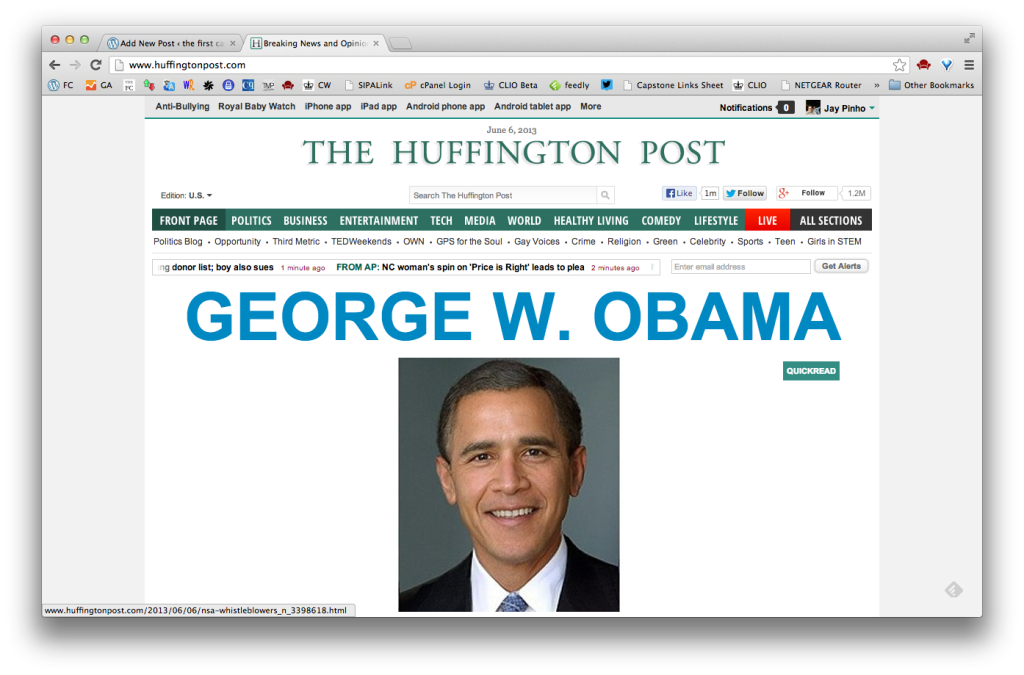
Screen Shot 2013-06-06 at 5.19.16 PM
The Huffington Post, with a typically subtle headline.

When you’re a Democratic president and The New York Times’ editorial board has utterly lost its faith in you, you may have done something wrong:

Within hours of the disclosure that the federal authorities routinely collect data on phone calls Americans make, regardless of whether they have any bearing on a counterterrorism investigation, the Obama administration issued the same platitude it has offered every time President Obama has been caught overreaching in the use of his powers: Terrorists are a real menace and you should just trust us to deal with them because we have internal mechanisms (that we are not going to tell you about) to make sure we do not violate your rights.

Those reassurances have never been persuasive — whether on secret warrants to scoop up a news agency’s phone records or secret orders to kill an American suspected of terrorism — especially coming from a president who once promised transparency and accountability. The administration has now lost all credibility. Mr. Obama is proving the truism that the executive will use any power it is given and very likely abuse it.

Many responses to yesterday’s Guardian bombshell about Verizon call data being scooped up en masse by the NSA have been less than furious. Notably, the chair of the Senate intelligence committee, Senator Dianne Feinstein, said, “This is called protecting America. People want the homeland kept safe.” She also helpfully pointed out, without a trace of concern, that this secret court order is apparently just one in a long string of them dating back consecutively to 2006. She also made sure to explain: “This is just metadata. There is no content involved. In other words, no content of a communication.”

Andrew Sullivan likewise joined the quickly swelling ranks of those that are mostly unbothered by the revelation:

I’m neither shocked nor that outraged. Meta-data is not the content of our phone records.

On that front, this kind of meta-data gathering hasn’t outraged me too much under either administration. This kind of technology is one of the US’ only competitive advantages against Jihadists. Yes, its abuses could be terrible. But so could the consequences of its absence.

But Sullivan and his cohorts are completely wrong on this point — and they’re wrong in three crucial but different ways: technically, logistically, and philosophically.

First, metadata — even when it excludes the subscriber’s name, as the secret court order claims — is just about the furthest thing from anonymity. Back in March, MIT News reported on a new study showing just how little metadata is required to pinpoint a specific individual:

Researchers at MIT and the Université Catholique de Louvain, in Belgium, analyzed data on 1.5 million cellphone users in a small European country over a span of 15 months and found that just four points of reference, with fairly low spatial and temporal resolution, was enough to uniquely identify 95 percent of them.

In other words, to extract the complete location information for a single person from an “anonymized” data set of more than a million people, all you would need to do is place him or her within a couple of hundred yards of a cellphone transmitter, sometime over the course of an hour, four times in one year. A few Twitter posts would probably provide all the information you needed, if they contained specific information about the person’s whereabouts.

Second, as Jane Mayer of The New Yorker points out, the actual content of the call — that is, audio or a transcript of the conversation — is not necessarily as valuable as the patterns and networks that can be traced from metadata:

For example, she said, in the world of business, a pattern of phone calls from key executives can reveal impending corporate takeovers. Personal phone calls can also reveal sensitive medical information: “You can see a call to a gynecologist, and then a call to an oncologist, and then a call to close family members.” And information from cell-phone towers can reveal the caller’s location. Metadata, she pointed out, can be so revelatory about whom reporters talk to in order to get sensitive stories that it can make more traditional tools in leak investigations, like search warrants and subpoenas, look quaint. “You can see the sources,” she said. When the F.B.I. obtains such records from news agencies, the Attorney General is required to sign off on each invasion of privacy. When the N.S.A. sweeps up millions of records a minute, it’s unclear if any such brakes are applied.

Finally, even on a philosophical or ideological level, Sullivan is wrong about the danger of not pursuing such invasive surveillance tactics. Stephen Walt takes it away:

There are two obvious counters. First, the United States (and its allies) are hardly lacking in “competitive advantages” against jihadists. On the contrary, they have an enormous number of advantages: They’re vastly richer, better-armed, better-educated, and more popular, and their agenda is not advanced primarily by using violence against innocent people. (When the United States does employ violence indiscriminately, it undermines its position.) And for all the flaws in American society and all the mistakes that U.S. and other leaders have made over the past decade or two, they still have a far more appealing political message than the ones offered up by Osama bin Laden, Ayman al-Zawahiri, and the various leaders of the Taliban. The United States is still going to be a major world power long after the contemporary jihadi movement is a discredited episode in modern history, even if the country repealed the Patriot Act and stopped all this secret domestic surveillance tomorrow.

Second, after acknowledging the potential for abuse in this government surveillance program, Sullivan warns that the “consequences of its absence” could be “terrible.” This claim depends on the belief that jihadism really does pose some sort of horrific threat to American society. This belief is unwarranted, however, provided that dedicated and suicidal jihadists never gain access to nuclear weapons. Conventional terrorism — even of the sort suffered on 9/11 — is not a serious threat to the U.S. economy, the American way of life, or even the personal security of the overwhelming majority of Americans, because al Qaeda and its cousins are neither powerful nor skillful enough to do as much damage as they might like. And this would be the case even if the NSA weren’t secretly collecting a lot of data about domestic phone traffic. Indeed, as political scientist John Mueller and civil engineer Mark Stewart have shown, post-9/11 terrorist plots have been mostly lame and inept, and Americans are at far greater risk from car accidents, bathtub mishaps, and a host of other undramatic dangers than they are from “jihadi terrorism.” The Boston bombing in April merely underscores this point: It was a tragedy for the victims but less lethal than the factory explosion that occurred that same week down in Texas. But Americans don’t have a secret NSA program to protect them from slipping in the bathtub, and Texans don’t seem to be crying out for a “Patriot Act” to impose better industrial safety. Life is back to normal here in Boston (Go Sox!), except for the relatively small number of people whose lives were forever touched by an evil act.

In other words, the NSA’s wiretapping program that began under Bush and has now very apparently flourished under Obama is every bit as bad as it sounds. The New York Times got it exactly right: the Obama administration has lost all credibility. So why is it that we always seem so willing to forget this news so quickly?

Enhanced by Zemanta

An update on Everett United

It’s a very small step in the right direction, but it’s (slightly) better than nothing: a letter to the editor, signed by various Everett personalities, was posted to the Everett United Facebook page yesterday, and it included the phrase “Everett United, a Wynn supported group.”

The letter is reprinted in full below:

Everett has always been a tough and resilient city.  Like our much lauded football team, we play hard.  Multigenerational rivalries, competition and decades old slights and offenses long forgotten add to a complex culture.  Politics here is a beloved full contact sport.

Those of us who call Everett home have been both shocked and amazed to see long time rivals, disparate ethnic communities and diverse political factions coming together united in a common vision for Everett’s future.

The Wynn Resorts proposal for a world-class resort complex in Everett has sparked imaginations and ignited Everett pride.  It has made us question our ideas about what our community can be and the kind of city we might just be able to leave to future generations.  Many preconceived notions about our little city and our inherent inferiority complex are truly being questioned.  Just listen to the reactions as neighbors look at the project renderings with the gleaming tower, lush landscaping and waterfront parks.  “I can’t believe that could be in Everett!” is heard over and over again.

The financial implications are truly game changing with a one time payment of $30 million, ongoing yearly payments of $25 million, additional tax revenue from hotel and food taxes and much more. This turbo-boost to our City’s beleaguered tax base is a foundation upon which we can build.  There will be a vigorous debate about how these funds are allocated and how we agree on shared priorities for the future of our city but this staggering opportunity is within our reach.

People across the city have come together to support this project and this new vision for Everett’s future.  Over 1500 signs promoting the Saturday, June 22 vote blanket the city.  Everett United, a Wynn supported group made up of Everett residents and business owners, has over 800 members and a large, enthusiastic and dedicated team of volunteer precinct captains, door-to-door canvassers and phone callers spreading the word to fellow neighbors.  Their very active Facebook site is closely monitored by thousands of Everett residents supporting and monitoring the project’s progress.  18 current elected officials, the Chamber of Commerce, over 100 local businesses and numerous others have come together to endorse the project.  Everett’s leaders have put politics aside to stand together in a way none of us have ever seen before.

Ultimately the decision on which community gets the sole license for our region, the billion-dollar plus investment, and all the jobs and benefits that come with it lies with the Massachusetts Gaming Commission.  This is a competitive process with Everett, Milford and East Boston all in contention for one available license. Everett is United and standing together as never before.  It is crucial that everyone comes out to vote on Saturday, June 22 to make our voices heard and show everyone that no one wants it more, needs it more or deserves it more than the City of Everett.  It’s our time.

Mary Boever
Robin Brickley
Paul Dobbins
Tom Fiorentino
Vincent Ragucci
Roger Thistle

This is, of course, verification of what we already knew, essentially. Nevertheless, it’s good to see a public record of it. Obviously, it’s not nearly enough: one letter to the editor, stuffed in amidst a flurry of other Facebook and web site messages that make no reference to the Wynn Resorts/Saint Consulting Group/Everett United nexus, will reach only a small percentage of Everett United’s audience. And even among those who read the letter, the phrase “Wynn supported group” may not click unless it’s repeated prominently over and over.

Enhanced by Zemanta

No Saint in this game: Is Wynn Resorts using Everett United to gain casino support?

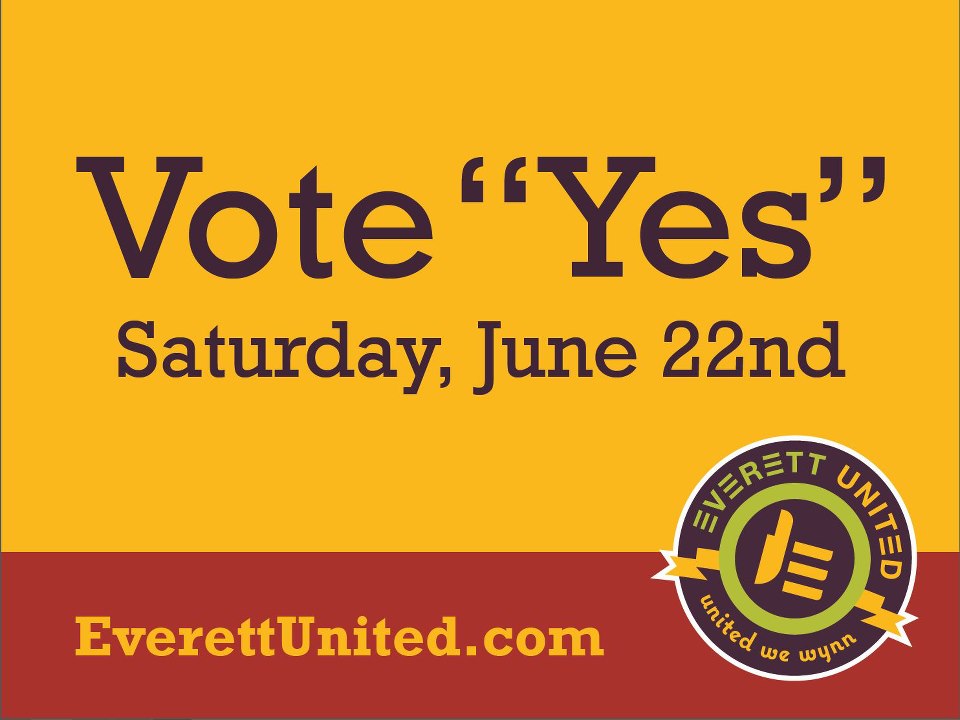
An image on Everett United's Facebook page.
An image on Everett United’s Facebook page.

(UPDATE 5/31/2013 6:48 PM EST: The headline of this post has been changed from “No Saint in this game: Wynn Resorts uses Everett United to gain casino support” to “No Saint in this game: Is Wynn Resorts using Everett United to gain casino support?” Additionally, per Seth Cargiuolo’s request, I have removed a screenshot of his Facebook profile that included a photo of his minor children. This photo has since been replaced with a screenshot of his newest profile.)

(UPDATE 6/3/2013 11:34 AM EST: I have updated this post to reflect confirmation from one of the Facebook commenters that she did not delete her own post on the Everett United Facebook page.)

Several weeks ago while scrolling through my Facebook newsfeed, I ran across a post that had been Liked by an acquaintance from my old hometown of Everett, Massachusetts. The post was written by Everett United, a group I’d never heard of before, and it concerned a new casino being proposed for Everett by Las Vegas casino/resort mogul Steve Wynn.

Out of curiosity, I began reading through the group’s Facebook page. Having lived for nine years in Everett, it seemed improbable to me that anyone would find it a good idea to place a casino there. A small suburb just north of Boston, Everett had just under 42,000 residents in the 2010 census, and its median household income is $48,319 (about 8.4% below the national average). From long personal experience, I know that Everett is, in every way, the polar opposite of glamorous.

The Facebook page for Everett United, which launched in March, describes the group as “a coalition of local residents and business leaders who support the idea of a world-class resort hotel and entertainment complex in Everett.” The group’s dedicated web site, EverettUnited.com, contains a similar statement: “Everett United are your neighbors…the clerk at the checkout counter…your friends and co-workers. Together, we view the Wynn Resort and Hotel in Everett as a once-in-a-lifetime opportunity to greatly improve our city and quality of life. It’s a project we need, and deserve, more than any other community” (ellipses in original).

The objective of the group is to drum up support for a June 22 citywide referendum in Everett, required under state casino law, in which Everett residents will decide whether to approve the host agreement between Wynn Resorts and their city. If they do, the proposed hotel and casino complex will then be one of three contestants for a Greater Boston casino license, whose winner will be decided by the Massachusetts gambling commission.

Continue reading No Saint in this game: Is Wynn Resorts using Everett United to gain casino support?