Category Archives: Miscellaneous

Fresh new faces at The First Casualty

One of the most important aspects of blogging successfully is keeping current. Lately, I’ve found this increasingly hard to do, as school-related and other extracurricular projects have eaten away steadily at my rapidly diminishing free time.

Paradoxically, even while posting less, I’ve probably spent more time thinking about the blog recently than I used to in the past, however. And I think I may have discovered a partial antidote to the large periods of silence between blog posts: guest contributions.

The great thing about inviting others to join me on this blog from time to time is that it accomplishes several objectives at once: 1) it adds valuable new perspectives (and even ideologies) in a wide array of fields and niches to a site that tends towards one-dimensionalism, 2) it relieves some of the pressure on me to post ever more frequently, and 3) it keeps the blog current.

I’m not yet entirely certain what form the guest posts will take, but a few general guidelines are already taking form in my head. Although I cannot guarantee any regularity to the posts, as this depends on my schedule and theirs, the general idea will be for each guest blogger to specialize in something they have studied (or are studying) at an advanced level, worked on professionally, or otherwise engaged in on an academic or professional (or comparably rigorous) level.

Over the next several weeks to a month, expect to see some really interesting topics (ones I am neither qualified nor courageous enough to write about myself) written by some truly fascinating people. At present, this group is limited to a small handful, but I fully anticipate adding to this team as we go forward. Tell your friends!

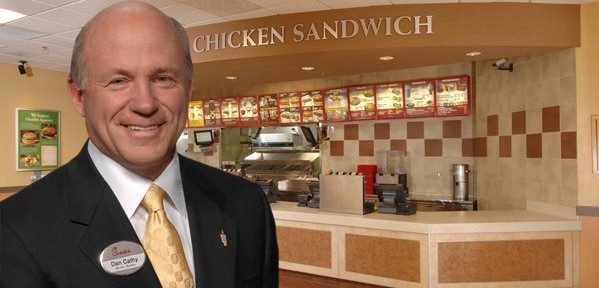
A quote and a photo to hail the start of the weekend

From yesterday’s Le Monde:

Je viens d’acheter du poulet et ma voiture sent l’odeur de la liberté.

This was spoken by “Steve” during an interview with Mike Huckabee, just after eating at Chick-Fil-A to protest the backlash against the food chain for its president’s stance against same-sex marriage.

And on a completely unrelated note, here is your weekend picture, taken today at Zaitunay Bay in Beirut.

Why writer$ write

Tim Parks wonders about the correlation between quality of writing and the amount of income received from doing it:

Asked to write blogs for other sites, some with much larger audiences, I chose to stay with the New York Review, partly out of an old loyalty and partly because they pay me better. Would I write worse if I wrote for a more popular site for less money? Or would I write better because I was excited by the larger number of people following the site? And would this larger public then lead to my making more money some other way, say, when I sold a book to an American publisher? And if that book did make more money further down the line, having used the blog as a loss leader, does that mean the next book would be better written? Or do I always write as well or as badly as I anyway do regardless of payment, so that these monetary transactions and the decisions that go with them affect my bank balance and anxiety levels, but not the quality of what I do?

I don’t know about Parks, but the reason I keep up this blog is the huge stack of cash each post brings in.

(shrug)

What luck looks like: a primer in three parts

Part I:

Nick Hanauer’s taxable income is, he tells me, “tens of millions. In a bad year it can be $10 million.”

His parents made good money in the pillow trade, and after college he set up a few okay businesses. But then one day he met a girl who was dating a guy. She said, “You two are going to be friends.”

The guy had a business idea. Nick loved the sound of it. He invested all the money he had on hand—$45,000 cash. The guy was Jeff Bezos, and the business was Amazon.com.

Part II:

The “Moneyball” story has practical implications. If you use better data, you can find better values; there are always market inefficiencies to exploit, and so on. But it has a broader and less practical message: don’t be deceived by life’s outcomes. Life’s outcomes, while not entirely random, have a huge amount of luck baked into them. Above all, recognize that if you have had success, you have also had luck — and with  luck comes obligation. You owe a debt, and not just to your Gods. You owe a debt to the unlucky…

Your appointment may not be entirely arbitrary. But you must sense its arbitrary aspect: you are the lucky few. Lucky in your parents, lucky in your country, lucky that a place like Princeton exists that can take in lucky people, introduce them to other lucky people, and increase their chances of becoming even luckier. Lucky that you live in the richest society the world has ever seen, in a time when no one actually expects you to sacrifice your interests to anything.

All of you have been faced with the extra cookie. All of you will be faced with many more of them. In time you will find it easy to assume that you deserve the extra cookie. For all I know, you may. But you’ll be happier, and the world will be better off, if you at least pretend that you don’t.

Part III:

“You built a factory out there? Good for you,” she says. “But I want to be clear: you moved your goods to market on the roads the rest of us paid for; you hired workers the rest of us paid to educate; you were safe in your factory because of police forces and fire forces that the rest of us paid for. You didn’t have to worry that marauding bands would come and seize everything at your factory, and hire someone to protect against this, because of the work the rest of us did.”

She continues: “Now look, you built a factory and it turned into something terrific, or a great idea? God bless. Keep a big hunk of it. But part of the underlying social contract is you take a hunk of that and pay forward for the next kid who comes along.”

The 2012 presidential election will be, in part, about how much we as a country ascribe to the importance of luck in our everyday lives. Universal healthcare is, in many ways, a hedge against bad luck. To an extent, all entitlement programs are about mitigating the volatile luck of the draw.

Americans have never really been believers in luck, and that’s part of the reason we became who we are: no excuses, best foot forward, all that jazz. But it’s also given us a massive blind spot, and it’s in times like this that the problem becomes glaringly obvious.

Protest porn

[vimeo http://vimeo.com/42848523]

Keeping things in perspective:

The 2012 Quebec student protests are a series of ongoing student demonstrations led by Quebec students’ associations, students, and their supporters against a proposal by the Quebec Cabinet, headed by Premier Jean Charest, to raise university tuition from $2,168 to $3,793 between 2012 and 2017.

Those 2017 tuition fees are lower than what I will spend in one month of my master’s program at Columbia this coming year. So stop complaining, French Canada. Cool video, though. I will give you that.

(Side note: when will governments learn that outlawing protest — or some thinly disguised variant of outlawing it — doesn’t solve anything?)

Disproportionate analogy of the day

On the neighborhood divisions caused by filmmaker George Lucas’ plan to sell property in ultra-wealthy Marin County to house low-income residents:

The staunchest opponents of Lucasfilm’s expansion are now being accused of driving away the filmmaker and opening the door to a low-income housing development. That has created an atmosphere that one opponent, who asked not to be identified, saying she feared for her safety, described as “sheer terror” and likened to “Syria.”

The 1%: they’re just like us, only they’re in so much more danger.