Category Archives: Politics

Why I love Joe Biden

An off-the-cuff Biden-esque mistake, or a deliberate olive branch thrown to the gay community by an Obama administration that’s still too scared to officially back same-sex marriage?

Vice President Joseph R. Biden Jr. said on Sunday that he was “absolutely comfortable” with same-sex marriages and was heartened by their growing acceptance across the country, a position that moves well beyond the “evolving” views that President Obama has said he holds on the issue.

The comments, which aides described as the off-the-cuff views of a vice president not known for fidelity to a script, sent the White House scrambling to clarify that Mr. Biden was not articulating an official change in policy, a reaction that highlighted the administration’s unease over the subject.

And speaking of presidential elections…

…get ready for more of this in the upcoming months:

“Certain precincts in this county are not going to vote for Obama,” said John Corrigan, clerk of courts for Jefferson County, who was drinking coffee in a furniture shop downtown one morning last week with a small group of friends, retired judges and civil servants. “I don’t want to say it, but we all know why.”

A retired state employee, Jason Foreman, interjected, “I’ll say it: it’s because he’s black.”

This could get ugly. One of the more interesting aspects of this general election matchup between President Barack Obama and the presumptive Republican nominee, Mitt Romney, is the fact that they both suffer from two very similar trust deficit problems with large swaths of the American public.

Governor Mitt Romney of MA

First, both Romney and Obama are seen, by significant portions of the public, as un-American. For Romney, this is due to his Mormonism, which 22% of Americans last year cited as a disqualifying factor for the presidency. For Obama, this is due to his father’s Kenyan heritage and his own race, as well as lingering doubts as to his birthplace resulting from repeated lies being perpetrated by some right-wing groups.

Secondly, both candidates supported, and subsequently passed, universal healthcare coverage laws in their respective constituencies: the entire country for Obama, the state of Massachusetts for Romney. And although Romney has vowed to repeal “Obamacare” as soon as he is elected President (which may become a moot point next month if the Supreme Court rules the law unconstitutional), the fact that he passed a virtually identical bill while governor certainly doesn’t help his credibility.

And it is this tension — between the candidates’ political weaknesses and their desire to attack those same perceived weaknesses in their opponents — that should turn what might otherwise be a rather boring general election contest into riveting political theater. It will be interesting to see Obama subtly play up his Christianity and Romney do the same with his, well, whiteness. In terms of who has the edge, I’d give Romney a slight advantage here. Despite the fact that Obama projects an infinitely “cooler” public persona, a significant portion of the American public is still reticent (or racist) enough about his identity to such an extent that Romney can exploit this discomfort for electoral gain. Conversely, while Obama can try to very gently remind Americans of Romney’s Mormonism (to be clear, I find it ludicrous and disgusting that anyone wouldn’t vote for Romney based on his Mormonism, but that probably won’t stop Obama from trying), he likely won’t score as many points with this as Romney can with the “un-American” verbal grenades he’ll be tossing at Obama.
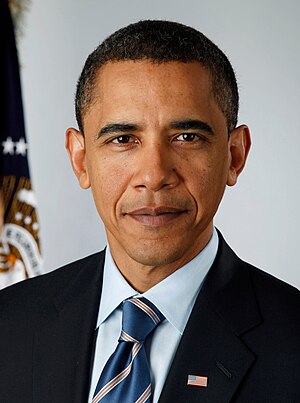
Cropped version of File:Official portrait of B...

On health care, however, I think the situation is flipped. Obama has the advantage here, as Romney has made Obamacare’s repeal a central cog of his presidential election campaign and yet passed basically the same thing in Massachusetts. His problem is one of credibility, especially given the massive attention being paid to the questions of whether he is sufficiently conservative and whether he has a real “core.” Obama, on the other hand, will likely be in a superior position, since it’s a law he passed as President and he is clearly interested in keeping it on the books. His weaknesses are twofold: 1) although individual elements of the law remain popular, the overall legislation is not; and 2) Obama has shown a surprising (and absolutely infuriating) tendency to back away from his own legislative achievements. If he wants to own Romney on the health care question, he needs to be unequivocal in his support for the health care bill he passed. Of course, Romney can then use this firmness to try to showcase how Obama’s out of step with the American public, but again, he’ll run straight into the credibility buzz-saw (since he passed the same thing at the state level).

This could end up being a very delicate tap-dance in the debates. Meanwhile, the TV ads will likely get really ugly, on both sides.

And so France goes to the polls

Via Le Mondethe two candidates, President Nicolas Sarkozy (who the latest polls show trailing) and François Hollande, are preparing their victory or mourning after-parties:

Les deux derniers candidats au second tour de l’élection présidentielle ont d’ores et déjà commencé à organiser les festivités – ou déconvenues – de l’après scrutin. Difficile de prendre les dispositions nécessaires sans savoir à l’avance s’il faudra sortir le champagne ou les mouchoirs. Malgré tout, les équipes des deux candidats ont commencé à distiller des informations : si Hollande reste fidèle à Tulle, il honorera la victoire de François Mitterrand, en 1981, en allant sur ses pas fêter une éventuelle victoire sur la place de la Bastille, en deuxième partie de soirée. Nicolas Sarkozy, lui, prévoit de faire la fête sur les lieux qui avaient déjà accueilli les réjouissances de 2007, puis un de ses plus grands meetings de 2012, à la Concorde.

Benedict Obama? The increasingly confusing story of Chen Guangcheng

For the non-living-under-a-rock population, here’s what happened in the Chen Guangcheng saga. The question now is whether the United States deliberately hung Chen out to try or if they instead just badly mismanaged the entire negotiating process with Chinese officials. Either way, things are not looking good now:

Chen Guangcheng, the blind dissident lawyer at the heart of a diplomatic crisis between China and the United States, telephoned in to a Congressional hearing on Thursday to plead for help in leaving his country.

Via a cellphone held up to a microphone at the hearing, Mr. Chen, speaking in Chinese, said: “I want to come to the U.S. to rest. I have not had a rest in 10 years. I’m concerned most right now with the safety of my mother and brothers. I really want to know what’s going on with them.”

Mr. Chen, according to the English translation of his comments, also asked to meet with Secretary of State Hillary Rodham Clinton, who was in Beijing. “I hope I can get more help from her,” he said. “Also, I want to thank her face-to-face.”

The call, apparently made from Mr. Chen’s Beijing hospital room from which American officials have been barred, was another dramatic turn in a case that had for a short time looked like a deft achievement to secure Mr. Chen’s safety by American diplomats. That achievement has unraveled, leaving the Obama administration open to attacks from rights activists and Republicans that it had failed to adequately protect Mr. Chen after he left the sanctuary of the United States Embassy here on Wednesday.

There are many weird aspects to this case. First of all, American officials have been barred from the hospital, and yet Chen remains free to converse with as many media and political figures as he likes. Perhaps the Communist Party higher-ups are just biding their time until the media circus blows over, but this is still a slightly odd circumstance. Secondly, was the U.S. actually shocked by Chen’s quick reversal (first he wanted to stay in China, and now he wants to leave for the States with his family), or did American officials simply not care what happened after he left the embassy? Also, what was the point of arranging such an elaborate pickup of the dissident far from the embassy’s entrance, even going so far as to protect him from a Chinese security contingent, if they were just going to release him back to the authorities soon afterwards anyway? (Or was the entire “car chase” sequence part of an American image repair campaign after the Chen affair went terribly wrong?)

It seems impossible that President Obama and Hillary Clinton could have so badly miscalculated the resolve of the Chinese Communist Party to regain physical control of Chen, and yet it looks like that’s exactly what they did. I tend to agree with Robert Wright over at the Atlantic, who writes:

The Obama folks may be cynical, but they’re smart enough to have known that if Chen walked into a bait-and-switch, that would be a big problem not just for him but for them. It doesn’t make sense, even in Machiavellian terms, that they’d have wanted to seriously mislead him.

James Fallows, meanwhile, suggests remaining cautious:

Quite a lot about this situation is confusing and contradictory, to put it mildly. But I would caution readers against drawing an inference, from headlines like the ones above on US-based analyses rather than on-scene reports, that (a) it is clear that U.S. officials so clearly mis-handled, or coldly handled, this case, or (b) there was something much more clearly successful or satisfying that they could have done. It’s possible that both those things will prove to be true, and the Obama Administration and its representatives in Beijing will deserve criticism. But that is far from clear now — and I worry that a pileup of headlines of this sort can give an initial shape to the story that is hard to change, and that the complicated facts don’t support.

And lastly, the New York Review of Books (in an article to which Fallows links) proffers the idea that, in the end, it’s not up to the United States to change China’s pattern of human rights violations. In any case, here’s hoping the media spotlight stays bright for awhile until some sort of agreement can be hashed out.

Stephen King gets feisty

Via the Daily Beast:

What some of us want—those who aren’t blinded by a lot of bullshit persiflage thrown up to mask the idea that rich folks want to keep their damn money—is for you to acknowledge that you couldn’t have made it in America without America. That you were fortunate enough to be born in a country where upward mobility is possible (a subject upon which Barack Obama can speak with the authority of experience), but where the channels making such upward mobility possible are being increasingly clogged. That it’s not fair to ask the middle class to assume a disproportionate amount of the tax burden. Not fair? It’s un-fucking-American is what it is. I don’t want you to apologize for being rich; I want you to acknowledge that in America, we all should have to pay our fair share. That our civics classes never taught us that being American means that—sorry, kiddies—you’re on your own. That those who have received much must be obligated to pay—not to give, not to “cut a check and shut up,” in Governor Christie’s words, but to pay—in the same proportion. That’s called stepping up and not whining about it. That’s called patriotism, a word the Tea Partiers love to throw around as long as it doesn’t cost their beloved rich folks any money.

The joy of Rupert Murdoch’s Wall Street Journal

Yesterday’s online Wall Street Journal edition included a column by Daniel Henninger, its deputy editor of editorials. The article, titled “Memo to the Youth Vote,” begins by asking: “Why would anyone under the age of 25 vote for Barack Obama in November?”

This seems an unlikely question to ask. A Harvard poll released about a week ago revealed that Obama leads Romney among the young by 17%. So perhaps the more appropriate question would be, “Why would anyone under the age of 25 vote for Mitt Romney in November?” But even leaving aside this curious opening line, Henninger later uses economist Robert Lucas to critique Obama’s economic policies:

He then looked at the levels of U.S. social-welfare commitments, including the new Obama health-care entitlement, and ended with a simple observation: “Is it possible that by imitating European policies on labor markets, welfare and taxes, the U.S. has chosen a new, lower GDP trend? If so, it may be that the weak recovery we have had so far is all the recovery we will get.”

In what alternate universe has Obama imitated European policies on…any of these things? European tax systems are different, welfare is extremely different, and in general the labor markets are more rigid on the Old Continent than they are in the U.S. Going a step further, Obama’s stimulus package is proof positive that he differed strongly from his European counterparts, who have united behind the austerity-advocating trifecta of David Cameron, Angela Merkel, and Nicolas Sarkozy.

But Henninger doesn’t stop there. He then proceeds to discuss the disarray of European universities, never bothering to devote a single sentence to how this relates to the U.S., which has most of the best universities in the world. He finally closes by suggesting that, given high unemployment levels, young Americans may end up needing ObamaCare after all. Indeed they might, Henninger. That’s kinda the point of universal coverage.

The New York Times: socioeconomically tone-deaf as ever

From today’s “Opinionator” with Gail Collins and David Brooks:

David:  I once conducted an interview with a businessman in a small town and I pulled up in my Audi A6, which was a very nice car but not super luxury.

Sir David Brooks is wrong about the “not super luxury” part. The 2012 Audi A6 is, in fact, currently ranked #2 by U.S. News & World Report in the “Luxury Large Cars” category and retails, on average, between $41,245 and $49,346. According to the U.S. Census Bureau, the median household — not individual — income (averaged over the period 2006-2010) was $51,914. So an Audi A6 costs somewhere between 79% and 95% of the average American household’s pre-tax income.

Look, I am not one of those people who decry rich people for being rich. Hell, I don’t have a problem with rich presidents, politicians, or candidates. In some cases it may even reduce corruption by limiting the political sway of outside contributions. But New York Times writers really need to stop playing the “seriously, we’re not rich” game that has been increasingly played by the American upper class (including, too often, by writers for the Times). It’s absolutely fine to be wealthy. It’s not fine to pretend to be a member of a more modest social class.

I’m just going to stand back from this one and watch it all explode

I’ll say this for the guy: he has a “spectacular” sense of timing. In the great debate over economic fairness, income disparities, the unjustness of the tax system, and other such issues, it seems that the last thing the majority of the country is interested in hearing is a spirited defense of the status quo. But maybe I’m wrong. We are the nation that turned Glenn Beck into a superstar, after all. What’s the matter with Kansas, indeed.