All posts by Jay Pinho

About Jay Pinho

Jay is a data journalist and political junkie. He currently writes about domestic politics, foreign affairs, and journalism and continues to make painstakingly slow progress in amateur photography. He would very much like you to check out SCOTUSMap.com and SCOTUSSearch.com if you have the chance.

Strangers passing “In the Dark:” Sam Lim and I discuss Episode 9 of The Americans

Screen Shot 2013-03-31 at 7.34.05 PM

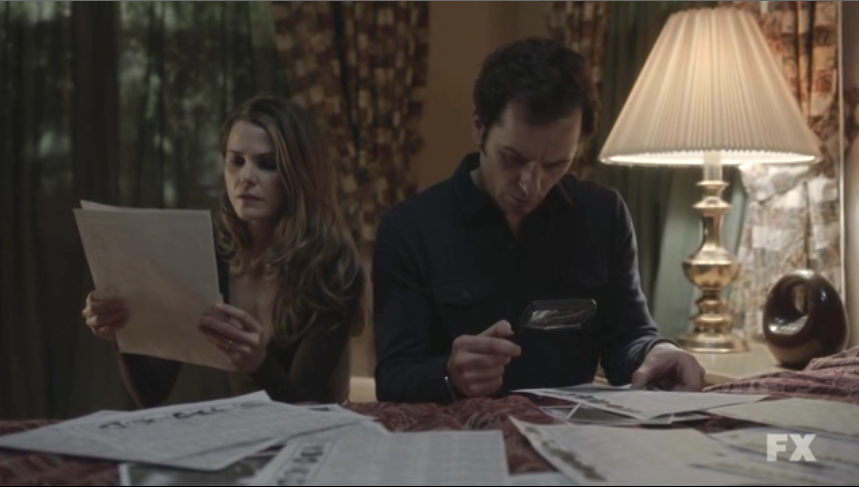
Jay: Wow, I think I can safely say that this was the best episode all season. Normally, I’m against using plot twists for the sake of using plot twists, but in this case I think they actually got it almost perfectly right. Agent Gadd is one of those characters who the show never even slightly hinted might be a villain, and yet here we are.

The best part about this surprise is that it puts a lot of central characters into some very vulnerable positions. Most obviously, Nina is screwed. But the genius of this scenario is that Gadd can’t move too quickly to eliminate her, because Stan’s a savvy veteran (having been undercover with white supremacists for years) and might catch on to anything strange happening to Nina — especially considering his romantic/sexual attachment to her, which Gadd obviously knows about. At the same time, Gadd himself is on thin ice, precisely because Stan is such a consummate professional (minus the small detail of his affair with a confidential informant) and may be quick to catch on to Gadd’s double-crossing of his own agency.

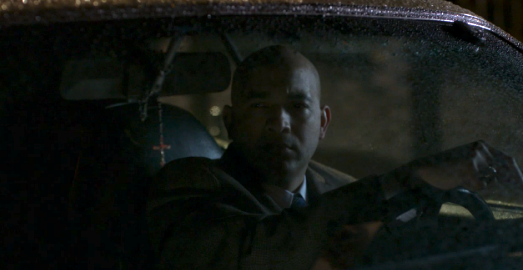
I also loved Amador’s creepy stakeout of Martha’s place when Phil came over again. I do have a slight beef here, as usual: there’s absolutely no way Phil would take off his mustache, wig, and everything in his car right after leaving Martha’s place, even if he thinks there’s no way anyone could see him. Relatedly, it’s highly unlikely Amador could actually see anything in the dark of night like that, even with his binoculars. But OK, I’ll let those small details slide. Whatever the realism or lack thereof, the fact that Amador now knows A) Martha is sleeping with someone else and B) this guy is clearly not whoever he tells Martha he is, the stage is definitely set for some big surprises. Continue reading Strangers passing “In the Dark:” Sam Lim and I discuss Episode 9 of The Americans
Now featured on The First Casualty: my mistakes

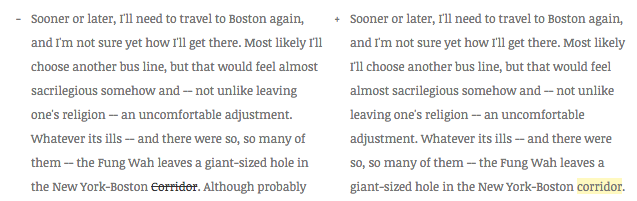
An example comparison of different versions of the same post.

One of the oft-noted pitfalls of online journalism — whether conducted by online-only publications or by traditional print/media outfits that have migrated online — is the lack of transparency over changes made to posts and articles after they’ve already been published. Many, for example, have observed The New York Times change headlines and even article text after posting them online, even after people have read the original version.

It is, in fact, this problem of unmarked revisions that gave rise to the truly stellar site NewsDiffs.org, which explains: “For better or worse, readers can now view ‘the making of the sausage’ that historically was discreetly tucked away from view with dead-tree editions.” The site scrapes the articles appearing on home pages of news organizations (currently The New York Times, CNN, Politico, and BBC) and archives each iteration of the ones that change after publication, so visitors can see what was revised.

Well, a few years ago, a developer named Scott Carpenter, responding to a “manifesto” written by Scott Rosenberg in which he called for news organizations to build a Wikipedia-style public revision history, built just such a plugin for WordPress blogs.

Fast forward to yesterday. Blog post revisions have been an ongoing internal question for me: I try not to change a post after publishing it if at all possible, but obviously I have to break this rule for a variety of reasons from time to time. If it’s something small, such as a grammatical error or a typo, I change it as soon as I see it, without noting the correction. If it’s significant, I usually add the word CORRECTION or UPDATE to the bottom of the post, to note the change. Inevitably, there are gray areas.

But I have yet to come up with a red-line rule on when to note a correction and when not to. Nor have I settled on a hard-and-fast point at which a post becomes “non-updatable.” (Generally, once I’ve written a subsequent post, I don’t update previous ones. But even on that, I’m not sure I’ve followed this rule 100% of the time: I’ve been blogging for over three years and am closing in on 700 posts, so I haven’t kept close track.)

Enter Scott Carpenter’s handy plugin. (Thanks, Scott!) I just read about it for the first time yesterday, and I immediately realized it would work perfectly for my purposes. Now, on all posts going forward and on every one that’s already been posted since the beginning of the blog, every published revision is publicly viewable. To take a look, go to any single post’s perma-linked page (just click on the post headline from the home page), scroll to the bottom of the post, and you’ll see a list of all post revisions, complete with links. If you click on an older version of a post, it will load it — and you can even scroll to the bottom again to see a side-by-side comparison of what has changed since then.

If you notice any problems or bugs, please let me know!

Thanks.

Enhanced by Zemanta

Such great heights: Russians on the Egyptian pyramids

Courtesy of Gawker.com.

Gawker has the scoop on a series of breathtaking photographs taken from the top of the Great Pyramid in Egypt:

Last week in Egypt, a group of Russian photographers apparently climbed the Great Pyramid of Giza—hiding from guards for four hours after closing time before beginning the ascent. Climbing the pyramid, one of the photographers claims, carries a punishment of one to three years. But it was worth it. “I was speechless,” one wrote. “I felt a chilling delight, absolute happiness.”

With Bibi, the proof is in the muddling

[youtube http://www.youtube.com/watch?v=JrtuBas3Ipw]

Shaul Arieli, an Israeli negotiator with the Palestinians under several prime ministers, had much to say in an illuminating interview with +972 Magazine‘s Noam Sheizaf. A few of the many interesting passages are below.

On whether the Palestinians rejected a peace plan under Ehud Olmert:

I will quote Olmert himself: the Palestinians never refused. They didn’t accept some of our proposals, just as we didn’t accept some of theirs. Israelis think that Olmert gave “a generous offer” to the Palestinians. But the Palestinians would say the same. Mahmoud Abbas was ready for land swaps that would leave 75 percent of the settlers under Israeli authority, including in neighborhoods in East Jerusalem. Abbas went a long way toward Israel on every issue.

On Benjamin Netanyahu’s goals:

Then Netanyahu came, and he had tremendous experience and knowledge on these issues. After all, he took pride once in his ability to kill the Oslo process. I served under Netanyahu and I think he still believes in what he wrote in his book in 1995 – that ‘placing a PLO state 15 km from the beach of Tel Aviv poses an existential threat to the state of Israel.’

Netanyahu, when he came back to office in 2009, didn’t try to introduce his own demands. He went to changing the terms of reference. He declared that 1967 borders won’t serve as basis for the negotiations, and if he accepts land swaps, it will never be in a 1:1 ratio. He wants to annex 10 percent of the West Bank and give the Palestinians 1 percent in return. The same goes for Jerusalem. As long as he continues to speak about a united Jerusalem, anything he might say about the two-state solution is meaningless.

Bibi is the one who moved back from what was agreed upon. There is no reason to enter negotiations without the principles that were agreed upon, without the framework.

Netanyahu wants the process, not the agreement. Bibi doesn’t care about the Palestinians. He is interested in the way Israel is treated by the world. So he will take his time, and as far as he is concerned it [the talks] can take forever.”

Enhanced by Zemanta

In Palestine, a gap between words and actions

Stephen Walt, repeating much of what I wrote last week, reminds his readers what really happened during Obama’s much-heralded tour of Israel:

Obama also offered rhetorical support for Palestinian aspirations, and his speech went further than any of his predecessors. He spoke openly of their “right to self-determination and justice” and invited his Israeli listeners “to look at the world through their eyes.” He also told them “neither occupation nor expulsion is the answer” and said “Palestinians have a right to be a free people in their own land.” He reiterated his call for direct negotiations — though he no longer suggests that Israel stop building more settlements — and he called upon his youthful audience to “create the change that you want to see.”

But that’s all he did. He did not say that a Palestinian state would have to be fully sovereign (i.e., entitled to have its defense forces). He did not give any indication of where he thought the borders of such a state might lie, or whether illegal settlements like Ariel (whose presence cuts the West Bank in two) would have to be abandoned. He did not say that future American support for Israel would be conditional on its taking concrete steps to end the occupation and allow for the creation of a viable state (i.e. not just a bunch of vulnerable Bantustans). On the contrary, his every move and phrase made it clear that Israelis could count on the United States  providing generous and unconditional support to the vastly stronger of the two parties. He made no mention of a special envoy or an “Obama plan.” In short, he did not announce a single concrete policy initiative designed to advance the vision of “two states for two peoples” that he first laid out in the almost-forgotten Cairo speech of June 2009.

Walt’s conclusion:

For realists like me, in short, halting a colonial enterprise that has been underway for over forty years will require a lot more than wise and well-intentioned words. Instead, it would require the exercise of power. Just as raw power eventually convinced most Palestinians that Israel’s creation was not going to be reversed, Israelis must come to realize that denying Palestinians a state of their own is going to have real consequences. Although Obama warned that the occupation was preventing Israel from gaining full acceptance in the world, he also made it clear that Israelis could count on the United States to insulate them as much as possible from the negative effects of their own choices. Even at the purely rhetorical level, in short, Obama’s eloquent words sent a decidedly mixed message.

Because power is more important than mere rhetoric, it won’t take long before Obama’s visit is just another memory. The settlements will keep expanding, East Jerusalem will be cut off from the rest of the West Bank, the Palestinians will remain stateless, and Israel will continue on its self-chosen path to apartheid. And in the end, Obama will have proven to be no better a friend to Israel or the Palestinians than any of his predecessors.

Enhanced by Zemanta

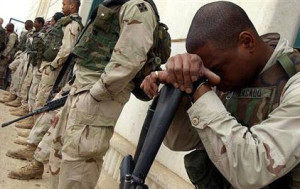
Iraq War anniversary apologies

Courtesy of PolicyMic.com.

There’s an interesting discussion taking place on Corey Robin’s blog regarding Ezra Klein’s apology for supporting the Iraq War:

Like many people who supported the Iraq War, Ezra Klein has written his apologia.

But he fails to identify—indeed, repeats—his biggest mistake in supporting the war: When thinking of the US government, he  thinks “we.”

Iraq, [Kenneth Pollack] said, shouldn’t be America’s top priority. We should first focus on destroying al-Qaeda. We should then work on the Israeli- Palestinian conflict. Only then should we turn to Hussein. Moreover, when and if we did invade Iraq, we should do so only as part of a coordinated, multilateral operation…

After all, what other chance would we get to topple Hussein?

It wasn’t worth doing precisely because the odds were high that we couldn’t do it “right.”

Klein doesn’t think a state invaded another state; he thinks “we” went to war. He identifies with the state. Whether he’s supporting or dissenting from a policy, he sees himself as part of it. He sees himself on the jeeps with the troops. That’s why his calls for skepticism, for not taking things on authority, ring so hollow. In the end, he’s on the team. Or the jeep.

I’ve learned a lot from reading the comments. (Now there’s a sentence you rarely see on the Internet these days.) One commenter, Justin, replied:

Maybe I’m too naive, but isn’t the problem that more people DON’T identify with the government? If we identify with the government, then its failings are our failings and there’s more motivation to change things because they’re being done in our names. If we don’t identify with it, then it’s just this abstract entity that we can have nothing to do with, which leads to the government abusing its power because none of us feel responsible for it.

I guess I don’t think it’s a problem that Klein is “on the team” – it’s that most of us aren’t on it and thus don’t have any say on what’s happening.

Another commenter, Ned Ludd, raised a different point:

Because he supported the stablishment position on Iraq, Ezra Klein was able to rise into the ranks of the establishment. Back in January 2007, Jebediah Reed of the now-defunct Radar Magazine took a look at some of the career trajectories of pundits who supported the war (Tom Friedman, Peter Beinart, Fareed Zakaria, Jeffrey Goldberg) and the subsequent careers of vocal opponents of the invasion (Robert Scheer, William. S. Lind, Jonathan Schell, Scott Ritter). If Klein had been against the war, he never would have been promoted from obscurity to the pages of the Washington Post.

All of these points raise the question of how such a calamity as Iraq can be avoided in the future. As The Atlantic‘s Elspeth Reeve has ably demonstrated, the 10-year anniversary edition of self-flagellation for supporting the Iraq War has blossomed so ubiquitously as to necessitate a taxonomy of apology bullet points: “I was but a lowly worm,” “I was fooled by bad intelligence,” and so on.

However, what many such Iraq War apologists and (much later) apologizers seem to have in common is an inability to grasp their deeper failing for directing much of their vitriol at the anti-war crowd and castigating those people (who turned out to be very right in the end) as a bunch of hippies. Freddie deBoer remembers this specifically:

You know, I’m reading all of the Iraq mea culpas, some good, some bad. But they are all systematically ignoring one of the most obvious and salient aspects of the run up to the war: the incredible power of personal resentment against antiwar people, or what antiwar people were perceived to be. As someone who was involved in day-to-day antiwar activism at the time, the visceral hatred of those opposing the war, and particularly the activists, was impossible to miss. It wasn’t opposition. It wasn’t disagreement. It was pure, irrational hatred, frequently devolving into accusations of antiwar activists being effectively part of the enemy. Yet for as visible and important as this distaste was for the debate, it’s missing from the postmortems.

Ta-Nehisi Coates has similar memories:

I am not a radical. But more than anything the Iraq War taught me the folly of mocking radicalism. It seemed, back then, that every “sensible” and “serious” person you knew — left or right — was for the war. And they were all wrong. Never forget that they were all wrong. And never forget that the radicals with their drum circles and their wild hair were right.

And Conor Friedersdorf compiles a roundup of mockery aimed at anti-war protesters before and during the war.

It’s enough to make one wonder if we ever learn anything, at all, from history.

Enhanced by Zemanta

“Mutually Assured Destruction” on The Americans: Sam Lim and I discuss Episode 8

Screen Shot 2013-03-24 at 7.54.44 PM

Jay: Ho hum. Another episode of The Americans, another sigh of disappointment. This is getting to become a ritual weekly event.

This time we have Granny telling Elizabeth the truth about Phil and Irina. We have Stan and Amador’s colleagues getting blown to smithereens. We have Amador himself starting to suspect his former girlfriend…of something. And we have a West German loose cannon on the prowl until he, too, gets blown to smithereens.

What a lot of these moments have in common, or how they tie together, is not always clear. Why, for instance, did Granny feel it necessary to sabotage Elizabeth’s marriage? Was this her backhanded way of exacting revenge for the beating she received at Elizabeth’s hands: a ruined marriage for a bruised face? Or was there some larger strategic calculation at play? My first thought was that this could set up a situation in which Elizabeth sells out Phil to her bosses for his lack of commitment, as revenge for his infidelity. But by the end of the episode, their tension had mostly dissipated into familiar marital discord.

Nina’s conversation with Stan at the end, meanwhile, was certainly bizarre. What exactly is going on at the embassy? Is she really being promoted, or is Arkady moving her up to keep a closer eye on her? Something about that situation seemed funky.

Also, it was never explained why the West German hired hand would have a problem with following directions from the KGB. What’s it to him whether or not a scientist lives or dies? As with so many aspects of The Americans, this is left unexplained.

Also, I guess I’m supposed to care that Phil’s and Elizabeth’s marriage is falling apart, right? Well, I don’t.

Do you? Continue reading “Mutually Assured Destruction” on The Americans: Sam Lim and I discuss Episode 8