All posts by Jay Pinho

About Jay Pinho

Jay is a data journalist and political junkie. He currently writes about domestic politics, foreign affairs, and journalism and continues to make painstakingly slow progress in amateur photography. He would very much like you to check out SCOTUSMap.com and SCOTUSSearch.com if you have the chance.

My problem with TEDx

krugman
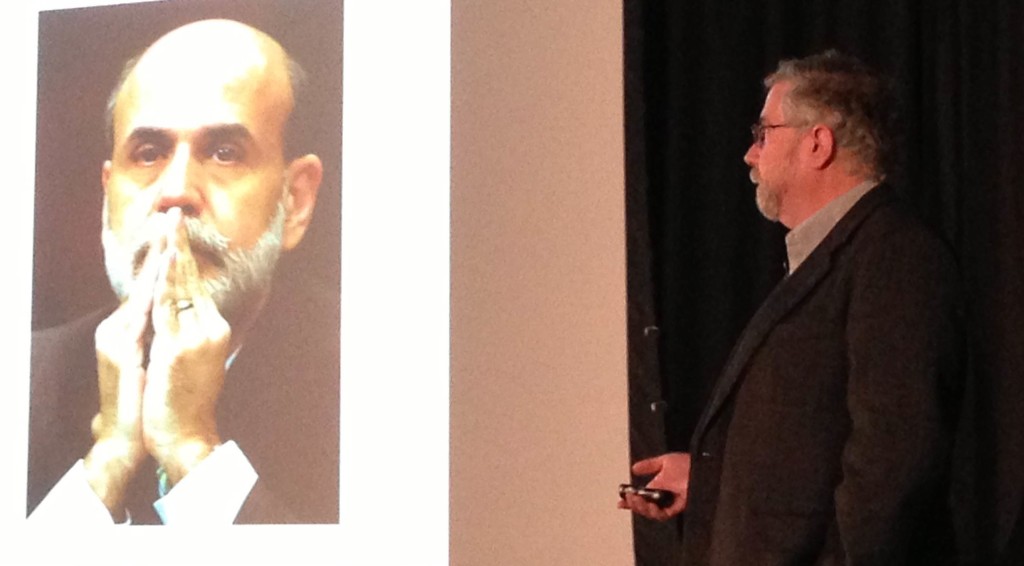
Battle of the Beards: Paul Krugman eyes his sometime bête noire, Ben Bernanke. TEDx talk at Columbia University’s School of International and Public Affairs. Friday, February 15, 2013.)

It wasn’t until after all the speeches had ended and everyone was mingling around the makeshift bar outside that I finally made the connection: TEDx is just like church.

I can’t remember the first time I heard about TED, the conference series that emerged into the spotlight rather suddenly several years ago and has become a staple of the socially conscious set ever since. But I distinctly recall feeling mounting skepticism with each new mention of the organization, which was often expressed in near-mythic terms and was almost always unqualifiedly positive.

The first full talk I recall actually watching myself was Dutch General and then-Chief of Defence Peter van Uhm’s TEDx speech in the Netherlands in 2011. I’d been assigned the video for a graduate class in January of last year. The course was on the American military, and the TEDx talk I’d been instructed to watch was titled “Why I Chose the Gun.” Here’s how it started:

Well, ladies and gentlemen, first of all, thank you for giving me an applause before I even started. As the highest military commander of the Netherlands, with troops stationed around the world, I’m really honored to be here today. When I look around this TEDx Amsterdam venue, I see a very special audience: you are the reason why I said yes to the invitation to come here today. When I look around, I see people who want to make a contribution. I see people who want to make a better world — by doing groundbreaking scientific work, by creating impressive works of art, by writing critical articles or inspiring books, by starting up sustainable businesses. And you all have chosen your own instruments to fulfill this mission of creating a better world.

This, as I would soon discover, was as perfect a microcosm of the TED experience (TEDxperience?) as one could find. First, the establishment of his credentials; then, the obligatory salute to the audience; and, finally, the ode to the transcendent ideal of “a better world.” Continue reading My problem with TEDx
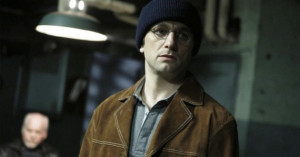
“Gregory,” we have a problem: Sam Lim and I take on Episode 3 of The Americans

philSam: I almost liked this whole episode. But even with managed expectations this week, I still couldn’t buy it all. Allow me to explain.

On the whole, I thought this episode was perhaps the best one so far. The whole scene with Gregory’s guys moving Joyce, Robert’s wife that no one knew about, off the street was pretty smooth. The story lines, for the most part, weren’t tangential.

But, I still found myself not liking the show any more than I did after episode one. I’m realizing that perhaps my dislike of this series has more to do with my dislike for mushy family-ness than the show itself. I find myself wanting to just skip the scenes between Philip and Elizabeth working out their wacky relationship problems, and perhaps because the non-relationship parts of the show are not on par with that of Homeland‘s, the show seems ehh to me.

But, my own realizations aside, let me now point out the parts I found strange. Did it seem strange to you that Elizabeth had such a deep contact in Philly? The way she explained it she must have met Gregory shortly after she and Philip moved to the US. For such a loyal KGB agent, she seemed unusually chatty about her ties with him when they first met. Sure, she fell for the dude, but wouldn’t she have been even more steely and committed to her cause than she is now? I just found this story line to be a bit of a stretch.

Also, the way Granny was introduced in the restaurant where Philip and his daughter were having breakfast just seemed weird. Who interrupts other people’s conversations from the bar? Maybe no one bothers me from across restaurants I go to, but that seemed strange to me. Finally, Stan must be quick at tying his shoelaces, because he didn’t look like he’d finished tying it when we started running after the dude “in the hood.”

Overall, though, I wasn’t as disappointed as the previous two episodes. Just ambivalent. Your take? Continue reading “Gregory,” we have a problem: Sam Lim and I take on Episode 3 of The Americans

Elizabeth Warren is still scaring Wall Street. And it’s about time.

Kevin Roose provides context for the above video:

This video of Senator Elizabeth Warren putting the hurt on a bunch of regulators in her first hearing on the Senate Banking Committee is pretty amusing. I’m a big fan of the clip that starts at about 2:30, when Warren asks Tom Curry, who heads a little regulatory agency called the Office of the Comptroller of the Currency, why the OCC hasn’t taken more Wall Street banks to trial, rather than settling out of court and getting them to pay a penalty when they break the law, and Curry hems and haws and can’t really answer, so he basically goes full Milton from Office Space and then just kind of trails off and sulks.

Even though Wall Street bankers weren’t the target of Warren’s interrogation yesterday — the regulators who oversee them were — the financial industry is apparently freaking out about the hearing, on the theory that it augurs a tough road for them ahead in dealing with Warren as a senator. Ben White got some quotes from scared financial industry executives who called her performance “shameless grandstanding” and accused her of competing with Ted Cruz for the title of “most extreme fringe freshman senator.”

Which raises the question: Are these people kidding?

Enhanced by Zemanta

The Christopher Dorner story, and the media’s complicity with the police

Max Blumenthal was monitoring a police scanner during the standoff between alleged cop killer Christopher Dorner and the police who had surrounded the cabin where he was staying:

In an initial dispatch, a deputy reported seeing “blood spatter” inside the cabins. Dorner, who had just engaged in a firefight with deputies that killed one officer and wounded another, may have been wounded in the exchange. There was no sign of his presence, let alone his resistance, according to police dispatches.

It was then that the deputies decided to burn the cabin down.

“We’re gonna go ahead with the plan with the burner,” one sheriff’s deputy told another. “Like we talked about.” Minutes later, another deputy’s voice crackled across the radio: “The burner’s deployed and we have a fire…”

Over the course of the next hour, I listened as the sheriffs carefully managed the fire, ensuring that it burned the cabin thoroughly. Dorner, a former member of the LAPD who had accused his ex-colleagues of abuse and racism in a lengthy, detailed manifesto, was inside. The cops seemed to have little interest in taking him alive.

“Burn that fucking house down!” shouted a deputy through a scanner transmission inadvertently broadcast on the Los Angeles local news channel, KCAL 9. “Fucking burn this motherfucker!” another cop could be heard exclaiming.

This fact hardly registered in the media, however:

At the time that I am writing this, some online media outlets are beginning to entertain the possibility that San Bernardino County Sheriff’s deliberately set the fire that killed Dorner – a fact that I reported on Twitter as soon the sheriff’s department order came down. If there is any doubt about the authenticity of theYouTube clip containing audio of the sheriff deputies’ orders to burn the cabin down, I can verify that it is the real thing. I was listening to the same transmissions when they first blared across the police scanners.

In the hours after the standoff, however, the police cover-up remained unchallenged thanks largely to local media complicity. An initialLos Angeles Times report recounted the incident in a passive voice, claiming “flames began to spread through the structure, and gunshots, probably set off by the fire, were heard.” Similarly, LA’s ABC affiliate, KABC, quoted Bachman’s vague comment about “that cabin that caught fire,” failing to explore why it was aflame or who torched it.

Today, the Los Angeles Times reported claims by anonymous “law enforcement sources” that the sheriffs used “incendiary tear gas” to flush Dorner out of the cabin. The sources claimed the deputies who had besieged the cabin were under a “constant barrage of gunfire” and that, “There weren’t a lot of options.”

This is almost certainly a lie.

Enhanced by Zemanta

From the Criterion Collection, with love (and for free)

The Verge is reporting that the entire Criterion Collection of films will be available to stream for free via Hulu — from today through the weekend. Happy Valentine’s Day!

The company has routinely offered up selections from its catalog — normally exclusive to paying Hulu Plus subscribers — for complimentary viewing, but now it’s opening up the floodgates and making hundreds of classic motion pictures available at no cost. If you’re spending Valentine’s Day alone, at least you can now spend your evening lost in the timeless treasures of cinema.

Enhanced by Zemanta

A New Yorker Valentine’s Day

The magazine took a meandering walk through its archives today:

My personal favorites are from the thirties and forties. In February of 1942, The New Yorker reported on “the saddest Valentine’s Day story” of the year:

[It’s] an enormously involved affair which starts with a young lady named Therese telephoning Western Union and asking that Valentine Greeting 242 be delivered to a certain young man. Valentine Greeting 242 might be criticized as kind of silly, but it’s definitely harmless; it reads, “Hens cackle, Roosters crow, You’re my Valentine, Don’t cha know.” Western Union, however, sent out Valentine Greeting 241, which reads, “Be my Valentine, Be my honey, We’ll live on Love and Daddy’s money.” Daddy got hold of it, inevitably, and while he is probably no more suspicious than other daddies, there was a lot of explaining to be done. Western Union, we’re glad to report, wrote a manly, straight-forward letter accepting all the blame, which was considerable.

Enhanced by Zemanta

Good riddance to a nuisance

DSC_0986.jpgHe was a Boston icon, yes. But Glenn Ordway was also such a vulgar, uncreative radio personality for so many years that his eventual termination is all the more embarrassing for its tardiness. Perhaps Ordway’s most enduring legacy is bringing Rush Limbaugh-esque sensibilities to Boston sports talk radio, and for that I say: don’t let the door hit you on the way out.

The fall is a stunning one for Ordway even by the volatile standards of the radio business. He was the ringleader of the “The Big Show,” which featured him moderating a rotating cast of co-hosts, and the show was a tremendous ratings success through the late ’90s and well into the last decade.

Ordway signed a five-year contract worth a reported $1 million per year in January 2009, but there were out-clauses if certain ratings benchmarks weren’t met.

The launch of the CBS Radio-owned 98.5 The Sports Hub in August 2009 almost immediately revealed that there was room for two potent, strong-signaled sports radio stations in the market. It’s afternoon drive program, hosted by Michael Felger and Tony Massorotti, has consistently had stellar ratings the past couple of years.

The competition cut into Ordway’s audience — and in a sense, his salary. In September 2011, Entercom, WEEI’s parent company, cut his salary in half after the program failed to finish among the top three stations in the Boston market for a particular demographic in a specific number of consecutive Arbitron books.

In his own words:

“You’re going to hear nothing negative about anybody here,” said Ordway. “If you’re looking for that, you’re not going to find it here.”

On why he wasn’t expressing more of his disappointment publicly, Ordway said, “I was there on Day One. I was a big part of starting all this, so I’m really fond of it.”

Took him thirty years to find the high road, but glad to hear he’s briefly discovered it.

Enhanced by Zemanta

A Congress of simpletons

Jeremy W. Peters reports on the contentious Armed Services Committee meeting yesterday that resulted in its recommendation for Chuck Hagel’s nomination as Secretary of Defense:

At times, the meeting slipped into an unusually accusatory and bitter back-and-forth, with Republicans like Ted Cruz, a freshman senator from Texas, going as far as to suggest that Mr. Hagel had accepted money from nations that oppose American interests.

Saying that he had serious doubts about the source of payments that Mr. Hagel had accepted for speaking engagements, Mr. Cruz declared, “It is at a minimum relevant to know if that $200,000 that he deposited in his bank account came directly from Saudi Arabia, came directly from North Korea.”

Senator Bill Nelson of Florida and other Democrats countered by saying that Republicans had unfairly questioned the integrity of both Mr. Hagel, a two-time Purple Heart recipient, and had undermined the work of the normally bipartisan committee itself.

“Senator Cruz has gone over the line,” Mr. Nelson said. “He basically has impugned the patriotism of the nominee.”

Senator John McCain, Republican of Arizona, who is opposing his former colleague, also bristled at the attacks on Mr. Hagel, saying that “no one on this committee should at any time impugn his character or his integrity.”

Tension reached its height when Senator James Inhofe of Oklahoma, the senior Republican on the committee, said that those who had suggested that Mr. Hagel was “cozy” with terrorist states had a basis for their claims because Iran had expressed support for his nomination.

“He’s endorsed by them,” Mr. Inhofe said. “You can’t get any cozier than that.”

Senator Claire McCaskill, Democrat of Missouri, gasped in disgust. “Senator Inhofe, be careful,” she later warned him. “What if some horrible organization said tomorrow that you were the best guy that they knew?”

“Horrible organization?” Implicitly characterizing Iran as such is not only ignorant — for one, most people wouldn’t refer to Iran as an “organization” — but it also perfectly illustrates the binary us=good/them=bad mentality of our elected officials towards the rest of the world.

No wonder neocons retain their substantial influence on American foreign policy, despite their shameful record on Iraq. No wonder we end up getting involved in Libya and even now some are agitating for action in Syria. If the prospect of being endorsed by one of the United States’ enemies — an enemy created thanks to the actions of the CIA as much as those of the current Iranian regime itself — is so anathema as to disqualify a Defense Secretary nominee, that says more about the committee discussing his appointment than it does about Chuck Hagel.

Enhanced by Zemanta

A State of the Union “prebuttal”

Brendan Nyhan at the Columbia Journalism Review tries to dampen the hype:

So far, there has been less hype about the power of the bully pulpit than usual—The Washington Post even ran a story today headlined “Impact of State of Union speeches isn’t very lasting.” But the stakes are lower than the media’s overwrought phrasing often suggests. Politico’s Glenn Thrush wrote yesterday, for instance, that “If Americans perceive Obama as too partisan, he’ll lose a serious share of his personal popularity.” In reality, however, Obama isn’t likely to significantly increase his approvalor significantly reduce it. And even if he did make a major blunder, we wouldn’t know it from the ill-conceived instant polls of speech watchers that tend to shape reporting and punditry in the aftermath of the State of the Union. Here’s hoping some media outlets take a better approach in 2013 so this column doesn’t become an annual tradition.

Enhanced by Zemanta