All posts by Jay Pinho

About Jay Pinho

Jay is a data journalist and political junkie. He currently writes about domestic politics, foreign affairs, and journalism and continues to make painstakingly slow progress in amateur photography. He would very much like you to check out SCOTUSMap.com and SCOTUSSearch.com if you have the chance.

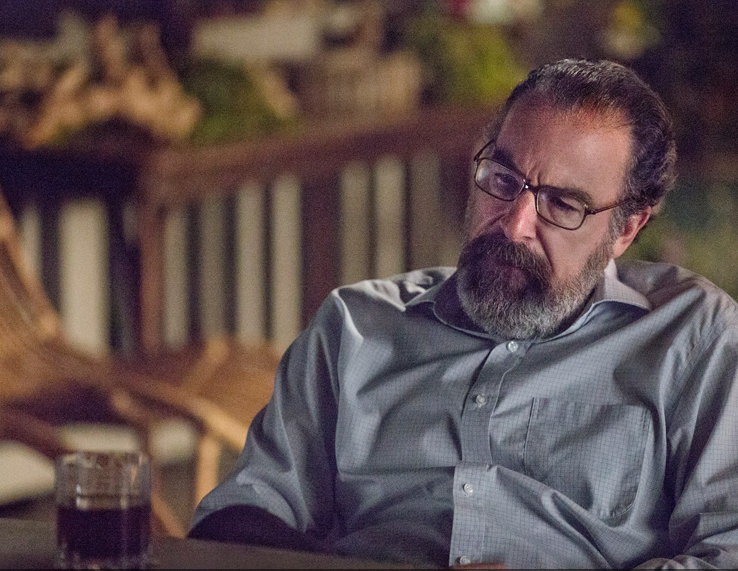
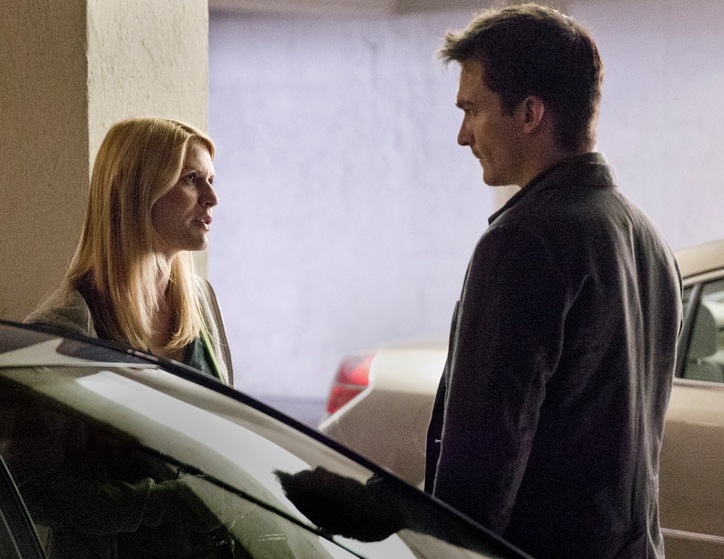
Episode 5 of Homeland: Is “The Yoga Play” the beginning of Saul gone rogue?

Screen Shot 2013-10-29 at 8.23.19 PM

Sam: Before we begin, let me just say: good luck to your Boston Red Sox. As a Seattle Mariners fan, I have no idea what it feels like to cheer on your team in the World Series.

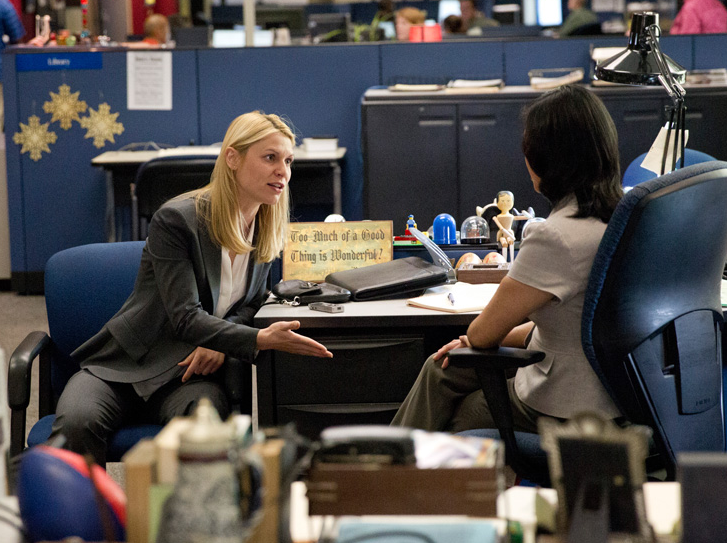
Now, on to this week’s episode. I think we started to see the beginnings of how the Brody family drama is going to intersect with the Carrie-Saul story. But, c’mon, would Jessica really go to Carrie looking for Dana?? It just felt like a huge leap to put them in the same frame again.

And would Carrie seriously put ALL that undercover work on the line just to check on Dana? It seemed all too implausible. But then again, it’s Carrie. I feel bad for Max and Virgil.

I feel bad for Saul, too, since he pretty much thought he’d be taking over the CIA. I mean I did, too, until the senator showed up. I think this also sparked a new track for the Saul-CIA story as well. Might Saul join Carrie in going rogue later on the road? Might Brody fit into that?

This week’s episode left me lots of questions, I guess. What about you? What were your thoughts on this episode?

Jay: One game to go! Man, I’m losing years (and hair) this October. But if they win on Wednesday or Thursday, it’ll all be worth it.

The Jessica-to-Carrie twist was a bit weird, for sure. I know she said she had nowhere else to go, but…really? Nowhere at all? Her local barista wasn’t working that day? Her stylist? Anyone else? I’m pretty certain Carrie is not the person she’d go to in that situation, especially when she’s shown zero interest in Brody’s kids (or wife, obviously) before. I also had the same feeling you had about Carrie: one second she’s saying this is not a good time for her, and the next moment she’s breaking all kinds of unwritten rules and jeopardizing an entire high-level spying operation in order to find a teenager who’s run off with a boy. Just…no.

Saul, for his part, seems ready to go rogue himself — as you suggested. His career’s just taken a hit, his wife seems to be cheating on him, and Carrie may have just blown the one intelligence operation that could manage to save his job.

That said, Carrie’s decision to go off her meds is so. Goddamn. Exhausting. Enough with that meme already. Just put her back on her medication and be done with it. The whole “will she or won’t she?” about taking her drugs is just beyond ridiculous at this point.

I’m not even sure what to think about Dana anymore.

My guess? Brody will be back in a big way either next episode or the one after. I wouldn’t be surprised to see Brody show up in Carrie’s apartment as a cliffhanger to close out next week.

What do you think is coming?

Sam: Totally with you on the whole meds and Carrie saga. I get that the show, as Mandy Patinkin said in a recent interview, is shining a light on mental health issues, but it’s rough seeing it recycled into the plot every season.

I forgot about Saul’s wife and “friend”! That’s a strange development. Not sure how I feel about the show diving farther into it beyond just the continued tension between Saul and his wife.

You know what made me laugh? Quinn’s reaction to Saul looping him in to the secret mission. If he had had a cigar in one hand and a bottle of booze in the other, he could’ve been Bunk.

I think next we may see the Brody connection come back with Carrie getting her face-to-face with Javadi. I have to think the mission will get messier before it gets resolved considering the unfolding clashes between Saul and the new CIA Director.

What are your thoughts on Javadi? How dangerous is this guy, you think?

Jay: Ha, is this our first-ever Bunk reference? How did we not incorporate him into our recaps already? Either way, excellently done.

One thing I find consistently frustrating about Homeland, by the way, is the way in which it perpetually places extremely high-level characters into gritty settings in which their real-life counterparts could not possibly ever find themselves. This happens so frequently at this point that it’s hardly worth mentioning, but I will anyway:

– Dar Adal riding the bus last season
– David Estes frequently hanging out around the secret control room the CIA used to track Brody while he was working for them
– And now, the deputy intelligence director of Iran (right?) driving himself into the country under false pretenses

A few times is forgivable. But the constant switching between worlds is more and more distracting each time it happens. Isn’t part of the point of Homeland to illustrate the enormous fallout from the actions taken by distant bureaucrats and politicians on the lives of ordinary citizens living out their gritty existences? That’s, in fact, the entire internal struggle that animated Brody in Season 1: Issa, a real flesh-and-blood child that he loved, was taken from him as the direct result of men in suits halfway around the world deciding to push a virtual button on a remote-controlled aerial vehicle.

But when everyone’s crossing between these two worlds — going from the halls of power to the “real world” and back — the show is abandoning its (important) point about how desensitizing politics and espionage and bureaucracy can be. The characters are no longer insulated (as their real-world counterparts generally are) from the consequences of their actions: Carrie can go from phone conversations with the interim director of the CIA to being kidnapped by the Iranians in the course of 24 hours.

And speaking of Javadi, it’s hard to tell how dangerous he is yet but I hope they don’t turn him into some poor man’s version of Abu Nazir. What could be interesting is if Carrie ends up involuntarily reenacting the reverse of Brody’s plot last season: forced by the Iranians to work as a double-agent for them after they’ve discovered her ploy by going back to the CIA and feeding them false information or something similar.

Enhanced by Zemanta

To Blame Everything, Read Here: The Folly of Technological Defeatism

My inner cynic was pleased to discover that the back cover of Evgeny Morozov’s latest book, To Save Everything, Click Here, included a blurb from noted war journalist and scholar David Rieff. The curmudgeonly critic was a professor of mine at Sciences Po in Paris two years ago, and his class was a weekly tour de force of disillusionment with the modern human rights-industrial complex.

In praise of Morozov’s latest effort, Rieff wrote, “Against the reigning consensus — that there is a digital fix for every social and political problem, and that thanks to the technologies that we group together for convenience’s sake as the Internet, the brave new world of the future will be one of endless, limitless improvement in every realm of life — Morozov offers a sophisticated, eloquent, and definitive rebuttal.” This was the Rieff I remembered from my time in grad school, as I heard him wearily repudiate the moralist cri de coeur of peers like Michael Ignatieff and even Bernard Kouchner. It’s the same Rieff I read with great interest in the virtual pages of Foreign Policy, where he took a moment between excoriations of “Kony 2012” and the Singularity movement to dub Morozov “cyber-utopianism’s severest and most eloquent critic.”

That may not be inaccurate. But it is hardly the whole story. A mid-sized hamlet’s worth of straw men make brief cameos in To Save Everything, Click Here, only to be set ablaze by Morozov’s rapid-fire denunciations. Intellectual broadsides are not innately problematic, of course. But like fellow fire-breather Glenn Greenwald — whom Morozov, in his book, dubs “a terrific polemicist…[with] a tendency to overstate his case” — the Belarusian-born author often employs scorched-earth rhetoric against stunning illogic. Continue reading To Blame Everything, Read Here: The Folly of Technological Defeatism

“Game On” for Homeland: the twists return

Screen Shot 2013-10-22 at 8.30.41 PM

Sam: Finally! The Homeland I’ve been waiting for is back. How can we not start at the end?

Did you see Carrie playing an undercover role here at all? Did she not seem off her rocker, for real? All the promos and stories so far this season have pitted Carrie against Saul, and I didn’t think for a minute they might be in on the whole thing together.

Damn it. Continue reading “Game On” for Homeland: the twists return

“Tower of David:” Homeland catches up to Brody

Screen Shot 2013-10-15 at 10.26.15 PM

Jay: Episode 3 was a strange beast. You’d think that, after two Brody-less episodes, I’d be thrilled to finally get one in which he’s onscreen for most of the hour. (Even more so considering the utter absence of his family, which I think everyone can agree was a pleasant development.)

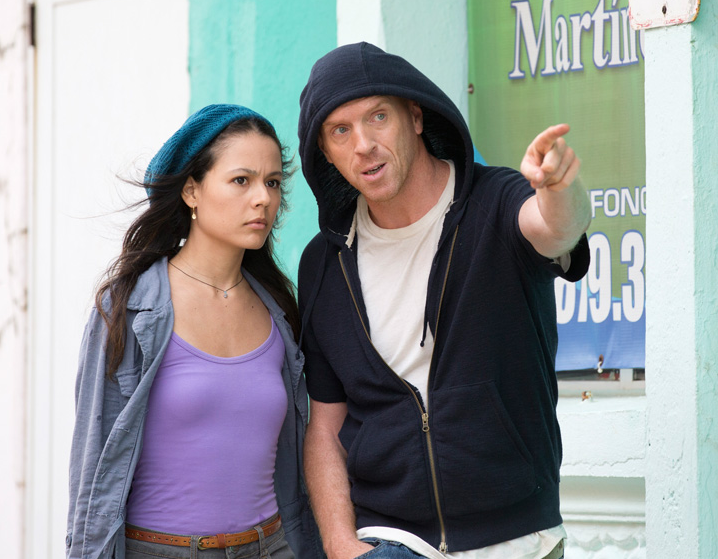
And yet at times his scenes seemed to drag on (a notable achievement given the clear –and successful — attempt at eye candy with the inclusion of Martina García as Esme), without any clear sense of direction. I suppose it was inevitable that a substantial amount of time would be required to reestablish Brody in the viewing audience’s consciousness. But something about his interactions with the doctor, as well as with Esme’s father, left me feeling slightly disengaged by about 30 minutes in.

Fortunately, the duller moments were broken up by some truly spectacular vistas of downtown Caracas, including a breathtaking view of the Tower of David itself from the outside. But phenomenal cinematography aside, I was still left with a lot of questions. For example, how did Brody end up in Colombia in the first place, before getting shot and making his lucky way into Venezuela? And who, exactly, was the guy that visited Carrie in the mental hospital? (And why did he call her — at least, it sounded like he did — Franklin when he first saw her?) And who, or what, is really keeping Carrie in the institution? Is it really Saul, or is it simply the doctor out of concern for her condition? Continue reading “Tower of David:” Homeland catches up to Brody

Playing the blame game

Courtesy of The New York Times.

Much ink has been spilled over the relative blame that should be assigned to various parties in the current government shutdown / impending debt-ceiling fiasco from hell. (About that spilled ink, I’m speaking virtually, of course: no one still publishes on physical paper anymore, do they?)

Aside from the predictable litany of “both sides need to compromise” bullshit from the zombie lords of political commentary — which The Atlantic‘s James Fallows, Al Jazeera‘s Dan Froomkin, and NYU professor Jay Rosen continue to eviscerate brilliantly — perhaps most distressing still are the results of today’s Gallup poll:

Americans are now more likely to name dysfunctional government as the most important problem facing the country than to name any other specific problem. Thirty-three percent of Americans cite dissatisfaction with government and elected representatives as the nation’s top issue, the highest such percentage in Gallup’s trend dating back to 1939. Dysfunctional government now eclipses the economy (19%), unemployment (12%), the deficit (12%), and healthcare (12%) as the nation’s top problem.

This is, in its own way, tantamount to a Republican victory — and one that could have more profound long-term implications than whatever short-term turbulence the GOP has inflicted upon itself courtesy of its decreasingly fringe-y “wacko bird” fringe. Indeed, although early indications suggest that House Republicans may suffer for their intransigence in next year’s midterms, there are plenty of reasons to bet against the Democrats’ chances of retaking the lower chamber in 2014.

Meanwhile, the broader national disgust with governmental dysfunction plays directly into Republicans’ hands: in fact, it could be argued that the GOP will always have a home-field advantage of sorts over the Democrats when the two parties are at loggerheads over just about anything of consequence. When bitterly contested policy issues cause Americans to blame government generally (even if, as is the case now, one side is clearly precipitating the immediate crisis), Republican ideology wins the day. Time will tell if this triumph is more durable than the Democrats’ current advantage in generic horse-race Congressional polling.

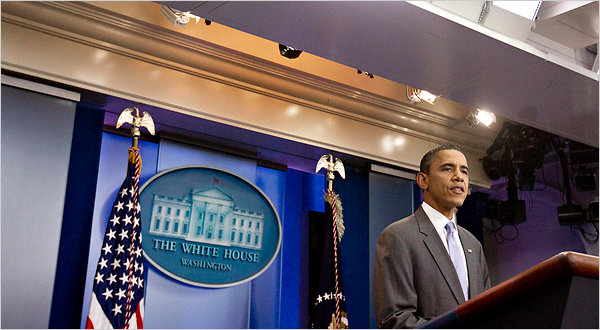
But there is yet another component to this struggle that’s extremely apparent but is somehow not gaining the traction I’d expect, especially from left-leaning media outlets. And that is the direct line connecting President Obama’s decision to negotiate the debt-ceiling increase in the summer of 2011 with the current crisis. While there is no question that Republican lunacy is the immediate cause of the budgetary and debt-ceiling impasses, much longer-term blame rests directly on the shoulders of Barack Obama.

Today’s manufactured crisis was an entirely foreseeable outcome of Obama’s capitulation two years ago. In fact, Paul Krugman predicted exactly this sort of future as soon as the 2011 deal with Republicans was announced. In an August 1, 2011 column titled “The President Surrenders,” Krugman wrote:

For the deal itself, given the available information, is a disaster, and not just for President Obama and his party. It will damage an already depressed economy; it will probably make America’s long-run deficit problem worse, not better; and most important, by demonstrating that raw extortion works and carries no political cost, it will take America a long way down the road to banana-republic status.

Republicans will supposedly have an incentive to make concessions the next time around, because defense spending will be among the areas cut. But the G.O.P. has just demonstrated its willingness to risk financial collapse unless it gets everything its most extreme members want. Why expect it to be more reasonable in the next round?

In fact, Republicans will surely be emboldened by the way Mr. Obama keeps folding in the face of their threats. He surrendered last December, extending all the Bush tax cuts; he surrendered in the spring when they threatened to shut down the government; and he has now surrendered on a grand scale to raw extortion over the debt ceiling.

And this is exactly what ended up happening. Two days ago, Jonathan Chait explained this very phenomenon:

They see the debt-ceiling fight as being mainly about the long-term question of whether Congress will cement into place the practice of using the debt ceiling to extort concessions from the president. The price of buying off a debt-ceiling hike would surely be less than the risk of a default. But doing so would enshrine debt-ceiling extortion as a normal congressional practice. This both skews the Constitutional relationship between branches — allowing an unscrupulous Congress to demand unilateral concessions at gunpoint rather than having to compromise — and creates endless brinksmanship that would eventually lead to a default.

The administration’s stance, then, is that submitting to ransom now creates the certainty of default eventually.

The primary quibble I have with Chait’s explanation — as I do with most analyses I’ve read of the situation thus far — is that the time to establish this stance was two years ago, not now. Of course, now is better than never, but the risk of actual default does appear to be greater now than it was back in 2011, and this is primarily due to Republicans’ increased confidence — based on very recent history — that the White House and Congressional Democrats would simply capitulate once again. And this very expectation, paradoxically enough, made it more dangerous for the Democrats to actually stand firm and demand that the Republicans raise the debt limit without preconditions — precisely because the overly-confident Republicans had virtually locked themselves into a rhetorical corner over raising the debt ceiling.

So what’s the point? Aside from the fact that President Obama is quite clearly a disastrous negotiator, the primary point is that — contrary to “centrist” notions of endless compromise that are entirely unmoored from the empirical reality of each party’s ideological flexibility — giving away the bank to a party steered by radicals absolutely does not guarantee healthy compromises or even engender good-faith efforts in the future. To the contrary, when confronted head-on with the awesome incoherence of Tea Party rage, the worst possible weapon is the one President Obama wielded back in 2011: procrastination.

“Uh…Oh…Ah…:” Sam Lim and I discuss an inexplicably-titled Episode 2 of Homeland, Season 3

Screen Shot 2013-10-08 at 7.19.10 PM

Sam: You know what I thought this week? Did Homeland start taking a page from The Americans?

Is it just me or has this season been super charged with emotional relationships so far? As you pointed out, the storyline with Carrie being off her meds and having to be committed again is not new. Nor is Dana’s bickering with her mom.

Having said all that, it does make sense that deep rooted issues like the ones they are dealing with aren’t “fixed” overnight. It’s just the heavy emphasis on relationships that’s taking away from the thrill of Homeland as a covert operations show that’s starting to get to me.

I’m going to try something new and share my winners and losers this week:

Winner — Quinn. I sort of panned him last week for not being a cold blooded assassin. But it’s exactly his heart that’s got him in the winner’s seat. Loved his confrontation with the bank big wig and his subtle defense of Farah (sp?).

Loser — There were a few candidates here, but I’m giving it to Saul this week. In the sense of character development for Saul, you could argue he actually belongs in the winners column. I put him in the losers column this week because of the racist and condescending bit he threw at Farah (hey, I get to make up the rules for my winners and losers picks, right?).

What were your thoughts on this episode? Continue reading “Uh…Oh…Ah…:” Sam Lim and I discuss an inexplicably-titled Episode 2 of Homeland, Season 3

“Tin Man Is Down:” Sam Lim and I recap Homeland‘s return, sans Brody

homeland


Sam: In our prognostications after the season two finale about what we might expect in season three, I have to say: I was pretty wrong about Brody’s family disappearing from the story a bit. Not only are they back in the picture, but they also got way more screen time than Brody himself (you surprised at his no-show?).

I have to believe that the writers just wanted to find some way of getting moody (and as we have clearly come to see, depressed) Dana back into the picture. Poor Chris still gets one or two dopey lines.

As for the Saul-Carrie relationship, what you said at the end of season two about Saul’s dark horse potential for being something more than what we have seen, I couldn’t help eyeing him with suspicion throughout this episode, particularly with all the CIA leaks to the press.

What were your impressions? Continue reading “Tin Man Is Down:” Sam Lim and I recap Homeland‘s return, sans Brody