All posts by Jay Pinho

About Jay Pinho

Jay is a data journalist and political junkie. He currently writes about domestic politics, foreign affairs, and journalism and continues to make painstakingly slow progress in amateur photography. He would very much like you to check out SCOTUSMap.com and SCOTUSSearch.com if you have the chance.

The two-state solution is dying

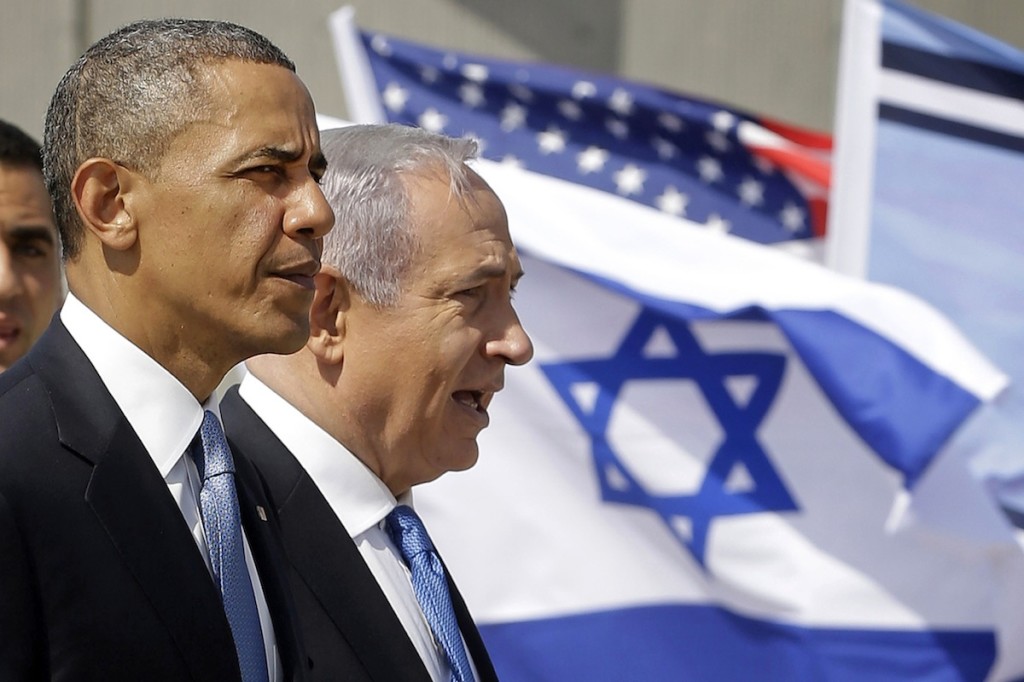
(AP Photo/Pablo Martinez Monsivais.)

My piece for The Morningside Post is up:

Indeed, Obama was right to decry the injustice of the occupation. But much of the blame for the perpetuation of what he termed the “grinding status quo” should rest squarely upon the president himself. Lacking from tonight’s speech was any semblance of a serious framework for peace talks, never mind for peace. A settlement freeze, once the centerpiece of Obama’s roadmap for peace negotiations, was never even timidly mentioned in passing.

Thus the cycle of endless backtracking is completed. Under Jimmy Carter, settlements were illegal. Under Ronald Reagan, they became an “obstacle to peace.” Now, as per Obama’s speech tonight, they are simply “counterproductive.” The progressively more muted rhetoric matches the devolution of the peace process from actual negotiation into something resembling kabuki theater.

And theater is precisely what it is: the continued half-hearted affirmations of the two-state solution by successive American presidents belie their rapidly vanishing interest in taking the steps necessary to achieve it.

2 A.M. Tune

[youtube http://www.youtube.com/watch?v=YiKArM-D5Fw]

The Fold – Ivan & Alyosha

I took this video last night (as in, Tuesday) at The Echo in Los Angeles. They sound even better live than on their album. Definitely worth seeing if you get the chance. (The audio is a bit dicey when the bass kicks in, but it’ll have to do.)

Book Review – Brokers of Deceit: How the U.S. Has Undermined Peace in the Middle East

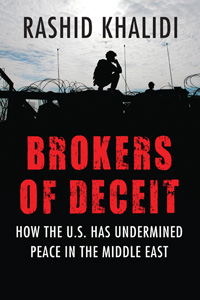
brokers of deceitRashid Khalidi, Brokers of Deceit: How the U.S. Has Undermined Peace in the Middle East (Beacon Press: 2013)


On Wednesday, Barack Obama will travel to Israel for his first official visit as President of the United States. The day after he arrives, he will deliver a speech to Israeli students at the International Convention Center that is expected to tread conventional ground regarding the peace process while gently reminding his audience that respecting Arab public sentiment on the occupation is a necessary condition for achieving a two-state solution.

Such modest objectives may seem anathema to true believers in Middle Eastern peace. But they are perfectly in keeping with the “peace process” industrial-complex portrayed by Palestinian-American historian Rashid Khalidi in his new book, Brokers of Deceit: How the U.S. Has Undermined Peace in the Middle East.

“I want to examine here…the veil that conceals how the policy of the United States toward the Palestine question has actually functioned to exacerbate rather than resolve this problem,” writes Khalidi in his introduction. Central to this disguise is the use of deliberately misleading language that wraps the decades-long stalemate in the ennobling lexicon of progress, before smothering it in the bureaucratic technobabble of “road maps” and “facts on the ground.” (If this sounds familiar, the bloodied remains of innocent drone strike victims have now attained the similarly reverential status of “collateral damage.”) Indeed, the all-encompassing term “peace process,” which Khalidi deems an “Orwellian rubric” obscuring “decades of futile initiatives,” is itself a figment of erstwhile imaginations warped beyond recognition by enough conferences, talks, and accords to fashion world peace several times over.

A question naturally presents itself: why bother with this charade at all? For Khalidi, much of the answer can be found in the goals of the various parties. He defines a successful resolution of the Israeli-Palestinian conflict as one entailing complete Israeli withdrawal from the West Bank and East Jerusalem, a “just resolution” for Palestinian refugees, and national autonomy for the Palestinian people. That all of these outcomes have failed to materialize is a product of Israeli and Palestinian deficiencies, of course. But it is also an indictment of American foreign policy on the subject, which has unfailingly taken Israel’s side as the prospects for peace slide with increasing urgency into history.

The reasons for the American-Israeli two-step and the United States’ consequent inability to end the Israeli-Palestinian conflict are threefold, Khalidi argues. The oil-exporting Gulf states have exerted almost no pressure on the United States over the plight of the Palestinians, domestic politics (especially the overwhelmingly hawkish Israel lobby) has prevented a change in strategy, and American policymakers demonstrate virtually no sympathy for the political and psychological duress of the Palestinians. On this last point, Khalidi quotes Richard Nixon, who in 1973 confided to Henry Kissinger: “You’ve got to give [Arabs] the hope…You’ve got to make them think that there’s some motion; that something is going on; that we’re really doing our best with the Israelis.”

“Doing our best,” it is no surprise to learn, meant something quite different to the Americans than it did to their Palestinian interlocutors. Behind Nixon’s Machiavellian scheming lay a rather simple truth: the domestic constituency for Palestinians was nonexistent, while Israel’s supporters regularly raised an unholy clamor. Forty years later, the Oval Office has occasionally changed hands but the calculation remains maddeningly identical. If anything, the din of the hawks has grown even louder: Khalidi accurately notes that an “increasingly formidable constellation of obstructionist forces” confronted Obama’s every timid attempt at course correction. Continue reading Book Review – Brokers of Deceit: How the U.S. Has Undermined Peace in the Middle East

The GOP’s wake-up call

The New York Times reports:

In a sweeping self-critique of the party’s 2012 election efforts, Republican leaders on Monday unveiled a set of proposals aimed at convincing younger voters, ethnic minorities and women that they have a home in the party, even if they do not agree with all of its positions.

“The report minces no words in telling us that we have to be more inclusive,” Reince Priebus, the chairman of the Republican National Committee, said on Monday. “I agree. And as President Reagan said, our 80 percent friend is not our 20 percent enemy.”

The national party’s report, called the Growth and Opportunity Project, is the latest contribution to a conversation among conservatives after disappointing losses in the 2012 presidential and Senate elections.

The report’s introduction is admirably candid:

At our core, Republicans have comfortably remained the Party of Reagan without figuring out what comes next. Ronald Reagan is a Republican hero and role model who was first elected 33 years ago — meaning no one under the age of 51 today was old enough to vote for Reagan when he first ran for President. Our Party knows how to appeal to older voters, but we have lost our way with younger ones. We sound increasingly out of touch.

As Mike Gerson and Pete Wehner wrote recently, “It is no wonder that Republican policies can seem stale; they are very nearly identical to those offered up by the Party more than 30 years ago. For Republicans to design an agenda that applies to the conditions of 1980 is as if Ronald Reagan designed his agenda for conditions that existed in the Truman years.”

The Republican Party needs to stop talking to itself. We have become expert in how to provide ideological reinforcement to like-minded people, but devastatingly we have lost the ability to be persuasive with, or welcoming to, those who do not agree with us on every issue.

Full text below.

Enhanced by Zemanta

Apartments of the (fictional) stars

Courtesy of FastCoCreate.com.

Interior designer Iñaki Aliste Lizarralde began sketching floor plans for the apartments inhabited by fictional TV characters:

In less time than it takes to say How I Met Your Mother, friends were asking Lizarralde to create similar layouts of the apartments of their favorite characters, like Sex and the City’s Carrie Bradshaw and Seinfeld’s Seinfeld. It turned out he was even able to sell them, too. But opening up Pandora’s Idiot Box has ultimately revealed some interesting details about the apartments of our fictional Friends.

“As an interior designer with years of experience, I developed my sense of space and ability to see sizes and proportions of architectural elements and furniture pieces,” Lizarralde says. “The problem with the living spaces on TV shows is usually located in the secondary sets, such as the bedrooms and bathrooms. Almost all the shows have triangular proportions to lend the sensation of depth to the sets. Even the apparently squared sets are in fact trapezoidal (wider in the front part and smaller at the bottom part) and sometimes it’s very difficult to translate to a sheet as “real houses” because all the tricks of the set decorators are in evidence.”

“But the war was politics.”

President George W. Bush addresses sailors dur...
President George W. Bush addresses sailors during the “Mission Accomplished” speech, May 1, 2003. (Photo credit: Wikipedia.)

Howard Fineman takes a look back at the beginning of the Iraq War, whose “shock and awe” campaign began ten years ago on Wednesday:

There were some reasons to expect success, or at least not to accept the dire warnings against invading Iraq. Bush’s critics had predicted disaster in Afghanistan, but in the first year or two after Operation Enduring Freedom, it seemed as though the “war lords” of the Bush administration were tough customers who knew what they were doing.

On the other hand, American ignorance of the Arab and Muslim worlds 10 years ago was alarmingly vast. More than ignorance, there was fear, prejudice and propaganda…

As for me, I could say that I was covering politics, not war, and that it wasn’t my job to try to pierce the veil of lies and “precog” justifications of the Bush-Cheney-neocon axis.

But the war was politics. It was a new battle for the president to be seen fighting as he headed toward a reelection run. I should have known more, studied more, asked more questions and been more skeptical.

I hope I am wiser now. I hope we all are.

Enhanced by Zemanta

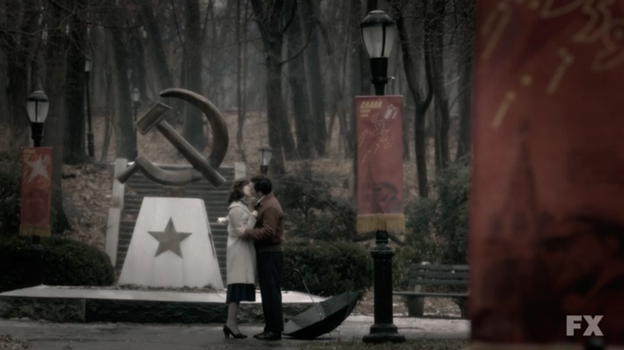
“Duty and Honor” and infidelity: Sam Lim and I discuss Episode 7 of The Americans


Courtesy of TV.com.
Courtesy of TV.com.

Jay: About halfway through this one, I really thought The Americans might have turned a corner. And in a way, I still think it might’ve. A lot took place in this episode, and part of me thinks my slightly more positive reaction stems mostly from the manipulative use of sad music during important scenes, instead of being a consequence of masterful storytelling.

Nevertheless, a few more things went well in this episode than I’m used to. It was also the rare TV episode in which relationships were the defining centerpiece and I wasn’t even bored. It helped that they added some mild twists, such as Stan being left at the bar and then, instead of hitting on the girl at the other end, meeting up with Nina. (By the way, that relationship is increasingly looking like it’s going in the direction I’d guessed earlier: he’s worried about her, and the FBI doesn’t give a damn.)

Phil’s backstory just got a hell of a lot more interesting as well, although I really wasn’t a fan of the actress who played his former love interest. First of all, why does she still look like she’s 16, even though she has a son that’s older than that? Secondly, I just didn’t find her a very convincing actress. Nevertheless, the execution of that part of the story was decent. It didn’t occur to me now — and here comes the obligatory Homeland reference — that Phil’s lie to Elizabeth at the very end (that nothing happened between him and Irina) is very reminiscent of Brody’s lies to Jess about Carrie. Anyway…

Once again, the events feel as if they’re taking place in a vacuum, though. Political events come into focus at the beginning of an episode, intensify during the middle, and are resolved by the end. It’s like Family Guy, only less funny. (That’s a bit harsh.) But I am trying to remain hopeful that the show can continue to nicely balance the relationship and career aspects of the show. Speaking of which, Elizabeth and Granny’s conversation on the park bench looked pretty ominous. If this were a higher-quality show, I’d venture to guess that it will have ripple effects in later episodes. On The Americans, I have no idea.

What’d you think? Continue reading “Duty and Honor” and infidelity: Sam Lim and I discuss Episode 7 of The Americans

A few HuffPo knickknacks

Today's HuffPo front page. Ouch.
Today’s HuffPo front page. Ouch.

Above: the front page of The Huffington Post as of 3:25 PM EST.

Below: my first piece for HuffPo, on Michael Bloomberg’s Super PAC and the scourge of outside campaign spending. (I’ve written previously about this here and here.)

At the time, many progressives cheered the appearance of Independence USA as a welcome response to the deluge of money then flooding the airwaves from conservative activists. After the Illinois special election results, the applause is likely to grow louder. But the degradation of campaign finance laws, a development that has facilitated the proliferation of organizations like Bloomberg’s, is an unqualified blight on democracy. Liberals may have triumphed in this round, but the true message of Robin Kelly’s victory is that no political candidate is immune to the scourge of outside (and outsized) spending.

Enhanced by Zemanta

The deadball era, the steroids era, and the Benedict XVI era

Pope Benedictus XVI
Pope Benedictus XVI. (Courtesy of Wikipedia.)

Dan Connolly at The Baltimore Sun posted a list of home run kings during each period of papal reign:

Baseball historian/statistician Bill Arnold passed this tidbit my way. And I had to share it with you. It combines Catholicism and baseball. And includes Baltimore’s greatest son.

In honor of the Roman Catholic Church naming Francis I its new pope Wednesday, Arnold put together a list of all-time, home-run leaders under each of the 11 popes since Major League Baseball was officially formed.

I’m not kidding.

Baltimore-born Babe Ruth is the only player to have sole possession of homer crowns under two popes (Hank Aaron had to share one). And, appropriately, the last player to win the “Pope Homer Crown” was a Cardinal and then an Angel: Albert Pujols (during Benedict XVI’s reign.)

By the way, Arnold points out that, numbers-wise, it’s easier to be selected to be pope (66 percent of the electorate) than a baseball Hall of Famer (75 percent).

(Follow the link above to see the full list.)

Here’s to the Pope Francis era being a less scandalous one for both Major League Baseball and the Catholic Church.

Enhanced by Zemanta

Freedom of speech, except for the press

ESPN sports columnist Bill Simmons (a.k.a. “Sports Guy”) was suspended from Twitter for disparaging the network in regard to the above video:

ESPN has suspended superstar columnist Bill Simmons from Twitter after he criticized the network’s controversial First Take show, according to a Deadspin report.

On First Take last week, NFL player Richard Sherman eviscerated host Skip Bayless in an extended exchange that quickly went viral online. Bayless has long antagonized sports fans for what many see as convoluted rants and unnecessary criticism of athletes intended to generate controversy more than provide actual value to viewers. Sherman was widely celebrated for standing up to Bayless and dressing the host down.

Enhanced by Zemanta