All posts by Samson X. Lim

About Samson X. Lim

Samson Lim is the Founder and Chairman of the Board of Scholarship Junkies, a Seattle-based scholarship resource organization that works to help students make higher education more affordable. Sam spent the 2010-11 academic year in Berlin, Germany, as a U.S. Student Fulbright Scholar and is currently pursuing his Master of Arts in Education Policy at Teachers College, Columbia University. When he’s not buried in grad school reading, Sam emerges every once in a while to highlight higher education and financial aid issues in 140 characters or less at @samsonxlim.

Find yourself a “Safe House,” or a relative close by…you’re probably wanted for murder — Sam Lim and I discuss The Americans, Episode 9

photo_3
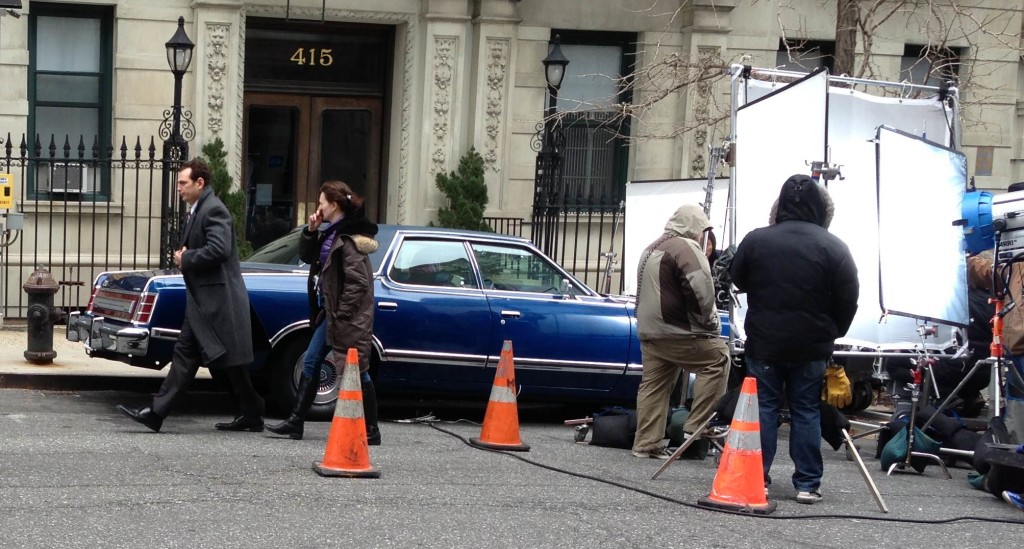
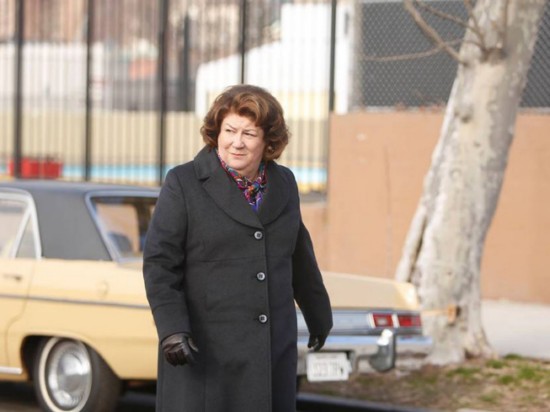
Shooting a scene of The Americans just outside Columbia University’s School of International and Public Affairs. Thursday, March 28, 2013.

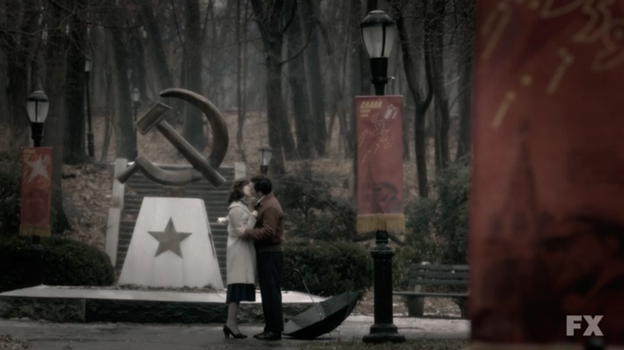
That’s right: two references in one headline. “Safe House” refers to this week’s episode of FX’s The Americans, and the rest of it…well, just have a look at this. As for the recap of Wednesday’s episode, you’ve come to the right place. And away we go.

Jay: I gotta say, when Amador showed up in that parking lot behind Phil after having already run into him at the Beemans’ party, I really thought they’d stolen our April Fool’s Day fake episode narrative and turned it into a real storyline on the show.

Screen Shot 2013-04-05 at 4.33.40 PMBut that might not have even been my favorite part. Even better was when the FBI agents began to discuss plans for killing Arkady (a conversation that took place in the kitchen of a dinner party, improbably: welcome back, The Americans) — and I immediately knew it couldn’t possibly happen, because I’d just seen the actor who plays him filming a scene on the Upper West Side last week.

The usual complaints still apply here, although they were slightly mitigated by the uptick in action. Throughout the episode, it seemed as if neither Phil nor Elizabeth had any real idea what they were going to do with Amador. In some ways, this echoed their indecision of the pilot episode, which ultimately also ended in the victim’s untimely demise. (The general rule on The Americans seems to be that, if you’re working for either American or Soviet intelligence and you end up in the Jennings’ custody, you’re probably screwed. If you’re just an innocent bystander — like the son of that poor old lady who got poisoned by Elizabeth — well, you’ll be OK eventually.) Continue reading Find yourself a “Safe House,” or a relative close by…you’re probably wanted for murder — Sam Lim and I discuss The Americans, Episode 9

“Mutually Assured Destruction” on The Americans: Sam Lim and I discuss Episode 8

Screen Shot 2013-03-24 at 7.54.44 PM

Jay: Ho hum. Another episode of The Americans, another sigh of disappointment. This is getting to become a ritual weekly event.

This time we have Granny telling Elizabeth the truth about Phil and Irina. We have Stan and Amador’s colleagues getting blown to smithereens. We have Amador himself starting to suspect his former girlfriend…of something. And we have a West German loose cannon on the prowl until he, too, gets blown to smithereens.

What a lot of these moments have in common, or how they tie together, is not always clear. Why, for instance, did Granny feel it necessary to sabotage Elizabeth’s marriage? Was this her backhanded way of exacting revenge for the beating she received at Elizabeth’s hands: a ruined marriage for a bruised face? Or was there some larger strategic calculation at play? My first thought was that this could set up a situation in which Elizabeth sells out Phil to her bosses for his lack of commitment, as revenge for his infidelity. But by the end of the episode, their tension had mostly dissipated into familiar marital discord.

Nina’s conversation with Stan at the end, meanwhile, was certainly bizarre. What exactly is going on at the embassy? Is she really being promoted, or is Arkady moving her up to keep a closer eye on her? Something about that situation seemed funky.

Also, it was never explained why the West German hired hand would have a problem with following directions from the KGB. What’s it to him whether or not a scientist lives or dies? As with so many aspects of The Americans, this is left unexplained.

Also, I guess I’m supposed to care that Phil’s and Elizabeth’s marriage is falling apart, right? Well, I don’t.

Do you? Continue reading “Mutually Assured Destruction” on The Americans: Sam Lim and I discuss Episode 8

2013 March Madness: College Costs-Style

While college basketball fans scramble to finish their office pool brackets and aim for wads of money via [insert any major sports website here], one site has taken a decidedly different approach to filling out their 2013 NCAA bracket.

Using the latest stats and figures from Peterson’s and Collegedata.com, Abe Sauer broke down the 2013 NCAA Men’s Tournament field by highest annual college tuition and crowned 11th-seeded Bucknell as the 2013 NCAA Champion with a whopping annual tuition of $45,132!

While tuition is certainly an important determinant in choosing a college, looking at the average net price (what you pay after grants and scholarships are subtracted from the college or university’s cost of attendance) might be a more interesting way of looking at the field. Plus, net price only accounts for financial aid you do NOT have to pay back, so student loans are not part of this equation.

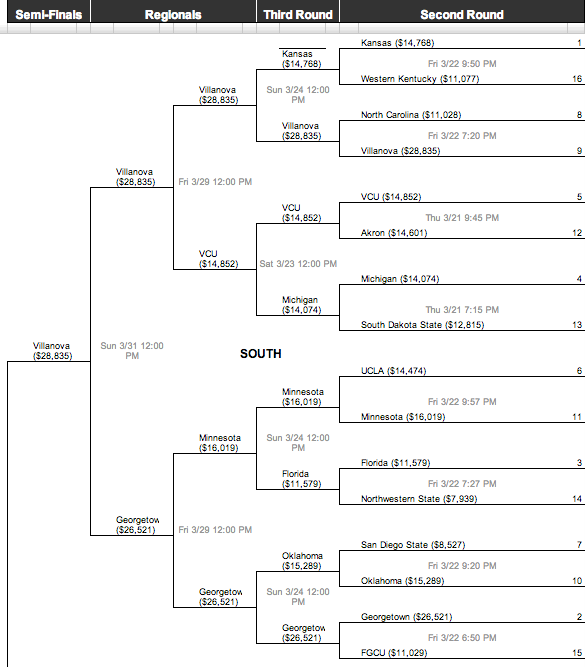
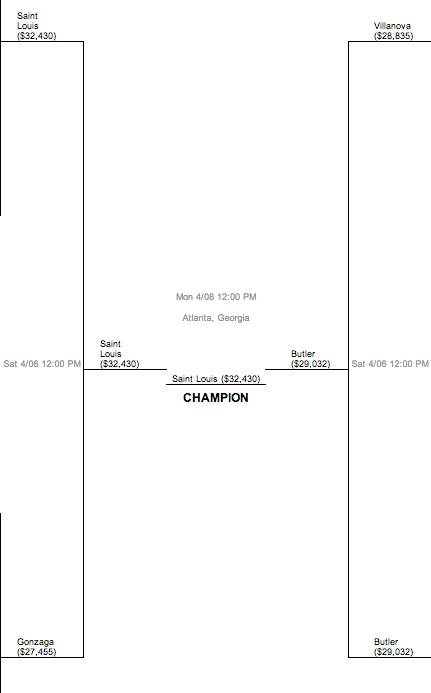
Using the Department of Education’s College Scorecard developed by the College Affordability and Transparency Center and a nifty NCAA Bracket template from Google, here’s what the 2013 NCAA Men’s Tournament field based on estimated Annual Net Price would look like:

Midwest Bracket

West Bracket

East Bracket

South Bracket

Final Four

Based on estimated Annual Net Price, Saint Louis ran away with the championship, costing its students a mind-boggling $32,430 AFTER grants and scholarships have been subtracted from the annual cost of attendance. (If you’re wondering, Bucknell didn’t even make it out of the first round! That’s a bit misleading though, since Bucknell still has the third-highest Annual Net Price in the East behind Butler and Marquette, who rank above Bucknell by only about $300.)

In terms of actual basketball, Saint Louis may actually have a more realistic shot as a No. 4 seed than the 11th-seeded Bucknell to win the actual NCAA championship, if history proves correct. No No. 11 seed has ever won the championship or even made it to the championship game. On the other hand, only one No. 4 seed has ever won the championship (Arizona in 1997).

In all seriousness, though, skyrocketing college costs are no laughing matter. Given that these numbers show how much students must pay (read: borrow) AFTER they’ve exhausted scholarships and grants, there’s already a great need to boost student financial aid and implement more student-friendly policies. If perhaps more schools followed New Mexico State’s lead (estimated annual net price: $2,344), we might actually be able to curb the growing student debt bubble a bit.

Until then, happy March Madness!

Hat tip to @mollywaldron for the original story.

“Duty and Honor” and infidelity: Sam Lim and I discuss Episode 7 of The Americans


Courtesy of TV.com.
Courtesy of TV.com.

Jay: About halfway through this one, I really thought The Americans might have turned a corner. And in a way, I still think it might’ve. A lot took place in this episode, and part of me thinks my slightly more positive reaction stems mostly from the manipulative use of sad music during important scenes, instead of being a consequence of masterful storytelling.

Nevertheless, a few more things went well in this episode than I’m used to. It was also the rare TV episode in which relationships were the defining centerpiece and I wasn’t even bored. It helped that they added some mild twists, such as Stan being left at the bar and then, instead of hitting on the girl at the other end, meeting up with Nina. (By the way, that relationship is increasingly looking like it’s going in the direction I’d guessed earlier: he’s worried about her, and the FBI doesn’t give a damn.)

Phil’s backstory just got a hell of a lot more interesting as well, although I really wasn’t a fan of the actress who played his former love interest. First of all, why does she still look like she’s 16, even though she has a son that’s older than that? Secondly, I just didn’t find her a very convincing actress. Nevertheless, the execution of that part of the story was decent. It didn’t occur to me now — and here comes the obligatory Homeland reference — that Phil’s lie to Elizabeth at the very end (that nothing happened between him and Irina) is very reminiscent of Brody’s lies to Jess about Carrie. Anyway…

Once again, the events feel as if they’re taking place in a vacuum, though. Political events come into focus at the beginning of an episode, intensify during the middle, and are resolved by the end. It’s like Family Guy, only less funny. (That’s a bit harsh.) But I am trying to remain hopeful that the show can continue to nicely balance the relationship and career aspects of the show. Speaking of which, Elizabeth and Granny’s conversation on the park bench looked pretty ominous. If this were a higher-quality show, I’d venture to guess that it will have ripple effects in later episodes. On The Americans, I have no idea.

What’d you think? Continue reading “Duty and Honor” and infidelity: Sam Lim and I discuss Episode 7 of The Americans

Sam Lim and I chat about The Americans, Episode 6: “Trust Me?” Not so much.

Stan and Nina talk it out in Episode 6 of The Americans, "Trust Me."
Stan and Nina talk it out in Episode 6 of The Americans, “Trust Me.”

Jay: I just don’t know anymore. This show is all over the place, and I don’t really mean that in a good way. We’re about halfway through the season (6 out of 13 episodes), but I’m still unable to get excited about anyone or anything in the show. That’s a problem, right?

There wasn’t anything glaringly wrong with this episode, necessarily. The plot moved along at a decently fast pace, and I couldn’t help but smile at the scene between Elizabeth and Gregory on the steps of Columbia’s School of International and Public Affairs. (I practically live in that building these days.)

But the story with the kids was just…weird. What are the chances that the first person to pick them up would be such a psycho? The reviews I’ve read point to that narrative as a way for The Americans to show how the kids now have secrets of their own, just like their parents. But every kid keeps secrets from his parents. (Am I misremembering my entire childhood?) Even taking into account the danger presented by that freak at the duck pond, hiding something like this from one’s parents is perfectly in line with normal kid behavior. All of that makes me wonder why it’s included in the episode at all.

As for Elizabeth and Phil, it’s gotten to the point where, even if I have trouble identifying specific problem parts, I’m not particularly into the episode anyway. Maybe it’s that their on-again-off-again marital problems are already boring me.

The Stan/Nina dynamic was more interesting. As noted elsewhere, the scene with the projected images flashing on their faces was very well-done, even if Stan seems unable or unwilling to acknowledge just how much danger he’s put Nina in. Side note: I love that he managed to protect her and get rid of her sexual partner, all in one fell swoop.

Did this episode mark an improvement? Or is it still stuck in “meh” territory? Continue reading Sam Lim and I chat about The Americans, Episode 6: “Trust Me?” Not so much.

Wandering aimlessly with The Americans: Sam Lim and I discuss Episode 5, “COMINT”

Sam: This will be somewhat interesting, given that we just watched this episode together a few hours ago. Perhaps it was because I was watching it at your place, but I actually didn’t think the episode was too bad. It was certainly confusing, and it took me a bit to piece things together (that’s perhaps what I get from hating on the show so much that I forget to keep track of who’s who). But, overall, it was an ehh episode. That, on my The Americans rating scale, is pretty good.

To the details: if the KGB director at the Soviet embassy couldn’t talk to his guy at the Defense Department, but Elizabeth could just walk right in and question him (and Elizabeth can connect with the KGB director, I assume), why doesn’t the director just pass a message to the guy through Elizabeth? I suppose, if they did that, we wouldn’t have this episode, would we?

elizabethI didn’t feel like that storyline was told or developed very well as far as the Defense Department guy’s wife dying and its impact on him. In hindsight, they did say it clearly, but it got so lost in the confusing details of who’s who that I was left wondering who his wife was and why that was important. This probably betrays my lack of paying close attention to previous episodes, but I was just lost for a few sequences in this episode.

One aspect I particularly enjoy, though, is the costumes Phil and Elizabeth change into when they go on their missions. They’re so clearly fake that it’s funny. Phil’s fake hair is the best. Oh, and as I mentioned when we watched the episode during Elizabeth’s little romp in the hotel room with the encryptor dude, how did her wig not just fall off?

Admittedly, given that this episode confused me a bit because of the details, I read up on it, and I really thought Karen Fratti’s recap was spot on, particularly her very last question (why does Beeman insist on studying Russian instead of going to bed with his wife??). What were your thoughts on this episode? Continue reading Wandering aimlessly with The Americans: Sam Lim and I discuss Episode 5, “COMINT”

Let’s Make Sure Financial Aid Actually Aids Students

If Congress doesn’t get its act together and pass legislation to avoid the 5% across-the-board cuts to the federal budget (aka the “sequester”), the higher education world will suffer through even more painful rounds of budget cuts. The Chronicle of Higher Education has this story covered:

“Thousands of researchers will lose their jobs, thousands of students will lose their financial aid, and thousands of unemployed workers will be turned away from college work-force programs.”

At a time when it seems like having a college degree is necessary for even the lowest-level jobs, these are troubling developments indeed:

“Though Pell Grants would be exempt from the sequester this year, Federal Work Study and Supplemental Educational Opportunity Grants would not. Arne Duncan, the secretary of education, has told lawmakers his department will make 33,000 fewer work-study awards and 71,000 fewer supplemental grants next year if the cuts take effect.”

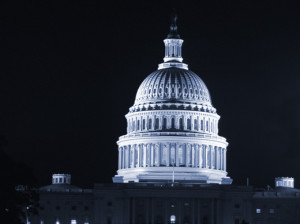
US Capitol
There might be some late nights here coming up…
[Photo via U.S. House of Representatives]
Besides this whole fiasco with the sequester though, Congress has some other higher ed-related legislative business to take care of in 2013: The Higher Education Act of 1965 is up for reauthorization. Judging by the sluggish pace at which the last reauthorization was passed (the 2003 reauthorization finally got passed…in 2008), we might be seeing the 2013 HEA reauthorization get pushed back for a while.

Let’s imagine, though, that the 113th Congress will actually do its job and reauthorize the HEA on time (ok, sorry, I didn’t mean to make you laugh there). But before it does, there are a few ideas Congress needs to hear first about overhauling the federal student financial aid system.

It could start with what I would consider “low-hanging fruit”: Continue reading Let’s Make Sure Financial Aid Actually Aids Students

Are the writers still “In Control?” Sam Lim and I tackle Episode 4 of The Americans

Jay: After last week, this episode felt a bit like a letdown. The action was good, the tension was decent, but the dialogue basically muddled through and the plot was weaker than it was in “Gregory.”

First, though, I have to get a pet peeve off my chest. Stan’s boss says of the attempted assassin, “[If] this guy’s said ‘Nyet’ once in the past ten years, we’re gonna find out when and where.” Why do so many TV shows and movies have lines like that? No one talks in such melodramatic phrases.

But even aside from a few campy moments — another one is when Elizabeth is arguing with Phil about staying committed to the Soviet Union: that debate is already getting old for me, and Elizabeth still hasn’t looked convincing while doing it yet — the plot got into weird territory at times.

claudia

First, why are Phil, Elizabeth, and “Claudia” all so willing to talk in their car openly (and even somewhat loudly)? They drop bugs all over the place — I’m guessing one was in the pin Phil gave to that nurse, most recently — but they’re not even remotely nervous that they’re being watched? Even after Phil knows for certain Stan was suspicious enough to snoop around their garage and check out their car?

Speaking of cars, it was never explained how they got rid of the security guard’s car. Dumping a body is one thing, but making a car disappear is another matter entirely. Maybe that’ll get brought up in a later episode.

Another thing: why would Nina’s boss tell her colleague to follow her? Once again, there’s really no explanation given for why all the right people are wary of all the other right people. It’s too uncanny, and too much like network TV.

Which brings me to my next complaint: remember how Nina was recruited in the first place? Because she got caught stealing caviar from the embassy. If you were her, wouldn’t you rather just confess the theft and try to find a new job, instead of risking your life running around every time the FBI calls? In defense of the show, I suppose it’s feasible that she feels it’s now too late, that even if she stopped working for the FBI they’d ruin her life (or end it) anyway. But her risk/reward calculations don’t seem that smart right now.

Side note: I don’t get what took place when Phil called that guy with a bunch of phones and asked to get to the vice president’s office. Was he figuring out who the nurse was? And who was that dude with all the phones?

One last thing: I couldn’t help but notice that when Paige went over her friend’s house to apologize, she was playing with her hands in the exact same way Dana does all the time on Homeland. Is that the universal TV representation of “awkward teenager?”

Sam: I couldn’t agree more with everything you pointed out! My biggest mistake this week: raising my expectations. Before I watched the episode, I read that this week’s episode would cover the assassination attempt on President Reagan, and for some reason, I thought it would make for an interesting episode, to say the least. I was wrong. Continue reading Are the writers still “In Control?” Sam Lim and I tackle Episode 4 of The Americans

“Gregory,” we have a problem: Sam Lim and I take on Episode 3 of The Americans

philSam: I almost liked this whole episode. But even with managed expectations this week, I still couldn’t buy it all. Allow me to explain.

On the whole, I thought this episode was perhaps the best one so far. The whole scene with Gregory’s guys moving Joyce, Robert’s wife that no one knew about, off the street was pretty smooth. The story lines, for the most part, weren’t tangential.

But, I still found myself not liking the show any more than I did after episode one. I’m realizing that perhaps my dislike of this series has more to do with my dislike for mushy family-ness than the show itself. I find myself wanting to just skip the scenes between Philip and Elizabeth working out their wacky relationship problems, and perhaps because the non-relationship parts of the show are not on par with that of Homeland‘s, the show seems ehh to me.

But, my own realizations aside, let me now point out the parts I found strange. Did it seem strange to you that Elizabeth had such a deep contact in Philly? The way she explained it she must have met Gregory shortly after she and Philip moved to the US. For such a loyal KGB agent, she seemed unusually chatty about her ties with him when they first met. Sure, she fell for the dude, but wouldn’t she have been even more steely and committed to her cause than she is now? I just found this story line to be a bit of a stretch.

Also, the way Granny was introduced in the restaurant where Philip and his daughter were having breakfast just seemed weird. Who interrupts other people’s conversations from the bar? Maybe no one bothers me from across restaurants I go to, but that seemed strange to me. Finally, Stan must be quick at tying his shoelaces, because he didn’t look like he’d finished tying it when we started running after the dude “in the hood.”

Overall, though, I wasn’t as disappointed as the previous two episodes. Just ambivalent. Your take? Continue reading “Gregory,” we have a problem: Sam Lim and I take on Episode 3 of The Americans

“The Clock” is ticking for The Americans: Sam Lim and I discuss Episode 2

americansSam and I are back — a little late this time — to talk about Episode 2 of The Americans, titled “The Clock.” The consensus? Lower expectations make for a more enjoyable viewing experience. (I guess we should all know that by now given the inexplicable long-term popularity of Two and a Half Men.)

Sam: At first glance, this week’s episode wasn’t that bad. I wasn’t impressed, but I wasn’t supremely disappointed either. I must be managing my expectations well.

Stan Beeman, though. I just find him annoying. First of all, they found caviar at some stereo store. Is it just me or does that just seem too convenient a storyline? And after pocketing that caviar, why does Stan feel the need to take it to Philip’s house that night? Is his gut telling him that caviar will make Philip admit he’s a KGB officer?

Interesting development at the FBI office though. Beeman takes a congratulatory phone call, and I noticed Amador’s face contort all of a sudden. Might this have been The Americans‘ subtle attempt to hint at race-relations in the workplace in the early 80s? Or this might’ve just been another tangential sequence with no direction (like the child predator from the first episode).

Also, in this episode, Elizabeth just seemed like a totally different character to me. Gone was the steely, nationalistic resolve from last week. Instead, perhaps fueled by her conversations with Philip (which still would be strange, given what we’d seen of their seemingly complicated relationship from last week), she wants to spend more time as a mother. I don’t know. I said it last week, and I’ll say it again. I find her character development sporadic and weak at best. Who randomly wakes up their daughter in the middle of the night to pierce their ears? Bizarre.

Your take?

Jay: Your last point cracked me up: there really is very little explanation for Elizabeth barging in on her sleeping daughter to pierce her ears. And on a similar note, I really don’t know why they insert gratuitous scenes like Phil watching over his sleeping son with hands folded. What is that scene supposed to accomplish? Let us know that, despite nearly suffocating an innocent guy earlier, he’s still a loving dad? I mean, great?!

The funny thing is, I know exactly what you mean about managing expectations: a big part of the reason I didn’t see this episode until today is because I was really busy, but the other part is that I just wasn’t that excited about it. So when I finally did watch it, my expectations were low enough that it allowed me to actually enjoy the episode much, much more than I did the pilot.

And I have to say, things were better this time around. Elizabeth, like you said, was much less dogmatic and more of a real person. Stan’s workplace dynamics are starting to shape up — although, again, we don’t know exactly what that look on Amador’s face meant yet, other than what seemed to be office politics (Stan taking the credit for other people’s hard work). Even the scene with Stan in Phil’s kitchen wasn’t as awful as it could have been. Granted, the whole caviar side-plot is a bit strange, but it seemed conceivable that Stan came over just to be friendly. He seems to be a bit of a loner, even with a family.

I’m also curious to see how the story with the newly recruited Russian caviar thief works out. I have to admit, I didn’t really pay close attention during Stan’s scene with her, so I’m not entirely sure what the racket was that she had gotten herself involved in — stealing caviar from an embassy and buying stereos with it? did I hear that right? — but I’m looking forward to seeing what she ends up doing.

My biggest complaint, weirdly enough, is about the girl Phil’s stringing along in his roleplaying as a Swedish intelligence officer: why are her lines so cheesy? No one talks like that, not even back in the 1980s. At least I certainly hope not.

Do you see any themes shaping up? Anything to get you more engaged? I have to admit that I’m somewhat less down on the show now, even if I remain wary.
americans2Sam: I had forgotten about Philip and the whole Swedish intelligence officer thing! You know, as part of my lowered expectations mantra, I think I just kind of approached that one with an “eh” reaction.

I do think you’re right, though, that such an approach allows the episode to do better this time around. You might be right about Stan just being friendly or not having much of a family life. Or perhaps he just felt bad for breaking into the Jennings’ garage.

Theme-wise, so far, I feel like we’re going to see a lot of family influence on the main characters’ actions and inactions. That seems to be a major theme of the series — that you have these covert spies who are supposed to blend in by having a normal family, etc. but have to balance a dangerous hidden life.

As for anything to get me more engaged, I’m honestly not sure. I can’t help wondering if some sort of Homeland-like twist where one of the main characters becomes a double agent might not make me more interested. But then it’d just become an even more second-rate Homeland ripoff. So I’ll just continue managing my expectations and enjoying more scenes of confiscated caviar being consumed. That’s it. I enjoy food, so perhaps introducing more good food would be a nice development (I’m only being somewhat facetious on this point).

What about you? What would you do to make this better?

Jay: I’m with you on the family aspect: I think this will continue to play a large role on the show. In fact, I think I read an interview with the creator, who said that the show was really about marriage and family, and that the spying was almost secondary (paraphrasing hugely here).

The Americans is in a somewhat strange position: it’s arriving on the heels of another very popular spy show, and yet there may actually be an opening for this one too just by virtue of the fact that Homeland went almost completely off the rails at various times during Season 2. And yet anything The Americans does will — at least in our minds, quite obviously — be compared against Homeland.

I think they need to make sure they take The Americans in a different direction. Obviously, they can’t avoid certain similarities: double agents, covert operations, and so on are all necessary staples of the spy genre, but one advantage The Americans has is its historical setting: the 1980s and the beginning of Ronald Reagan’s administration. It seems to me that they’re a bit more willing to “get political” (given the multiple references to Reagan being crazy and whatnot) than Homeland was, possibly simply due to the benefit of hindsight (people don’t always get as angry discussing the politics of thirty years ago than they would about contemporary issues like terrorism). That, and the look exchanged between Stan and his Number 2 make me think the show could edge in a direction that establishes itself as social commentary. I say “could” because, so far, these seem like mostly irrelevant blips that don’t connect to any broader themes, but that may be just because we’ve seen only two episodes. I guess we’ll find out.