All posts by Jay Pinho

About Jay Pinho

Jay is a data journalist and political junkie. He currently writes about domestic politics, foreign affairs, and journalism and continues to make painstakingly slow progress in amateur photography. He would very much like you to check out SCOTUSMap.com and SCOTUSSearch.com if you have the chance.

“The Star” bows out on Homeland‘s Season 3 finale

Screen Shot 2013-12-16 at 11.18.19 AM

Jay: So, where does Homeland go from here? Brody’s dead, Carrie’s both promoted and pregnant (with both assignments seemingly up in the air, for the moment), and the U.S. and Iran have signed a nuclear deal (in a scene that must have been shot very recently). I confess that it is difficult to imagine a scenario next season that would really keep my interest at this point.

As for the episode itself, I was disappointed, I think. I can’t put my finger on any specific flaw, other than the pervasive notion that this show has really meandered without any real objective for quite some time now. In Season 1, Homeland was about patriotism, family, and loyalty. Much of what happened that season can be analyzed via Brody’s relationships with other people: Carrie, his wife Jessica, his daughter Dana, his mentor Abu Nazir, etc.

But as Season 2 began to run off-track and then Season 3 continued the trend, I’m much less clear on what the show is “about” now. And while I’ve been predicting Brody’s death for quite some time, the fact that it’s now actually happened does raise a lot of questions as to how the series will proceed.

In some ways I think it would be best if they just stopped the show entirely here. What do you think? Continue reading “The Star” bows out on Homeland‘s Season 3 finale

“Big Man in Tehran:” On Homeland, Brody’s past closes in

Screen Shot 2013-12-15 at 2.10.41 PM

Sam: So, what’s the over-under on Brody making it out of Tehran alive? Or Carrie, for that matter? Does it strike you as not coincidental that the two of them are in Tehran for the final episode? It seems rather likely that one of them (dare we say both?) might end up not making it out of Tehran.

Overall, this episode felt like a giant teaser for the finale, though. The entire episode seemed like a whole lot of tension over whether or not Brody would carry out his mission. While the twists were clever, they seemed reminiscent of what we’ve seen from Homeland before: Carrie goes rogue in a foreign country, the original mission goes out of whack, and then things end up okay somehow.

We’ve harped on this before as well, but Saul really cannot be surprised that Carrie flat out cannot take orders, right? I mean, even Dar Adal can tell him that. Why they continually send someone like her into the field (and into Tehran, of all places) is just absolutely ridiculous. I suppose it helps with the storyline, I guess.

What’d you think of this episode? Continue reading “Big Man in Tehran:” On Homeland, Brody’s past closes in

A broken Constitution, and a few misplaced facts

Jeffrey Toobin’s latest piece for The New Yorker, “Our Broken Constitution” (paywalled), is an illuminating stroll through a myriad of justifiable complaints about the American founding document. But I couldn’t help but notice several questionable (and, in some cases, completely inaccurate) statements.

The essay opens thusly: “If there is a single point of consensus in this heated political moment, it’s that everyone loves the Constitution.” In the next paragraph, Toobin continues: “The Constitution, and the structure of government that it established, provides the backdrop, but never the subject, for every controversy.”

Skip ahead two paragraphs, however, and you’ll find the exact opposite: “Outside Washington,” Toobin explains, “discontent with the founding document is bipartisan and widespread…On the left and the right, [critics] are asking whether the pervasive dysfunction in Washington is in spite of the Constitution or because of it.” How can both be true simultaneously?

That’s not the only problem. Toobin’s opening statement, even if evaluated in the absence of his self-rebuttal a few lines down, is demonstrably inaccurate. Of course, there’s a certain futility to disproving any theory that includes the phrase “everyone loves” — which, to his credit, Toobin couldn’t possibly have meant literally. Nevertheless, even if afforded an ostensibly looser interpretation of “everyone,” his argument simply doesn’t work.

In fact, Toobin’s essay is itself just the latest in a series, all of which harp on the same general theme (a mostly justified one, to my eyes) that the Constitution is — to put it simply — overrated. A July 2012 Slate piece titled “Fixing the U.S. Constitution” invited readers and experts to amend the venerable document, introducing the effort thusly: “Politicians talk about the Constitution as if it were as sacrosanct as the Ten Commandments. But the document itself invites change and revision.”

In December of that same year, The New York Times ran an op-ed piece by Louis Michael Seidman, a constitutional law professor at Georgetown, headlined “Let’s Give Up on the Constitution.” In it, Seidman laments “our insistence on obedience to the Constitution, with all its archaic, idiosyncratic and downright evil provisions.” He also points out the long history of constitutional dissent: “Constitutional disobedience may seem radical, but it is as old as the Republic. In fact, the Constitution itself was born of constitutional disobedience…No sooner was the Constitution in place than our leaders began ignoring it.”

Less than three months ago, in September, Kevin R.C. Gutzman asked in The American Conservative: “Do We Need a New Constitutional Convention?” Perhaps more to the point, a National Journal article the following month by Alex Seitz-Wald was self-explanatorily titled, “A How-To Guide to Blowing Up the Constitution.” And these are just a few representative samples in a long canon of disenchantment with the output of “We the People” (or, rather, of their aristocratic appointees to the constitutional convention).

A second problem crops up soon enough. A little further along, but still on the article’s first page (p. 64 in the print edition), Toobin writes: “Implicitly but unmistakably, the 1787 Constitution allowed for the continuation of slavery.”

There is nothing implicit about the Constitution’s allowance for slavery. In the very first Article, Section 2, Clause 3 states, in part:

Representatives and direct Taxes shall be apportioned among the several States which may be included within this Union, according to their respective Numbers, which shall be determined by adding to the whole Number of free Persons, including those bound to Service for a Term of Years, and excluding Indians not taxed, three fifths of all other Persons.

Later on, in Article I, Section 9, Clause 1, the Constitution explicitly allows for the slave trade’s continuation until at least 1808:

The Migration or Importation of such Persons as any of the States now existing shall think proper to admit, shall not be prohibited by the Congress prior to the Year one thousand eight hundred and eight, but a Tax or duty may be imposed on such Importation, not exceeding ten dollars for each Person.

Article IV, Section 2, Clause 3 states:

No Person held to Service or Labour in one State, under the Laws thereof, escaping into another, shall, in Consequence of any Law or Regulation therein, be discharged from such Service or Labour, but shall be delivered up on Claim of the Party to whom such Service or Labour may be due.

And finally, Article V reaffirms the impossibility of eliminating the slave trade until at least 1808:

The Congress, whenever two thirds of both Houses shall deem it necessary, shall propose Amendments to this Constitution, or, on the Application of the Legislatures of two thirds of the several States, shall call a Convention for proposing Amendments, which, in either Case, shall be valid to all Intents and Purposes, as Part of this Constitution, when ratified by the Legislatures of three fourths of the several States, or by Conventions in three fourths thereof, as the one or the other Mode of Ratification may be proposed by the Congress; Provided that no Amendment which may be made prior to the Year One thousand eight hundred and eight shall in any Manner affect the first and fourth Clauses in the Ninth Section of the first Article; and that no State, without its Consent, shall be deprived of its equal Suffrage in the Senate.

Midway through Toobin’s piece, a third flaw emerges. Speaking of President Obama, Toobin writes:

Though he will spend eight years in office, his tenure as the actual leader of the national government lasted about a year and a half. On July 7, 2009, Al Franken was seated, after a recount, as the sixtieth Democratic senator. (Sixty votes are needed to overcome a filibuster.)…In the midterm elections of 2010, Obama’s party lost control of the House and fell below the filibuster threshold in the Senate.

But as has been well-documented (here, and here, and here, to name a few places) — and especially visible, one would imagine, to a political junkie such as Toobin — Obama’s actual filibuster-proof Senate majority lasted only four months in reality. Rachel Maddow’s blog explains:

In January 2009, there were 56 Senate Democrats and two independents who caucused with Democrats. This combined total of 58 included Sen. Ted Kennedy (D-Mass.), whose health was failing and was unable to serve. As a practical matter, in the early months of Obama’s presidency, the Senate Democratic caucus had 57 members on the floor for day-to-day legislating.

In April 2009, Pennsylvania’s Arlen Specter switched parties. This meant there were 57 Democrats, and two independents who caucused with Democrats, for a caucus of 59. But with Kennedy ailing, there were still “only” 58 Democratic caucus members in the chamber.

In May 2009, Sen. Robert Byrd (D-W.Va.) was hospitalized, bringing the number of Senate Dems in the chamber down to 57.

In July 2009, Sen. Al Franken (D-Minn.) was finally seated after a lengthy recount/legal fight. At that point, the Democratic caucus reached 60, but two of its members, Kennedy and Byrd, were unavailable for votes.

In August 2009, Kennedy died, and Democratic caucus again stood at 59.

In September 2009, Sen. Paul Kirk (D-Mass.) filled Kennedy’s vacancy, bringing the caucus back to 60, though Byrd’s health continued to deteriorate.

In January 2010, Sen. Scott Brown (R-Mass.) replaced Kirk, bringing the Democratic caucus back to 59 again.

Thus Obama’s supermajority, for all practical purposes, lasted only from September 24, 2009 until February 4, 2010, when Scott Brown took Kennedy’s old seat in the Senate.

Finally, towards the end of his article Toobin notes the undemocratic nature of the House of Representatives: “In 2012, House Democratic candidates across the country won about half a million more votes than their Republican opponents, but the G.O.P. emerged with thirty-three more seats than the Democrats.”

Toobin is correct on the seat differential, but significantly off on the vote gap. According to analysis performed by the Cook Political Report’s U.S. House editor, Dave Wasserman (and briefly explained by Talking Points Memo editor Josh Marshall), House Democrats actually won 1,365,157 more votes than Republicans in 2012 — a differential nearly three times that cited by Toobin.

Out of an abundance of caution — since Toobin had specifically compared the Democrats’ vote totals to those of their Republican opponents (emphasis mine) — I copied Wasserman’s Google spreadsheet and eliminated all House races in which either the Democrat or Republican candidate received 0 votes. This, I believe, should serve as a reasonably good proxy for uncontested races — in other words, those with no opponents. When only contested races are counted, the Democrats’ vote advantage over the GOP extends to 2,444,369. This is nearly five times as high as Toobin’s count.

I bring all this up not to rag on Toobin, who is obviously an astute legal mind. I enjoyed his article and am generally sympathetic to the complaints registered by the progressive movement regarding the Constitution’s many inadequacies. But several passages somehow slipped past The New Yorker‘s legendary fact-checking desk.

Enhanced by Zemanta

Brody lives on for another “Good Night,” as Homeland Season 3 nears its conclusion

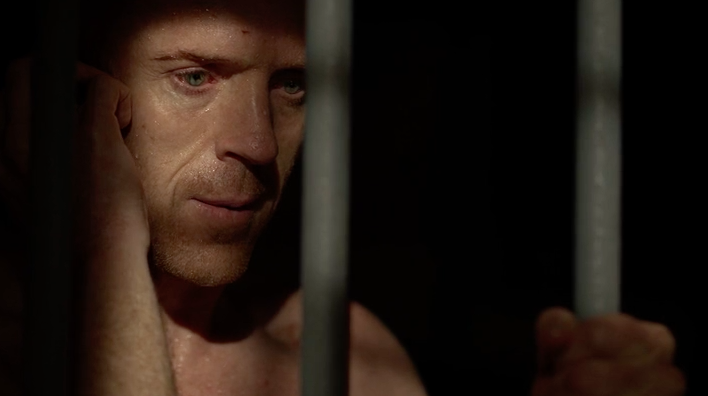
Jay: This was a riveting hour of television. And even aside from the theatrics of trying to get Brody across the Iraqi border and into Iran, the episode did well in other ways too — especially by avoiding some other pitfalls that could have easily induced some eye-rolling.

For one, I was cringing pretty hard as Carrie shouted at Brody over a secure line: I was just waiting for the moment when she’d scream, “I’m carrying your baby!” Perhaps the show’s writers realized that that would’ve truly been the moment Homeland would’ve jumped the shark. But it came perilously close.

Another nice little non-moment was the senator’s relatively reasonable behavior at the secret CIA site. You can often discern the quality of a show by the dimensionality of its heroes and villains. So the fact that Homeland has been gradually willing to portray the senator in a more sympathetic light is a good sign, methinks.

Personally, I could quibble a bit with the way that Brody’s vehicle looked like it had been utterly destroyed — occupants included — before they both miraculously escaped. But the moment actually turned out to be rather useful, as Brody’s Marine instincts clearly kicked in and he went from being a blubbering victim (as any of us would’ve been) to a man in charge instantly. I also liked the fact that Javadi killed Brody’s partner, which at least somewhat tempered the miraculous nature of their escape into Iran.

I’m a little less clear on what comes next. I tend to agree with some other predictors who are guessing that Brody isn’t actually the father of Carrie’s child — a point which she seemed to confirm to Quinn in this episode (although that could easily be a lie). On the other hand, if Brody’s fated to die this season anyway, it would make sense to have a mini-Brody born soon thereafter so as to provide Carrie some measure of solace, at least. (There, even more ridiculous theories for you.)

What did you think? Continue reading Brody lives on for another “Good Night,” as Homeland Season 3 nears its conclusion

“One Last Thing” for Brody? Flashes of brilliance in Homeland‘s Season 3, Episode 9

Screen Shot 2013-11-27 at 8.56.50 PM

Jay: So this episode may have been the best one all season. Granted, there were some pretty unbelievable parts, and some somewhat ridiculous time-warp moments (like the jarring “Sixteen Days Later” transition), but Brody’s return to the United States as a full-fledged human being (as opposed to a full-fledged junkie) breathed some life into what has otherwise been a subpar season.

Even Dana didn’t bother me as much in this episode. Alan Sepinwall hit all the right notes in his review already, among which were two important ones: 1) Dana works best when she’s in scenes with her father, and 2) Brody is almost definitely not going to survive this mission.

While I’ll probably miss him — and while the show may struggle to figure out how to move forward without him always lurking on the periphery — it’s probably about time he disappears. Even if he were to make it back alive, another season of him trying to woo Dana again probably isn’t a season worth watching.

Of course, Carrie continues to be reckless at all times, including a truly mind-blowing escape from the secret compound to take one of the world’s most wanted men to see his emotionally unstable teenaged daughter. What could possibly go wrong?

Fortunately, nothing did. But Carrie is getting increasingly hard to root for.

How would you rate this episode? Continue reading “One Last Thing” for Brody? Flashes of brilliance in Homeland‘s Season 3, Episode 9

My Days of Fire review is now up

I took a look at New York Times White House correspondent Peter Baker’s new book, Days of Fire: Bush and Cheney in the White House:

Baker, in his acknowledgments, hopes that readers comprehend “the value in attempting a neutral history of a White House about which almost no one is neutral.” But here he stumbles down the well-worn path of journalists like his colleague (and former Times executive editor) Bill Keller, whose tired defense of reportorial objectivity masks, time and again, their own inevitable — precisely because they are human, not because they are flawed — prejudices.

Chief among Baker’s faux neutralities is his characterization of the CIA’s brutal interrogations, which he fastidiously avoids calling torture. At one point, Baker describes the methodology as “the interrogation program that many called torture.” Elsewhere, a National Security Council press secretary refused to defend “the interrogation program many considered torture.” Later on, Baker writes that Bush “pared back the harsh interrogation techniques that critics called torture,” echoing his earlier characterization of waterboarding as a practice that (ostensibly subjectively) “was deemed torture by the rest of the world.”

Enhanced by Zemanta

“A Red Wheelbarrow:” Sam and I chat about Homeland, Episode 8

Screen Shot 2013-11-19 at 12.16.09 PM

Jay: Initial thoughts: not as great as all the reviewers promised. There was a flurry of Twitter activity suggesting that this episode would be a return to all things great about Homeland. But while some of the excitement returned, I’m not at all convinced we’ve reached any kind of turnaround.

First of all, you just knew Carrie was going to defy orders at the motel. Yes, I get that this is completely consistent with her character, but at some point it just gets tiring. I actually rolled my eyes when she got out of the van and started following Franklin. I understand that she’s impulsive and headstrong, but at what point does it become completely unbelievable that she could keep her job after so many betrayals? Similarly predictable was the fact that Carrie was clearly not going to die, no matter how ominous Dar Adal and Quinn tried to sound while warning her from continuing.

Mira’s lover being some sort of spy was decidedly less predictable, but I’m not at all persuaded that that plot point makes any sense. And speaking of nonsensical moments, Carrie being so open with her doctor about her job (referencing the “father” in relation to her work) was an absurdly risky moment in a series in which characters are supposed to be devoted to secrecy and information security.

Slightly more intriguing was Saul’s visit to Venezuela to visit Brody. It’s confusing on a few levels, actually: why was Saul so cagey with Carrie when she asked about his conversation with Javadi? And why the hell is he visiting Brody if he knows he didn’t do it? What could Brody possibly do for Saul now that he’s been shown to have been uninvolved with the bombing?

I guess I don’t see this as much of a step forward. Do you? Continue reading “A Red Wheelbarrow:” Sam and I chat about Homeland, Episode 8

Homeland, Episode 7: Sam Lim and I discuss “Gerontion”

Screen Shot 2013-11-16 at 3.57.00 PM

Sam: As much as I enjoyed this week’s episode, why does so much of it seem like deja vu? A turned informant? Carrie fixating on “the truth” about Brody?

I feel like we know where the coming weeks are going to take us: Carrie’s going to go on a crusade to clear Brody’s name. I can hardly wait (yawn).

On the plus side, there were moments I very much enjoyed and appreciated: Quinn’s resigned conclusion after his talk with the detectives and Saul calmly walking the Senator (and Dar Adal) through his master plan and then promptly locking him in the conference room.

I’ve neglected my winners and losers of the episode thing for a few weeks, so let’s bring it back:

Winner: Saul, hands down. Nothing must’ve felt better than to lock the Senator in the conference room and then clicking the button that fogged up the glass. In your face, Senator!

Loser: Mira. I’m so tired of her pathetic character. She’s getting close to Granny-level of annoyance for me (Dana has her own scale). Just go run away with the other dude already.

Your thoughts on this week’s episode? Continue reading Homeland, Episode 7: Sam Lim and I discuss “Gerontion”

“Still Positive” that Homeland‘s still got it? Sam and I break down Episode 6

Jay: Well, the consensus — at least among the reviewers I read — seems to be that Homeland is drifting farther and farther from its Season 1 glory. While I tend to agree that this season in general has had more than its fair share of rough patches, I’m not as appalled as some of the reviewers. Not yet, anyway.

This week’s episode contained what was, for me, perhaps the single most shocking scene in Homeland history, when Javadi used a bottle to puncture to death his ex-wife, who had defected to the United States years earlier. That moment was so singly un-Homeland-like in its brutality that I almost couldn’t believe it at first.

It also raises many questions. First of all, why was Saul so hellbent on ensuring that Javadi not get into the house? This is especially bizarre considering the fact that, as Quinn and Carrie briefed him immediately after entering the property, Saul didn’t even seem to realize that Javadi’s ex-wife was even living there at the time. (Or am I getting the chronology mixed up?) Methinks there’s some more history between Saul and Javadi’s ex: something about the way Saul held up the picture of her earlier in the episode suggested a deeper backstory.

Speaking of possible romantic connections, whatever was left of Saul’s marriage is definitively disintegrated in this episode, while Carrie suddenly seems to be carrying someone’s child. The obvious implication is that it’s Brody’s, but weirdly the first guy I thought of was that rando from the liquor store in the first episode of this season. Given the way some of Homeland‘s plot twists have petered out so quickly this season, I wouldn’t be entirely surprised if that happens again here.

What did you think? Continue reading “Still Positive” that Homeland‘s still got it? Sam and I break down Episode 6